
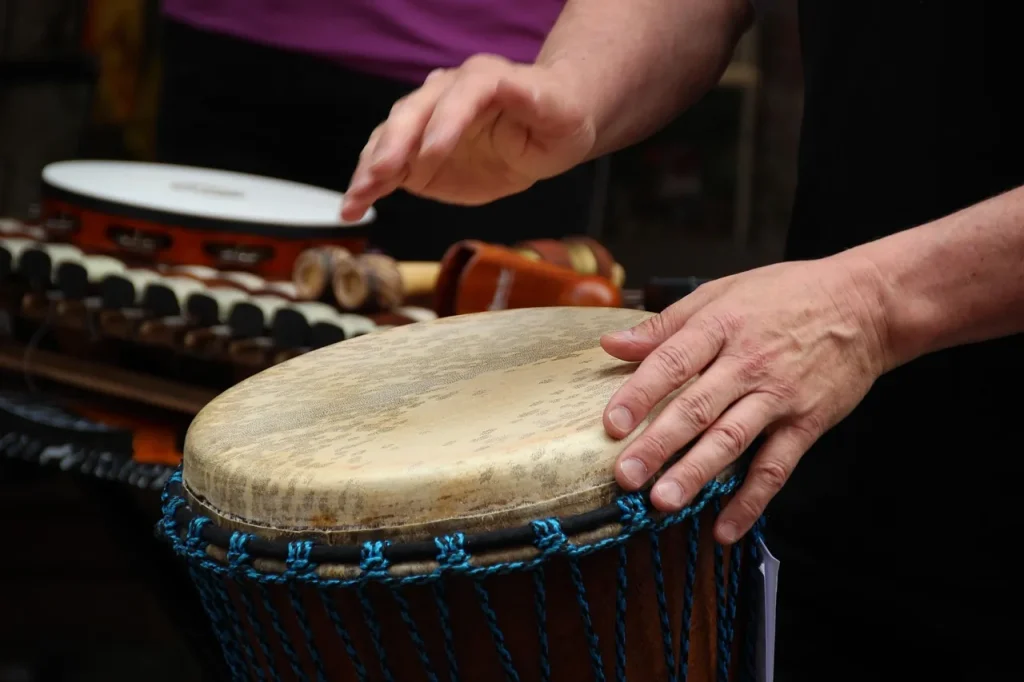
The djembe is a fascinating percussion instrument from Africa that has captivated musicians around the world for more than 700 years. Its distinctive goblet shape and ability to produce a rich range of sounds using only the hands make it a cultural treasure.
It is far more than a drum: it symbolizes a living tradition. This article explores its essential components, including the wooden shell, stretched drumhead, and tension ropes. Each plays a crucial part in producing its sound.
You will also learn what its players are called—djembefolas—and which materials are used to make it. By the end of the article, you will be able to recognize a djembe and understand how it works, from its origins to its place in contemporary music.
What Does a Djembe Look Like? Its Main Features and Components
This beautiful percussion instrument stands out for its iconic shape. Its goblet silhouette immediately catches the eye. Its flared base and wide opening are designed to project sound effectively, allowing musicians to create a captivating variety of tones.
The Wooden Shell: Shape and Construction
The shell is a key part of the djembe. Traditionally, it is carved from a single hollowed-out tree trunk. This handcrafted construction gives each instrument a unique voice. The goblet shape helps the sound resonate and carry.
The Drumhead: Material and Tension
The drumhead is the instrument’s second essential component. It is usually made from goatskin, chosen for its durability and rich sound, although synthetic materials are sometimes used. The head is stretched tightly over the shell, and its tension directly affects the djembe’s sound.
The Tension Ropes: Purpose and Adjustment
The tension ropes are crucial for shaping the sound. Usually made from nylon or plant fibers, they form a network around the upper part of the instrument and are tightened around a metal ring. By pulling the ropes, a percussionist can adjust the drumhead’s tension and change the pitch.
Traditional Decoration
Many djembes feature engraved patterns and artistic inlays. These decorations reflect the traditions and culture of their regions of origin. Some djembes have no decoration, but where present, these details add artistry to the natural beauty of the wood and the stretched drumhead.
Carved wood, a taut drumhead, and tension ropes combine to make the djembe a remarkable percussion instrument. It is both a work of art and a versatile musical tool.
| Component | Description |
|---|---|
| Shell | Carved from a single tree trunk into a goblet shape; projects sound effectively. |
| Drumhead | Usually made from tightly stretched goatskin; affects the sound. |
| Tension ropes | A network of nylon or plant fibers used to adjust pitch. |
| Decoration | Engraved patterns and inlays that reflect cultural traditions. |
The Djembe’s Origins and Evolution: An Iconic West African Drum
The djembe’s roots run deep in West African history. This iconic instrument emerged in the Manding Empire, founded by Sundiata Keita in the 13th century. The empire stretched from Guinea to eastern Mali and also encompassed northern Côte d’Ivoire and Burkina Faso.
Known as the “boté” among Guinea’s Susu people, the djembe is more than a drum. It is an integral part of a polyrhythmic ensemble, often accompanied by other percussion instruments such as the doundounba, sangban, and kenkeni. Rarely played alone, it enriches the rhythms of traditional ceremonies, accompanies dances, and accents dancers’ movements.
Origins in the Manding Empire and a Place in Polyrhythmic Ensembles
The djembe holds a central place in West African communities. It is essential to ceremonies and celebrations, providing the rhythm for important social occasions. Its powerful rhythmic phrases create a vibrant atmosphere and connect participants with their traditions.
Worldwide Growth Through Ballet Companies and Master Djembefolas
The djembe began spreading beyond Africa in the 1950s. African ballet companies and influential figures such as Fodéba Keïta helped make it popular. Under Sékou Touré, Guinea used its national ballet to showcase its cultural heritage and brought the instrument to prominence.
The 1980s marked a turning point in the djembe’s worldwide spread. Masters such as Mamady Keïta and Famoudou Konaté established teaching centers in Europe, the United States, and Japan. Through their dedication, African rhythms found audiences around the world.
A Place in Contemporary Music
From the 2000s onward, the djembe found a place in a variety of musical genres. In 2002, Noel “Toca” Rivera brought it into pop-rock while performing with Jason Mraz. More recently, Christina Goh has made the djembe her main rhythm instrument, blending blues and Afro-rock with electric instruments.
This journey shows how the djembe crosses cultural and musical boundaries. It has become a universal percussion instrument while retaining its roots in West African traditions. This article traces its evolution from traditional ceremonies to stages around the world.
What Is a Djembe Player Called?
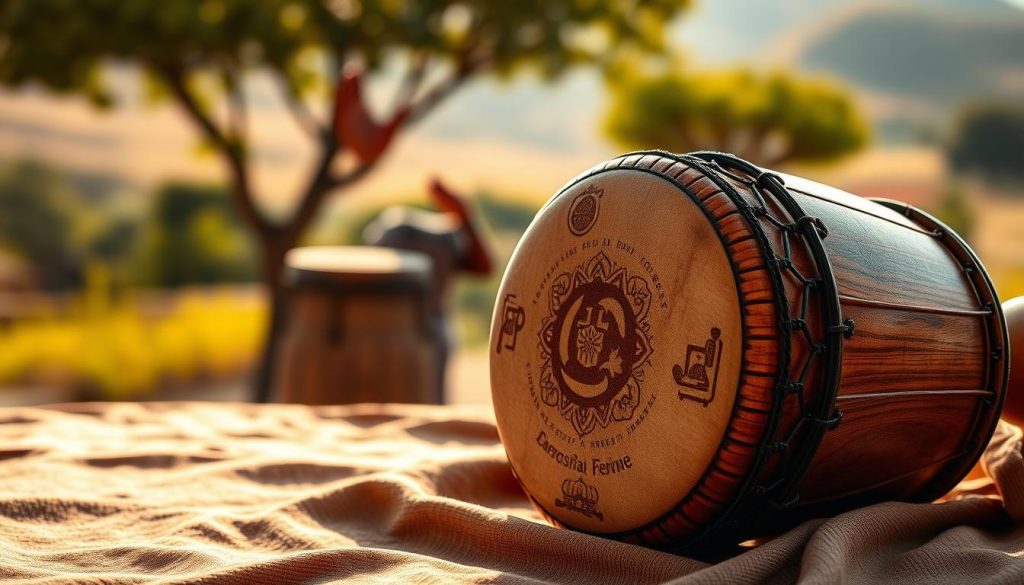
In African cultures, musicians who play this instrument have distinctive names. Terms such as djembefola and djembéfoli carry meaning and reflect the depth of West African musical tradition.
Traditional Terms: Djembefola and Djembéfoli
A djembefola is a master percussionist and a guardian of rhythms. Recognized for their command of the djembe, this musician embodies a living connection to their community’s traditions and stories.
Across West Africa, the djembefola has a central role at ceremonies and gatherings. Their mastery of rhythm brings energy and depth to social events.
Modern Expressions and Regional Usage
Outside Africa, people often say djembe player or African percussionist. These expressions can describe musicians at any level, from beginners to professionals. The choice depends on the cultural and geographical context.
Whatever the term, these percussionists share a passion for the instrument. Their commitment to music crosses borders.
The Musician’s Cultural Role and the Passing Down of Knowledge
Djembefolas play an essential role in passing down traditions, stories, and values through drumming. In doing so, they sustain a centuries-old musical heritage and enrich their communities’ culture.
Knowledge is often passed informally from master to student. This oral tradition crosses generations and keeps African culture alive.
Whatever they are called, djembe players bring invaluable rhythmic richness to the international music scene. They play a vital role in sharing African music and traditions.
| Term | Description |
|---|---|
| Djembefola | Master percussionist and guardian of rhythms, essential at ceremonies. |
| Djembéfoli | Musician specializing in the instrument and in passing down traditions. |
| Djembe player | A modern expression covering all skill levels. |
| African percussionist | A general term used outside Africa that emphasizes a passion for music. |
How Does a Djembe Work? How It Produces Sound
A djembe’s voice comes from the interaction of several elements. Each component plays a crucial role in creating the rich and varied sounds this percussion instrument can produce.
The Central Role of the Shell
Carved from a tree trunk into a goblet shape, the shell is at the heart of the instrument. Its shape amplifies vibrations from the stretched drumhead and projects sound with remarkable power. This makes the djembe one of the loudest drums.
The Stretched Drumhead: Vibration and Tone
The drumhead, often made from goatskin, is the instrument’s vibrating surface. When struck, it generates sound waves that resonate inside the shell. Greater tension produces a higher pitch; less tension produces deeper, lower sounds.
Why Tension Ropes Matter for Pitch
Tension ropes, usually made from nylon, are essential for adjusting the djembe’s pitch. By changing the tension of the drumhead, a percussionist can directly shape its sound and gain considerable freedom of musical expression.
Playing Techniques and a Variety of Sounds
Experienced percussionists use a range of striking techniques. They play with their hands, fingers, and palms to produce sounds ranging from deep bass to piercing highs. Gentle touches and firmer strikes create rhythmic and melodic nuances that give this instrument its expressiveness.
How Openings in the Shell Affect Resonance
Some rare djembes have openings in their shells. These holes let sound vibrations escape in a controlled way, changing the resonance and contributing to the instrument’s tonal richness.
The shell, drumhead, tension ropes, and playing techniques work together to give the djembe its exceptional range of sound. Mastering these elements allows percussionists to express a broad range of emotions through music. Understanding how the djembe works helps us appreciate the depth and complexity of this African musical instrument, which continues to fascinate musicians around the world.
What Materials Are Used to Make a Djembe?
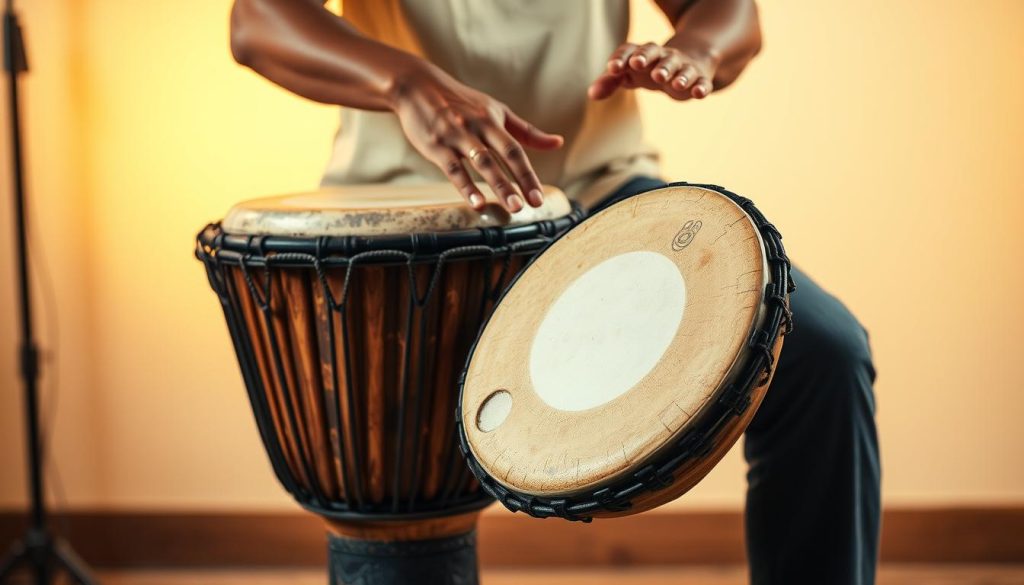
A djembe is made from carefully selected materials that affect both its appearance and its sound. Two principal elements make up the instrument: the wooden shell and the drumhead. Each is essential to the rich variety of sounds it can produce.
Wood Species and Their Acoustic Qualities
The choice of wood has a major effect on a djembe’s sound. Some of the most valued species include:
- Mahogany: known for its warmth and depth of sound.
- Doussie: valued for its durability and strong projection.
- Iroko: produces a clear, balanced sound.
- Lenke: known for its density and powerful sound.
- Djabara: produces softer, warmer tones.
Each type of wood affects the warmth, depth, and resonance of the sound, making every djembe unique.
Natural Drumheads and Synthetic Alternatives
Traditionally, the drumhead is made from goatskin, valued for its resonance and durability. It gives the instrument an authentic tone. Other options include:
- Antelope hide: often chosen for its lightness and flexibility.
- Cowhide: used by some makers to achieve a more powerful sound.
- Synthetic drumheads: suitable for heavy use or varied climates.
The quality of the drumhead directly affects the richness of the harmonics and the strength of the resonance. A high-quality head produces a warm, complex sound.
Tension Ropes: Materials and Effects on Sound
Tension ropes, usually made from nylon or plant fibers, are crucial for tuning and for keeping the drumhead taut. They allow precise adjustments that affect the djembe’s sound.
Traditional Craftsmanship and Contemporary Choices
Traditional craftsmanship is central to making an authentic djembe. Passed down through generations, these skills make each instrument unique. Today, musicians can also choose contemporary models made in keeping with tradition or using modern shell materials such as plastic or aluminum.
Wood and animal hide are natural materials that develop a patina over time. This adds to each djembe’s character and authenticity.
Choosing the materials carefully is essential to making a quality instrument. Together, wood and hide make the djembe an exceptional drum appreciated across the world and through the ages.
How Loud Is a Djembe?
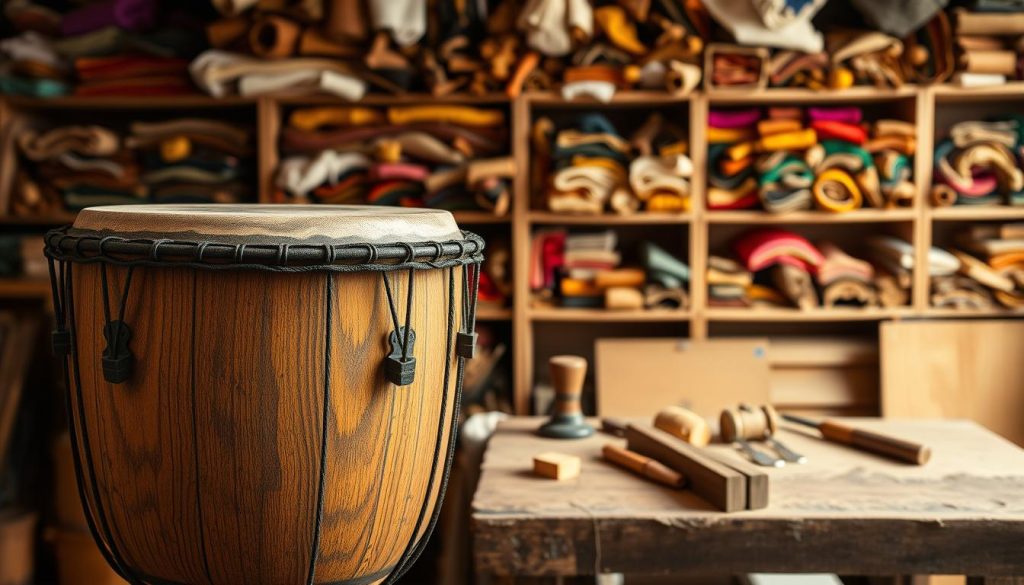
A djembe’s volume can vary considerably. In most situations, this instrument can produce sounds measuring 60 to 100 decibels. The loudest models can reach 105 decibels, exceeding the noise of a lawn mower.
The instrument’s size has a major effect on its volume and tone. Concert djembes taller than 60 centimeters have large shells that enable them to produce powerful sound. Smaller models, measuring 15 to 20 centimeters, produce softer, subtler tones.
How Size Affects Volume and Tone
A djembe’s dimensions directly affect how well it projects sound. A large djembe can create stronger vibrations, while a smaller one offers more delicate nuances. This range lets percussionists adapt their playing to the setting and audience.
How Playing Technique Affects Volume
A musician’s striking technique also affects volume. The force and angle of each strike, along with hand placement on the drumhead, shape how loud the sound is. Experienced percussionists can shift from a soft, muted tone to a powerful, driving rhythm with a single stroke.
The Effects of Materials and Playing Environment
The wood used to make a djembe, such as lenke, plays an important role in sound projection. Its density gives the drum strong resonance. The setting also affects how loud it seems. Outdoors, sound spreads more freely; in an enclosed space, reverberation can make it seem louder.
Typical Dynamic Range and Practical Tips
Musicians should choose a djembe size that suits where they will play and the volume they want. Its dynamic range makes it a musical instrument suited to many settings, from intimate drum circles to large concert stages.
Learning to control volume is part of mastering this instrument. Every djembe has its own voice, shaped by its size, materials, and the player’s technique. To learn more about its characteristics, read this article.
Conclusion
Beyond its beauty, the djembe symbolizes the spirit of West Africa. This percussion instrument is much more than a drum: it embodies a rich tradition with a long history and deep cultural meaning. You have discovered its essential components, its history, and its role in communities.
Learning to play the djembe is a rewarding adventure. It develops musical creativity and a sense of rhythm. The size of the instrument matters because it directly affects the sounds it produces. For a quality djembe, consider a specialist store such as Instruments du Monde, which offers a wide selection of authentic instruments.
As you begin learning, you will embark on a fascinating musical journey. Thanks to its versatility, the djembe continues to attract musicians around the world. It is an essential instrument for anyone wishing to explore African rhythms.