
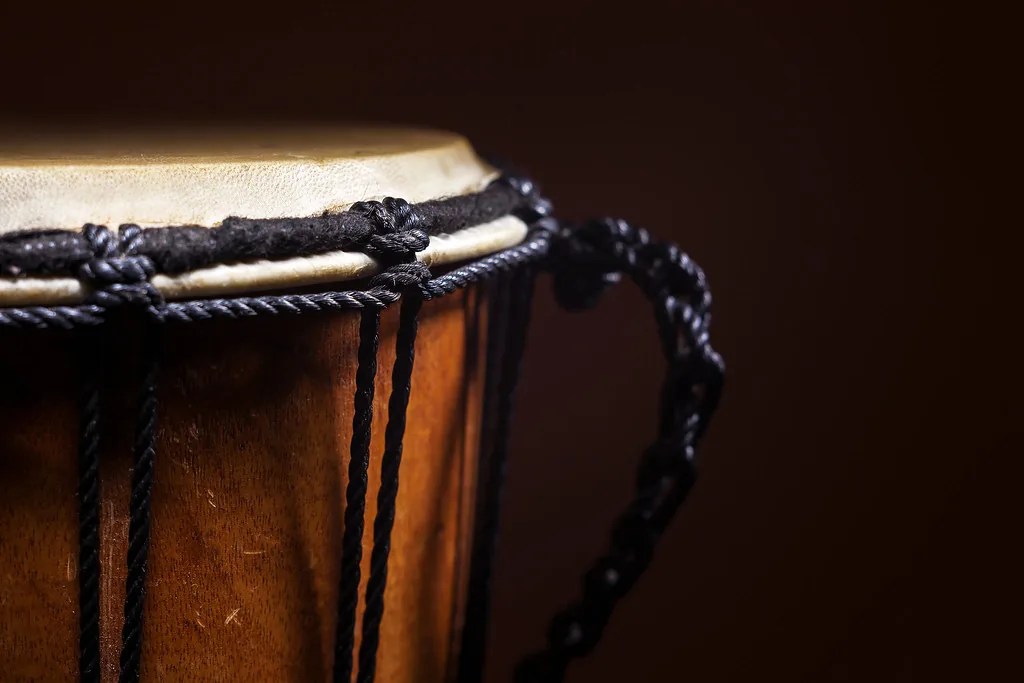
The djembe is a fascinating instrument that opens the door to African music. It is an ideal introduction to percussion. To get started, it is essential to choose rhythms that suit your level. This helps you build a solid foundation in striking techniques and coordination.
Traditional foundations, such as dununba and sangban, offer an excellent starting point. In fact, 70% of new musicians master three rhythmic patterns in just two months of regular practice. Online resources, such as video tutorials and active communities, make it easier to learn on your own.
This guide will take you step by step from buying your first instrument to mastering rhythmic sequences. You will also discover practical tips for improving your technique while having fun.
Why choose the djembe as your first instrument?
Choosing the djembe as a first instrument is a wise decision. This fascinating instrument is emblematic of West Africa. It offers an ideal introduction to the world of percussion. Its accessibility makes it a great choice for anyone beginning their musical journey.
The djembe stands out for its cultural richness. It carries Manding traditions passed down from generation to generation. Playing connects you with centuries of history. This enriches the learning experience.
The djembe’s accessibility and cultural richness
The beauty of the djembe lies in its accessibility. It takes little technique to produce harmonious sounds. This lets beginners express themselves quickly. Unlike some other instruments, it does not require complex sheet music at the outset.
Benefits of the djembe for beginners
There are many benefits. The instrument’s versatility lets you play seated or standing with a harness. It suits all settings, indoors and outdoors. Beginners often notice rapid progress in their playing.
The benefits of rhythmic practice
Playing the djembe benefits both body and mind. It improves motor coordination and develops reflexes. Playing the djembe is also an excellent way to reduce everyday stress.
Playing with other musicians gives you a shared musical experience. It creates a sense of belonging to a community. Online resources, such as video tutorials, make it easier to learn on your own.
| Aspect | Djembe | Other instruments |
|---|---|---|
| Accessibility | Easy to play | More complex technique |
| Cultural richness | African traditions | Varies by instrument |
| Versatility | Seated or standing | Often fixed in place |
| Benefits | Coordination, stress reduction | Vary |
Choosing your first djembe and essential accessories
Choosing your first djembe carefully can transform your musical practice. Selecting a suitable instrument is crucial to a positive learning experience. Several factors matter, including size, materials, and the accessories you need.
Size and material criteria for beginners
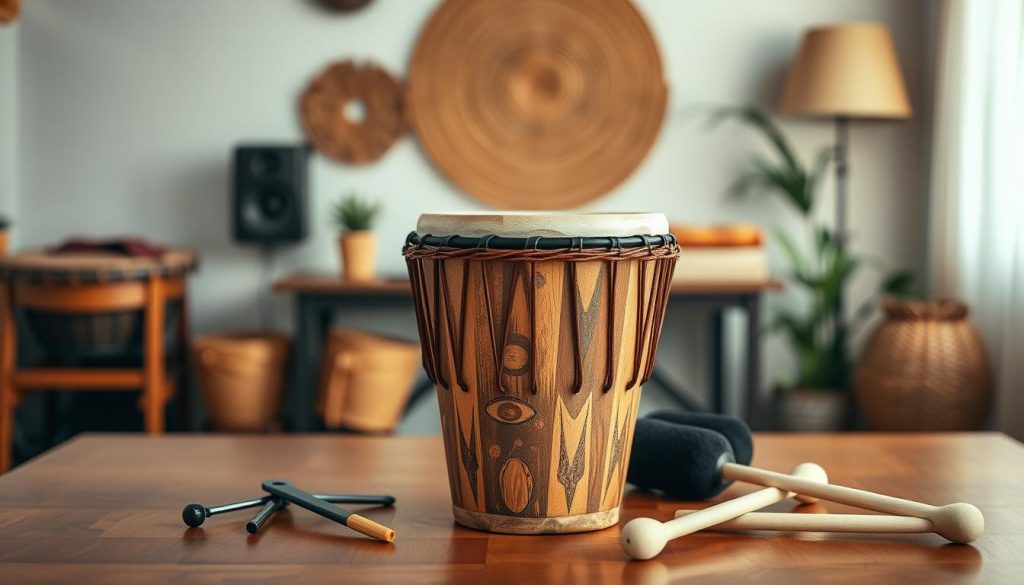
The ideal diameter for a beginner is between 30 and 35 cm. This size strikes a good balance between portability and a rich sound. For materials, you can choose between:
- Solid wood (iroko, lenke, or teak): it produces a warm, lasting sound, but costs more and is sensitive to moisture.
- Synthetic models: they are lightweight, durable, and often less expensive, but their sound is less rich.
It is essential to test the balance between low and high notes before buying. This will help you make sure the instrument meets your expectations for sound.
Essential accessories for getting started
To get the most from your instrument, a few accessories are essential:
- A moisture-resistant cover to protect your instrument.
- Adjustable straps for playing comfortably while standing.
- A metronome for practicing your tempo accurately.
A recommended starter kit also includes a sturdy carrying case, a spare drumhead, and a learning guide to help you progress methodically.
Budget and quality: how to make the right choice
Plan to spend between €150 and €300 on a professional-quality instrument. This budget helps ensure an excellent learning experience. Online stores such as Instruments du Monde offer a carefully selected range of djembes for every level.
A good djembe makes all the difference to your progress and everyday enjoyment. Remember to favor instruments handmade by expert African percussionists who have inherited craftsmanship passed down through generations.
| Criterion | Solid wood | Synthetic |
|---|---|---|
| Sound | Warm and rich | Less warm |
| Durability | Long-lasting | Moisture-resistant |
| Price | Higher | Affordable |
| Weight | Heavier | Lightweight |
Adopting good posture for comfortable playing
To enjoy the musical experience fully, it is essential to use proper posture. Good positioning improves sound quality and comfort during practice. Whether you sit or stand, each position has its own considerations.
Seated position: tips for ergonomic posture
When playing seated, it is crucial to keep your back straight and your shoulders relaxed. Place the instrument between your legs at a 45° angle for optimal resonance. Use a stool without armrests or a firm cushion for greater stability. This encourages a neutral wrist position and reduces the risk of tendinitis.
If you are left-handed, simply reverse your hand positions while following the same alignment principles. Here are some practical tips:
- The drum should rest on a rough surface to prevent it from slipping.
- Your hands should form a triangle on the drumhead, with your wrists straight.
- Keep your arms close to your body without spreading your elbows.
Standing with a harness: mobility and comfort
When standing, adjust the harness so the drum sits at navel height, ideally with a crossed strap. Remo offers ergonomic models that provide excellent comfort. Make sure the instrument’s weight is supported by your shoulders and waist. Keep your feet firmly planted for optimal control as you move.
Testing your posture for 5 minutes without playing lets you check your comfort before a session. This helps prevent pain and makes playing more enjoyable.
Tips for avoiding fatigue and pain
To avoid fatigue, alternate between seated and standing positions. This varies the demands on your muscles and helps prevent tension from holding a static posture for too long. Remember to warm up and loosen your wrists and fingers before each session.
Every percussionist should adapt their posture to their body. Finding the position that suits you best is essential for playing comfortably and expressing yourself musically.
| Position | Benefits | Tips |
|---|---|---|
| Seated | Comfort and stability | Use a stool without armrests |
| Standing | Mobility and freedom of movement | Adjust the harness to the right height |
| General | Pain prevention | Test your posture before playing |
Basic striking techniques to get started
Mastering striking techniques is essential for any musician who wants to improve. They let you produce a variety of sounds and enrich your playing. Here are three fundamental techniques to explore.
The bass stroke: producing a deep, low sound
The bass stroke involves striking the center of the drumhead with your whole palm and your fingers together. Let your hand rebound immediately to produce a deep, warm sound. Keeping your wrists relaxed is crucial to avoiding muscle tension.
One useful exercise is to alternate your right and left hands for 15 minutes in front of a mirror. This lets you check your finger position and adjust your technique.
The tone stroke: mastering the middle note
The tone stroke is made by striking the drumhead with your fingers slightly curved and held close together. This technique produces a clear, balanced sound corresponding to the middle note that is essential in African rhythms.
Avoid stiffening your fingers. Using moisturizer after sessions can help prevent calluses and keep your hands supple.
The slap: producing a sharp, percussive sound
The slap is a technique in which your fingers spread to about 30° to produce a crisp, bright sound. The drumhead must vibrate quickly to achieve this characteristic percussive tone.
To master the slap, start slowly to refine your striking angle. Then gradually increase your speed once you have the technique down.
Practical exercises for each technique
For each technique, practice progressively longer sequences and focused repetitions. A mirror can help you correct your hand and finger positions as you play.
One useful method is to analyze your progress with a spectrogram. It lets you see the frequencies produced by each type of stroke.
Remember to moisturize your hands after each session. This keeps your skin supple and helps prevent chapping or pain from repeated strikes.
Mastering these three basic techniques (bass, tone, and slap) is fundamental to learning rhythms with confidence and progressing to more complex compositions. To learn more, read this article on playing techniques.
Learning easy djembe rhythms for beginners
Exploring simple rhythms is an essential step for any musician who wants to master the djembe. These patterns develop coordination and fluidity while making learning fun and engaging. In this section, we will discover two well-known rhythms: Kuku and Djole.
The Kuku rhythm: coordination and fluidity
The Kuku rhythm is a duple pattern from Guinea. It alternates consistently between the right and left hands, helping develop independence between them. The recommended tempo is 80 to 100 BPM, with 4/4 notation using eighth notes for easier reading.
After two weeks of practice, you can add bells to enrich the sound. Here is a summary of the Kuku rhythm’s characteristics:
| Characteristic | Details |
|---|---|
| Origin | Guinea |
| Tempo | 80 to 100 BPM |
| Notation | 4/4 with eighth notes |
| Variation | Add bells after 2 weeks |
The Djole rhythm: energy and vitality
The Djole rhythm grew out of fishing rituals in Sierra Leone. It combines ease of playing with vitality, creating an energetic musical experience. Its structure has 8 beats, with an accented slap on the fourth beat that gives the rhythm its distinctive feel.
Free backing tracks are available online and are ideal for group playing. Here is an overview of the Djole rhythm’s characteristics:
| Characteristic | Details |
|---|---|
| Origin | Sierra Leone |
| Structure | 8 beats with a slap on beat 4 |
| Backing tracks | Available online |
| Setting | Ideal for drum circles |
Varying your practice with simple tips
To stay motivated, vary your practice. Here are a few tips:
- Gradually increase the length of your sessions.
- Record yourself regularly to assess your progress.
- Add breaks once you have mastered the basics.
Playing the djembe with other musicians also enriches your experience. Learn to synchronize your playing and listen to others to strengthen the group dynamic.
Repetition is crucial when learning simple rhythms. Regular practice helps commit these patterns to muscle memory. Explore online resources, such as video tutorials and free sheet music, to deepen your knowledge.
These two rhythms are a stepping stone to more complex compositions. They open the door to Manding music while giving each learner time to absorb the patterns. For more information about learning the djembe, read this helpful article.

Exercises and practical tips for improving quickly
To master this instrument, a structured practice plan is crucial. Ideally, devote 30 minutes a day to practice. Start with 10 minutes of warm-up using simple strokes to prepare your hands and wrists.
Daily practice plan and stroke sequences
Here is an example sequence to follow:
- Play 4 bass strokes with your right hand, followed by 4 tone strokes.
- Repeat the same sequence with your left hand.
- Then combine 2 right-hand bass strokes with 2 left-hand slaps.
These exercises build dexterity and coordination. Regular practice is best: 15 minutes every day is more beneficial than 2 hours of occasional practice. It helps you develop a deeper connection with the instrument.
Using a metronome to improve your timing
The Pro Metronome app is recommended for working on accuracy. Start at 60 BPM on the main beats during the first week. Move up to 65 BPM the following week and add offbeats. This will help improve your sense of rhythm.
Recording and self-assessment to measure progress
Record your playing sessions in audio or video. This will let you assess your progress objectively. You can identify areas for improvement and adjust your practice plan accordingly.
Use a mirror while practicing to correct your hand position, posture, and striking technique as you play. Keeping a progress journal is also helpful. Write down your goals, achievements, and difficulties to track how your skills develop.
Finally, set clear short-term and long-term goals. You might aim to learn a specific rhythm or increase your playing speed. Explore different musical styles and techniques to broaden your experience.
For more learning tips, read this helpful article.
| Aspect | Details |
|---|---|
| Practice duration | 30 minutes a day |
| Warm-up | 10 minutes of simple strokes |
| Stroke sequences | 4 bass strokes + 4 tone strokes, then the left hand |
| Metronome use | Pro Metronome, increasing the tempo in stages |
| Recording | Audio and video for self-assessment |
Playing the djembe at home without disturbing others
Practicing this instrument at home can be challenging, especially in a city. However, there are ways to enjoy your passion while respecting the people around you. Here are some practical tips for playing without disturbing others.
Sound-dampening techniques
One effective method is to place a microfiber towel over the drumhead. This reduces vibrations and lowers the volume by 60% while retaining the feel of the strokes. You can also invest in foam dampeners, which cost between €20 and €50, or use rubber covers for better bass reduction.
For those looking for a modern option, the Roland electronic djembe is an excellent solution. Although it costs more (around €300), it lets you play with headphones and offers exceptional sound quality without disturbing anyone.
Choosing suitable practice times
Timing matters. Favor periods between 2 p.m. and 6 p.m., when general activity naturally masks sounds. This increases tolerance for noise and lets you play with greater peace of mind.
Instrument options and dedicated spaces
If you need a soundproof space, consider renting a shared studio. For around €15 an hour, you can use a space dedicated to music without volume restrictions.
For children, instruments such as electronic drum kits with volume controls are excellent alternatives. They let children practice rhythm without creating a noise nuisance.
Finally, communicate with your neighbors. Tell them about your musical plans, suggest specific practice times, and invite them to a short demonstration. This encourages a positive relationship and avoids misunderstandings.
| Aspect | Details |
|---|---|
| Sound-dampening technique | Microfiber towel |
| Cost of dampeners | €20 to €50 |
| Electronic djembe | Roland, starting at €300 |
| Recommended times | 2 p.m. to 6 p.m. |
| Studio rental | About €15 an hour |
Conclusion: begin your rhythmic journey today
Set off on a rhythmic journey with the culturally rich djembe. This guide has covered the key steps for getting started: choosing a suitable instrument, adopting good posture, and mastering basic striking techniques. By putting these tips into practice, you can improve quickly and enjoy a rewarding musical experience.
Take inspiration from Soungalo Coulibaly, who went from enthusiast to recognized master. Join free introductory workshops during the Journées de la Culture, led by professionals such as Mélissa Lavergne. Remember that the quality of your instrument matters; a good djembe makes all the difference.
Explore online resources and virtual lessons to deepen your learning. Think of the djembe as both an instrument and a way to support well-being and cultural connection. Every great percussionist started with a simple first rhythm, so begin today and enjoy your passion!