
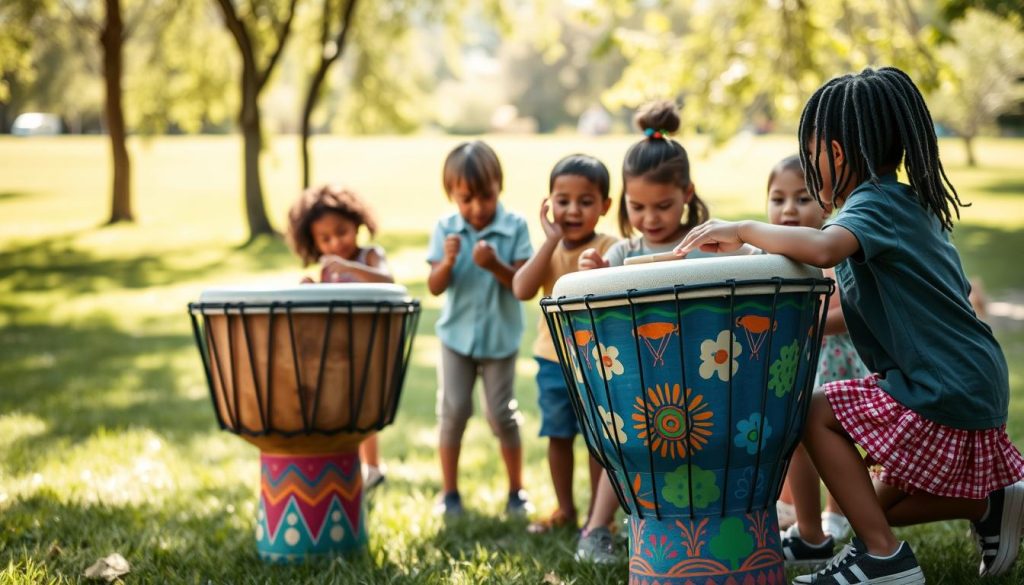
The djembe is a drum from West Africa that is ideal for introducing children to music. Choosing the right model is essential to sparking their passion for music. It should meet specific requirements for size, weight, and materials.
In this article, we will look at how to choose the right model from the many options available. Parents should consider their child’s build to ensure comfortable playing. Age also matters when selecting a suitable instrument.
We will cover the different types of djembes, the importance of size, the materials used, and the price ranges. Our aim is to help parents make an informed choice with advice from experts and the experiences of musicians.
Introduction to the Djembe for Children: An Instrument That Inspires a Love of Music
The magic of the djembe lies in its ability to inspire a love of music in children. This iconic instrument from West Africa is far more than a drum. It embodies a rich tradition and a living culture worth sharing with new generations.
Let’s explore the different sides of this fascinating instrument:
- Origins and symbolism: Originating in West African villages, the djembe is a universal symbol of rhythm and freedom.
- Handcrafted construction: Traditionally, it is carved from a single piece of solid wood, such as mahogany, and fitted with a natural skin.
- Cultural richness: Used in ceremonies, the djembe is an instrument of communication and celebration.
- Benefits for children: Introducing children to African percussion helps develop hand-eye coordination and a sense of rhythm.
- Fun to play: Children can quickly produce sounds on a djembe, which builds their confidence.
- Accessibility: Beginners do not need to read music, making it an ideal choice for early musical exploration.
- Social connection: Playing the djembe encourages listening and participation in a group.
- Variety of rhythms: Children can discover and reproduce many African rhythms, enriching their musical knowledge.
Different Types of Djembes: Traditional and Modern
There is a wide variety of djembes available, each with its own features and advantages. Traditional and modern models differ mainly in their materials and how they are made.
Traditional Djembes: Solid Wood and Natural Skins
Traditional djembes are often handmade by experienced craftspeople. They are carved from solid wood, such as mahogany or iroko, and fitted with a natural goat or buffalo skin. This craftsmanship gives them a warm, authentic sound.
The sound of these instruments is impressive. They produce deep bass notes, clear midrange tones, and sharp, precise slaps. Their natural resonance supports complex rhythms.
Modern Djembes: Synthetic Materials and Practical Use
Modern djembes are often mass-produced from synthetic materials such as ABS plastic or fiberglass. These models have pre-tensioned synthetic heads and rod-tensioning systems that make them easier to adjust.
Modern djembes offer many advantages, especially for young musicians. They are lighter and resist impacts and moisture. Their tuning remains stable as the weather changes. They are therefore a practical choice for children, who can handle them easily.
Advantages and Disadvantages for Children
When choosing a djembe for a child, it helps to weigh the advantages and disadvantages of each type. A plastic djembe is lighter than a solid-wood model, making it easier for younger children to handle.
In terms of sound, traditional djembes offer greater harmonic richness. Modern models produce a more consistent sound, although it is less rich. For very young children, a modern djembe is recommended for its light weight and durability.
In short, a modern djembe is often the best option for children under six. For older children, a small traditional model can offer an authentic playing experience while still fitting their build.
How Size Affects the Choice of a Djembe for a Child
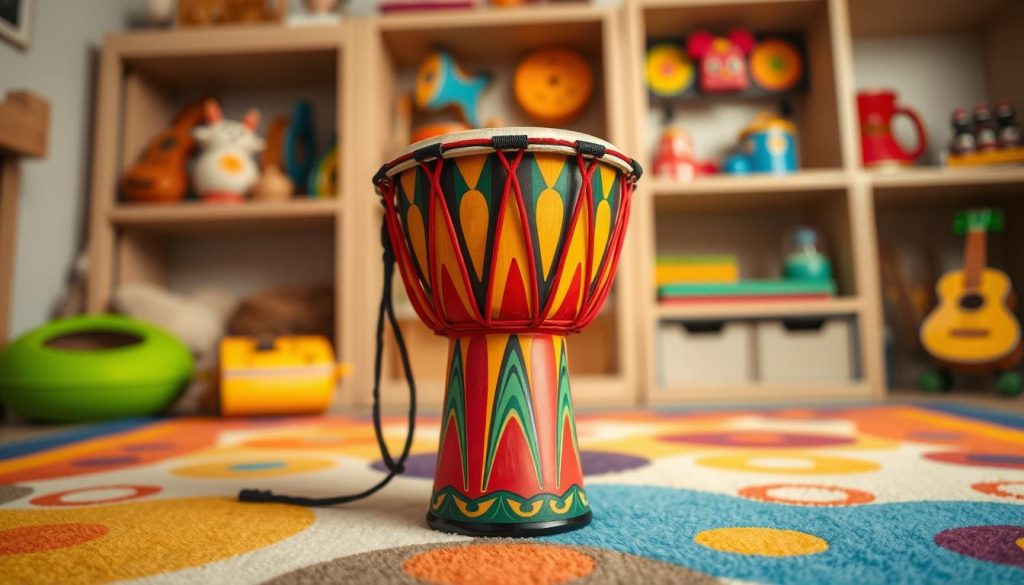
Size is a key factor when choosing a djembe for a young musician. It affects playing comfort, sound quality, and ease of transport. It is therefore essential to consider it before buying.
Recommended Sizes by Age and Build
For children aged three to six, a djembe between 30 and 40 cm tall is ideal. This size lets younger children play comfortably. For children aged six to ten, a model between 40 and 50 cm is a good choice.
The child’s build is important too. Arm length and height affect whether they can play without tiring. A djembe that is too heavy or too large can quickly discourage them.
How Size Affects Sound and Handling
The height of a djembe’s shell affects the depth of its sound. Larger models produce richer bass notes, while smaller ones produce higher-pitched sounds. The sound you want should therefore also guide your choice of size.
A wider drumhead also provides a larger playing surface. This makes it easier for beginners to learn different playing techniques and explore a variety of sounds.
Comparing Small and Medium-Sized Djembes for Children
Small djembes, under 40 cm tall, are lighter and easier to handle, making them well suited to very young children. Medium-sized models, between 40 and 50 cm, offer a fuller sound and greater versatility.
A djembe’s weight can also affect the playing experience. An instrument that is too heavy may make it difficult for a child to maintain good posture. Choose a model that suits their strength.
Finally, let the child try different models in a store or workshop if possible. They can compare how each one feels and sounds.
Djembe for Children: Which Model Offers the Right Size and Comfort?
When choosing an instrument for a young musician, size and comfort come first. A suitable model makes playing enjoyable and learning easier. Here are the main factors to consider.
Essential Features of a Child-Friendly Djembe
Consider the following when choosing an instrument:
- Light weight: A lightweight djembe is easier to handle, especially for younger children.
- Proportional size: Its height and diameter should suit the child’s build.
- Drumhead quality: A good-quality head produces a better sound.
- Tuning stability: An instrument that stays in tune makes learning easier.
Recommended Models for Young Children and Preteens
For children aged three to six, a djembe around 40 cm tall is recommended. Here are some models to consider:
| Model | Features | Price |
|---|---|---|
| Meinl Junior Djembe | Compact, pre-tensioned synthetic head, plastic shell | €52 |
| Toca 7″ Color Sound Djembe | Very light, clear sound, ideal for schools | €55 |
| Nino ADJ4-XS Moon Rhythm Djembe | Hand-carved, goatskin head, comfortable to play | €62 |
For preteens aged 10 to 14, a djembe with a diameter of 10 to 12 inches offers a good balance. The Toca TSSDJ-MB Street Djembe 10″ is an excellent choice, combining a powerful sound with easy handling.
Tips to Help Children Hold and Play the Djembe
Teach the child how to position the instrument properly. Here are a few tips:
- Place the djembe between the knees, tilted slightly forward.
- Use a cushion or stand if the child plays while sitting on the floor.
- Make sure the djembe’s height allows the child to strike it naturally.
- Choose a model with rounded edges to help prevent injuries.
With these tips, children can enjoy making music and develop a passion for percussion.
How Materials and Quality Affect the Choice of a Djembe for a Child
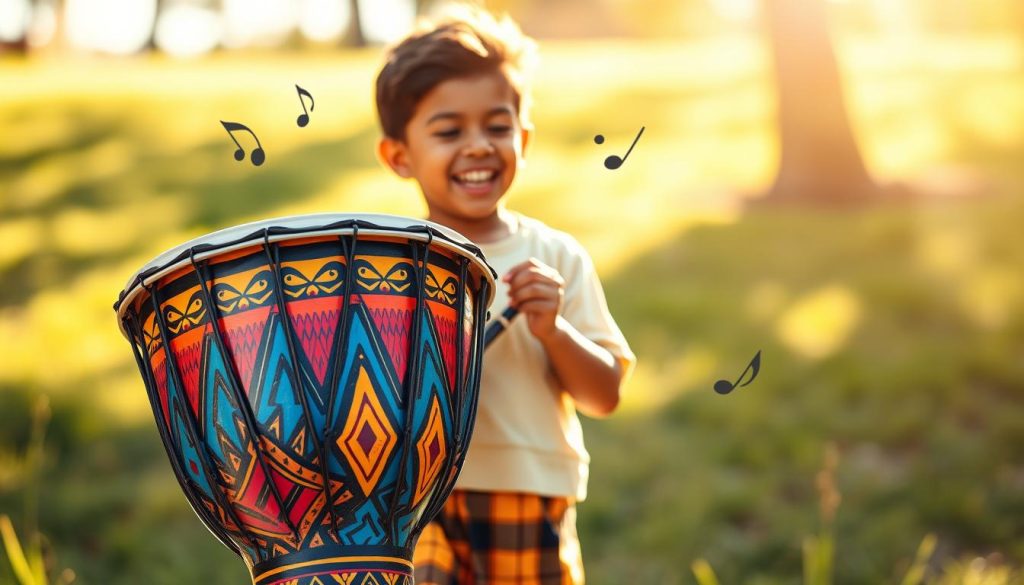
Materials matter when choosing an instrument for a young musician. The quality of the wood and drumhead affects the djembe’s weight and sound. Understanding these features helps you make a better choice.
How Mahogany, Plastic, and Fiberglass Affect Weight and Sound
Solid mahogany wood is often favored for its rich harmonics. It produces warm tones and deep resonance. ABS plastic and fiberglass models are lighter and well suited to children. These modern materials also allow for colorful, appealing instruments.
Although plastic produces a more neutral sound, it is a practical option. Synthetic djembes often resist impacts and moisture better, which is a considerable advantage for children.
Drumhead Options: Natural Goatskin or Synthetic
Natural goatskin heads are known for their lively tone. They offer expressive sound and respond to changes in how the drum is struck. However, they need regular care and are sensitive to moisture.
Synthetic heads, by contrast, hold a steady tension and produce a consistent sound in different weather conditions. They rarely go out of tune and stand up well to energetic playing.
Durability for Children’s Use
Plastic instruments with synthetic heads are among the most durable options for children. They withstand the sometimes rough handling of young musicians. For a child under eight, a synthetic model is therefore a sensible choice because it is sturdy and easy to maintain.
For a keen preteen, a mahogany djembe with a goatskin head can offer a richer, more authentic musical experience. It allows them to explore a wider range of sounds while remaining reasonably durable.
In short, materials and quality make a real difference. Look for a balance of light weight, sound, and durability. For more information about choosing a suitable instrument, read this article on how to choose a djembe.
How Much Should You Budget for a Child’s Djembe?
Setting a budget is an important step when choosing a musical instrument. Djembe prices vary considerably with quality, materials, and construction. Here is an overview of the price ranges to consider.
Small Budget: Entry-Level Djembes for Beginners
With a modest budget of €50 to €100, you can find several entry-level djembes suitable for beginners. These models offer good value and work well as a first instrument.
- Meinl Junior Djembe at €52: compact and sturdy, ideal for very young children.
- Toca 7″ Color Sound at €55: lightweight with a clear sound, ideal for schools.
- Afroton AD 006 at €57: a hand-carved African djembe with a natural goatskin head.
Midrange Budget: Quality, Durability, and Balance
For families who want to spend a little more, the €100 to €300 midrange offers higher-quality djembes. Often handmade, these instruments have a richer sound and are more enjoyable to play.
Here is one example in this range:
- Toca TSSDJ-MB Street Djembe 10″ at €119: made from mahogany with a goatskin head, it offers power and expression.
Investing in a Handcrafted or Premium Djembe for a Child
Premium djembes are also available for families who want to invest more. Instruments such as the Meinl JD10DA Jumbo Djembe at €209 offer exceptional sound. Consider, however, whether such an investment suits the child’s needs.
A premium djembe can be an excellent choice for a child who is already passionate about music and practices regularly. For a beginner, a midrange model often offers a better balance.
Before you start looking, set a maximum budget. Consider the child’s age and interest in music. Price is not everything: a well-chosen €60 djembe can inspire a child’s love of music if it is well made and fits their build.
Essential Accessories for Your Child’s Djembe
Some accessories protect the instrument and make it more comfortable to play. Here are the ones to consider:
Straps and Protective Bags for Easier Transport
A comfortable carrying strap helps children move the djembe safely. It distributes the instrument’s weight and makes trips to lessons or workshops easier. A protective bag shields the instrument from weather, dust, and knocks. Available in different sizes, these bags help a djembe last longer, especially if it is wooden and has a natural head.
Replacement Heads and Simple Maintenance
Natural and synthetic djembe heads can wear out over time. Having replacement heads on hand helps avoid interruptions to practice. Teach the child to wipe the head after each use and check the rope tension. Storing the instrument in its bag after each use also helps protect it.
Stands or Cushions for Greater Comfort
For younger children, a floor cushion or small stand can make playing more comfortable. It helps keep the djembe at the right height without effort and makes learning easier. Some manufacturers, including Meinl, offer sets with a djembe and bag, which can be a practical, economical option for parents.
A djembe tuning tool can also help adjust the head tension, while a soft cloth is useful for everyday care of the wood and head. Choose sturdy straps and bags that fit the instrument’s weight and dimensions for safe, long-lasting use.
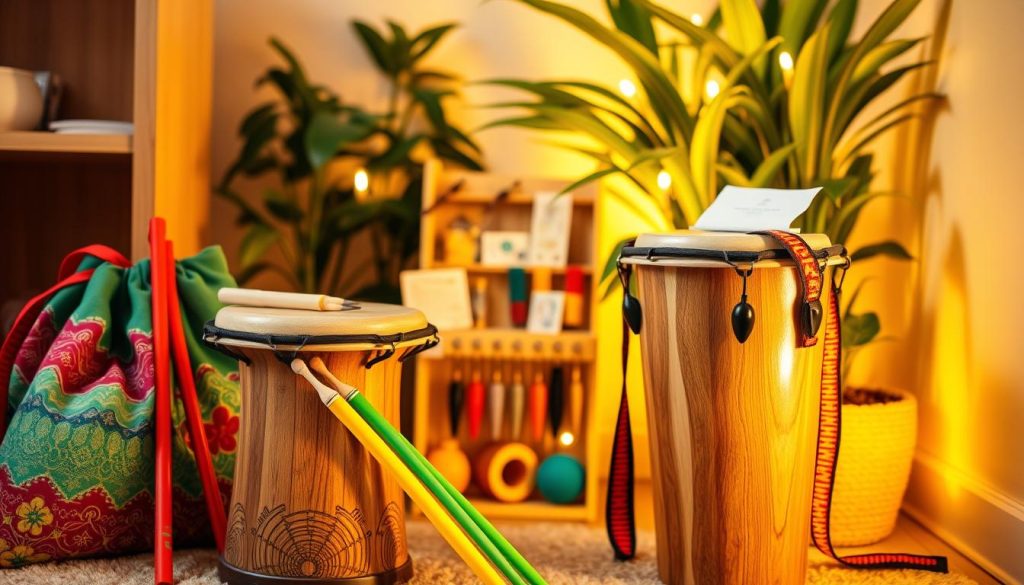
Practical Tips for Choosing Your Child’s First Djembe
Before making your choice, ask yourself a few questions. What musical goal do you have for your child? You might simply want a fun introduction, or you might plan for more focused learning with regular lessons. Your goal will influence the model and budget you choose.
Set a Clear Musical Goal
A clear goal helps guide your choice. If the child simply wants to have fun, a light, colorful djembe will suit them well. If they want to learn more seriously, a higher-quality model will be more appropriate.
Test Size and Weight in a Store or Workshop
There is no substitute for trying an instrument. Visiting a specialist store or attending a percussion workshop lets the child try several models and find the best fit.
While they try it, check their posture. The child should be able to hold the djembe comfortably between their knees, with their arms slightly bent and their hands naturally reaching the center of the head.
Make Safety and Enjoyment a Priority
Safety should come first. Choose a djembe with rounded edges, no splinters if it is wooden, and a non-toxic finish if it is painted or colored. An instrument that is too heavy or difficult to play can discourage a child. Choose one that makes them want to play from their first few strikes.
Appearance matters too. Children are often drawn to colorful djembes or ones decorated with African patterns. An instrument they enjoy looking at can strengthen their motivation and attachment to it.
For more information about choosing a suitable instrument, read this article on how to choose a djembe.
In short, a child’s first djembe should fit them and let them progress at their own pace, enjoying music without unnecessary difficulty or frustration.
Conclusion: Choose a Djembe That Sparks Your Child’s Musicality
Choosing a suitable instrument helps stimulate a child’s musical creativity. The djembe can become a valued companion for self-expression and exploring captivating rhythms. As this article has shown, size and materials are central to a rewarding playing experience.
Accessible and intuitive, this instrument is ideal for nurturing children’s love of music. By considering weight, budget, and accessories, you can make an informed choice.
The best djembe is one that makes a child want to play and explore. Visit specialist stores or attend workshops to learn more. You now have the knowledge to introduce your child to the fascinating world of African percussion.
Whatever model you choose, share the joy of music with your child and support them as they discover the rhythms that inspire them.