
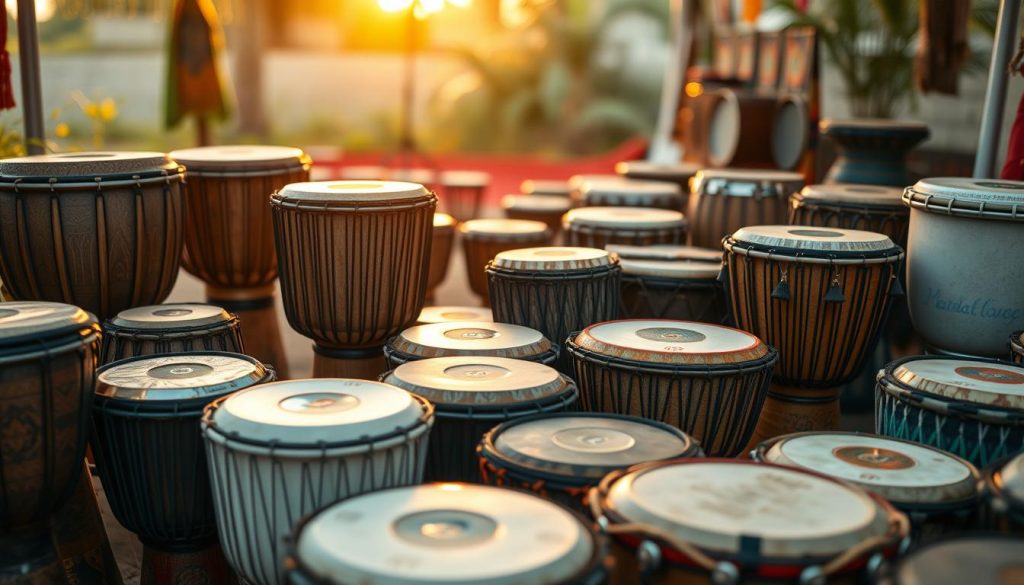
The djembe is an iconic West African instrument, originating in countries such as Guinea, Mali, Burkina Faso and Côte d’Ivoire. It is known for its powerful sound and rhythmic range. For beginners, choosing the right size is essential to an enjoyable musical experience.
In this article, we explore the factors to consider when choosing a djembe: your build, musical style and, of course, budget. Choosing an instrument of the right size helps you make steady progress as you learn.
Read on to discover what you need to make your choice. You’ll learn how size affects sound, which materials are available and much more. Get ready to explore the fascinating world of African percussion!
Why does djembe size matter when you’re starting out?
The djembe is an iconic instrument at the heart of African musical traditions. Its size plays a crucial role in playing comfort and sound quality. For beginners, a standard djembe between 50 and 60 cm tall is often recommended. This size makes it easier to learn basic techniques.
It is important to consider the player’s build. Smaller players or those with shorter arms may find a slightly smaller djembe more suitable. It makes the different parts of the instrument easier to reach and improves playing comfort.
Size also affects playing posture. Good posture is essential for coordinating hand movements and producing the three fundamental sounds: bass, tone and slap. An instrument that is the wrong size can make learning harder and slow a percussionist’s progress.
A poor choice of size can have unpleasant consequences: excessive fatigue, difficulty reaching the centre of the drumhead and poor sound quality. It can also lead to frustration during practice.
It is also important to match the djembe’s size to the style of music you intend to play. Whether you play traditional African rhythms, jazz or contemporary music, the dimensions that suit you may vary with the sound you want.
Before buying, check that the instrument’s size suits your build. Sit with the djembe between your legs and see how comfortable it feels to play.
Different types of djembes and materials: traditional or modern?
In the world of percussion, choosing a djembe often comes down to the materials used. There are two main categories: traditional handcrafted models and modern, mass-produced models made with synthetic materials.
Traditional wooden djembes with natural drumheads
Traditional djembes are generally carved from solid wood such as mahogany, iroko, lenke, dugura or cassia. These woods are valued for their density and exceptional sound quality. The drums are often fitted with an animal skin, usually goatskin, carefully tensioned to produce an authentic sound.
Before buying, check that the bowl has no cracks and that the drumhead is taut, with no holes or defects. A quality goatskin head is essential for producing a rich, warm sound.
Modern djembes made from synthetic materials
Modern djembes, by contrast, are often made from ABS plastic or fiberglass. These materials offer several advantages, including greater resistance to changes in climate and humidity. The instruments are also generally lighter and more affordable, making them appealing to beginners.
Modern models may also include electronic technology that amplifies the sound and produces a range of sounds unavailable on traditional instruments. However, these innovations can change the authentic sound you might expect from a traditional djembe.
How material affects sound quality
Material has a significant effect on sound quality. Solid wood djembes produce deep bass and a rich sound, while synthetic models tend to sound more uniform. For a percussionist, depth and resonance are essential to musical expression.
The table below compares the characteristics of the two types of djembe:
| Type of djembe | Materials | Sound quality | Weight | Price |
|---|---|---|---|---|
| Traditional | Solid wood, goatskin | Rich, deep sound | Heavy | High |
| Modern | ABS plastic, fiberglass | More uniform sound | Light | Affordable |
Ultimately, the choice between a traditional djembe and a modern model depends on your musical goals, budget and interest in tradition. Both types can suit beginners, and each offers a different playing experience.
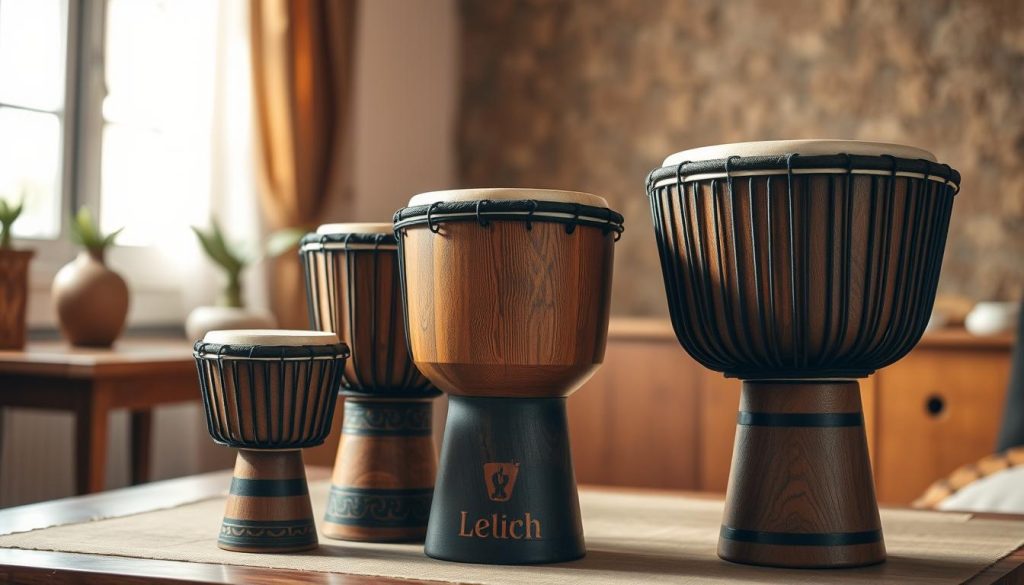
How does djembe size affect sound and playability?
The djembe’s range of tones is closely linked to its size and characteristics. Sound depth is one of the most noticeable differences. Large models, measuring 60 cm or more, produce rich, deep bass. Smaller ones produce higher-pitched sounds.
How instrument size affects sound depth
A good djembe is generally around 60 cm tall and 34 cm in diameter (at least 33 cm without the rings). These dimensions can produce a balanced sound. Larger djembes, with a greater drumhead area, offer stronger resonance. They also respond more readily to strikes.
Djembe projection and resonance
Instrument size also affects sound projection. Larger djembes carry farther, making them suitable for outdoor and group performances. Resonance is especially valuable to percussionists who want to explore complex rhythms.
Portability and ease of playing: finding a balance
Smaller models are lighter and easier for travelling musicians to carry. Large djembes, on the other hand, can weigh more than 10 kilograms and be harder to transport. It is therefore important to balance the sound you want with ease of playing.
A medium-sized djembe (40 to 50 cm) often offers beginners a good compromise. It combines playing comfort with a satisfying sound. Watching online comparisons can help you hear the differences.
What to consider when choosing the ideal size
There is more to choosing a djembe than its appearance; several factors deserve attention. To get off to a good start, assess your build and playing comfort. These factors directly affect your musical experience.
Your build and playing comfort
The player’s size matters. A tall percussionist may choose a standard model of around 60 cm. Smaller players may prefer a more compact djembe, which can help avoid muscle strain and make playing easier.
Try several sizes before choosing. This lets you feel the difference in comfort and hear how the sound varies between models.
Musical style and intended use
Musical style has a significant effect on your choice of size. For traditional African music, a djembe of around 55 cm is often recommended. For genres such as jazz, a larger model may offer deeper bass.
Also consider how you intend to use the instrument. A larger size improves sound projection for outdoor performances. A more compact model may be preferable for indoor playing or frequent travel.
How size affects price and availability
Budget also matters. Large djembes or handcrafted models made from rare woods can cost several hundred euros. Smaller models and those made from synthetic materials are generally more affordable and easier to find.
Set a realistic budget before buying. It will help you focus on the size that best suits your needs.
| Factor | Importance | Effect on your choice |
|---|---|---|
| Build | High | Playing comfort |
| Musical style | High | Desired sound |
| Intended use | Medium | Portability and projection |
| Budget | High | Available models |
Small djembes: compact size, portability and benefits
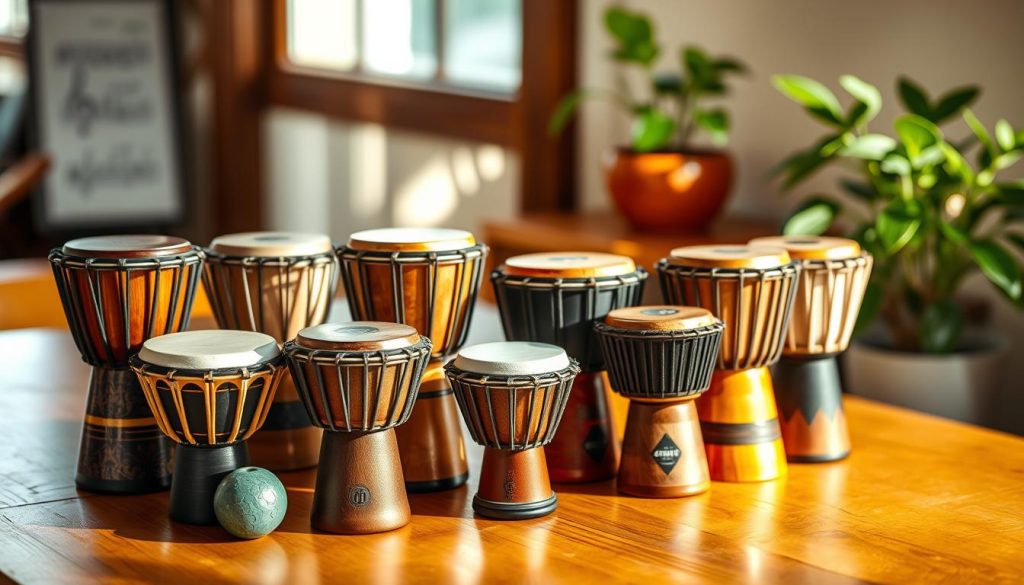
Small djembes, generally less than 50 cm tall, are valued for their compact size and portability. These qualities make them an appealing choice for travelling musicians and beginners.
Suitable for beginners and travelling musicians
Their lower weight makes them easy to carry. They fit readily into a backpack, which is convenient for musical trips. For beginners, they offer an affordable introduction to African percussion without a major investment.
Especially suitable for children
Small djembes also suit children. Their reduced size makes them easier to handle and helps young percussionists develop their technique. Children’s models are often 30 or 40 cm tall and are sometimes made from ABS plastic, making them particularly light.
Typical uses and sounds
Despite their compact size, these djembes produce a wide range of sounds, from deep lows to sharp highs. They are often used in music education, schools and music workshops. They also suit improvisation sessions, indoor performances and studio recordings.
When choosing a quality small djembe, check the density of the wood, the thickness and tension of the drumhead, and the strength of the rope. These features contribute to the instrument’s durability and sound quality, even in a compact format.
Large djembes: power, depth and richness of sound
Large djembes, often more than 60 cm tall, are known for their sound depth and resonance. They have broad drumheads measuring around 34 cm in diameter, which produce deep, punchy bass. They are an appealing choice for musicians who want to expand their range of sounds.
Group performances particularly benefit from the power of these djembes. Their volume lets them be heard above other percussion, which is useful for traditional African dance and outdoor concerts. Their striking sound drives the rhythms and creates a festive atmosphere.
Benefits for group and outdoor performances
A large djembe can be a real asset at an outdoor performance. Its ability to project sound over a distance explains why it is often chosen for open-air concerts. Its power also enriches the ensemble.
Weight and transport considerations
However, these instruments can weigh more than 10 kg, making them harder to transport. Consider this before buying a large djembe. A sturdy stand may also be needed to play comfortably.
Care and durability
A larger djembe needs more regular care than a smaller model. This includes replacing the drumhead and maintaining rope tension. These tasks are essential for preserving the instrument’s sound quality. Woods such as lenke and iroko can be exceptionally durable when properly cared for.
If you are considering a large djembe, assess whether you can comfortably handle a heavy instrument. It is also wise to budget for regular maintenance and set aside suitable storage space to protect it when it is not in use.
How do you choose the right djembe size for a child?
Choosing a suitable instrument is essential when introducing a child to music. The djembe is particularly good at sparking young musicians’ interest. Several factors need consideration, however, to make learning rewarding.
Recommended sizes by age and build
For younger children, a djembe 30 to 40 cm tall is ideal. Its smaller size makes it easier to handle and play. It also helps prevent excessive fatigue and poor posture.
Older children can try slightly larger models, provided they can still play comfortably. Match the instrument’s size to the child’s build.
Lightweight materials and suitable models
Children’s djembes are often made from lightweight materials such as ABS plastic. These instruments are easier to carry and designed to withstand energetic use. They also come in bright colours and attractive patterns, making learning more fun.
Making music enjoyable while learning
A small djembe can support learning. A well-sized instrument helps a child develop playing technique, coordination and confidence. Practice sessions become more enjoyable and motivating.
Check the djembe’s build quality too. Make sure the drumhead withstands repeated strikes and there are no sharp edges. This helps ensure a safe and satisfying musical experience.
The djembe also offers many educational benefits. It helps develop a sense of rhythm, improves motor coordination and stimulates creativity. Introducing a child to this percussion instrument is a wonderful way to open a door to the richness of African culture.
How much should you budget for a djembe that suits your needs?
Buying a djembe can be exciting, but it is important to set a budget. Prices vary considerably with size, materials and build quality. There are options for every experience level and budget.
Budget range for beginners
To explore the instrument without spending too much, a budget of €50 to €100 is a good starting point. In this range, you will find entry-level djembes, often made from synthetic materials. Though small, these models offer an accessible introduction to African percussion.
Mid-range and premium options
If you are ready to spend more, a budget of €100 to €300 gives you access to mid-range djembes. Often handmade with reasonably good wood and natural drumheads, these instruments offer better playability and a richer sound.
Experienced musicians or those seeking an exceptional instrument should expect to spend more than €300. Crafted by artisans from selected materials such as lenke or mahogany, these premium djembes offer exceptional sound and striking looks.
How budget affects size and quality
Your budget directly affects the size and quality of the djembe you can buy. Large solid wood models generally cost more because they require more material and craftsmanship. Smaller djembes and those made from synthetic materials are often more affordable.
Set a realistic budget based on your musical goals. A beginner can start with an entry-level djembe to get to know the instrument, then consider a higher-quality model as their interest develops.
Remember to include essential accessories, such as cases, straps and replacement drumheads, in your overall budget. They help protect your instrument and extend its life, but add to the total cost.
Essential accessories for your djembe
To get the most from your djembe, it helps to have the right accessories. They improve the playing experience and help protect the instrument. Here are the essentials.
Carrying straps and protective cases
A comfortable carrying strap is important for transporting your djembe safely. A well-padded strap distributes its weight evenly across your shoulders and helps prevent muscle strain on the way to lessons or performances.
A protective case is useful too. It shields the instrument from weather, dust and knocks. It also helps preserve the wood finish and the tension of the drumhead, extending the instrument’s life.
Replacement drumheads and maintenance
It is useful to keep a replacement drumhead on hand. A djembe’s goatskin head can wear out over time, much like guitar strings. To replace a drumhead, follow these steps:
- Remove the old drumhead.
- Prepare the new skin by soaking it in water.
- Fit the skin over the ring.
- Gradually tighten the rope, which is about 5 mm in diameter.
- Wait until the skin is completely dry before applying the final tension.
Other equipment that makes playing and practice easier
Other equipment can improve your playing experience. A djembe stand, for example, lets you play standing up. Sticks can help you vary the sound. A tuner can also help you maintain appropriate drumhead tension.
Learning materials and audio recordings are excellent tools for improving your command of African rhythms. Choose quality accessories made from durable materials and consider established percussion brands for reliable protection and comfort.
Practical tips for choosing your first djembe
Choosing your first djembe can seem complicated, but a few practical tips make it easier. Start by setting a realistic budget so you can focus on models you can afford.
Set a realistic budget and decide what matters most
Decide on the maximum amount you are willing to spend. This helps avoid disappointment and impulse purchases. Think about your priorities too: do you value sound quality, portability or appearance most? Your answers will guide you towards a djembe that meets your needs.
Try different sizes before buying
Before choosing, try djembes in several sizes. Visit a specialist shop to feel the differences in playing comfort. Listen to how the sound changes and work out which size best suits your build and playing style.
Ask professionals and specialist shops for advice
Expert advice can be valuable. Experienced staff at shops such as Instruments du Monde, which offers more than 50 different djembes, can point you towards models that suit your needs and budget. Ask questions and request recommendations.
Be wary of poor-quality djembes. Choose instruments sold by reputable professionals to avoid badly made models that could spoil your musical experience. Online resources, including comparison clips and tutorials, can also help you refine your choice before buying your first African percussion instrument.
Conclusion: find the right djembe for your musical journey
A djembe is much more than an instrument: it can become a musical companion, a means of personal expression and a gateway to captivating rhythms. Choosing the right size is an important step in your musical journey.
From traditional solid wood djembes to modern synthetic models, there are many options for every musician. Consider your build, musical style and budget to make an informed choice.
To learn more, the Instruments du Monde online shop offers a wide collection of quality djembes. You could even learn to make your own instrument and create a fully personalised African drum.
Begin your djembe journey with confidence and enthusiasm. Whatever you choose, find an instrument that inspires you to play and explore the rich world of African rhythms.