
Comparing two historic brands in 2025 that have shaped the instrument market: that is the purpose of this article. We offer a clear guide to understanding the differences in price, quality, and manufacturing between them.
You will find practical guidance on standout models: Epiphone’s Jack Casady and EB‑0/EB‑3, and Gibson’s Les Paul Bass and Thunderbird. These examples will help you choose according to your style, budget, and intended use, whether in the studio or onstage.
The article explains where these basses are made, how materials and electronics affect their value, and how reliability has evolved since 2019. The analysis considers the French market for both new and used instruments.
Goal: provide concrete guidance for a purchase. We will look beyond the clichés and show how quality has improved at both brands, from premium series to models that offer excellent value for money.
Introduction: two brands, two approaches to bass guitars in 2025
Choosing between these brands often involves a trade-off between prestige and affordability. The central idea is simple: one aims for excellence through manufacturing in the United States, while the other makes similar models more accessible through different production choices.
In short, the premium brand retains American production, thorough quality control (including Plek), and careful factory setups. The second brand, with its own long history, has concentrated production in China or Korea since the 2000s, and its instruments often need an initial setup at the shop.
The key question for buyers is what they actually gain by moving upmarket, and at what price the difference becomes audible and noticeable under their fingers.
- Criteria considered: models, prices, production, woods, hardware, electronics, finishes, quality control, and resale value.
- Perceived quality has improved in recent years; there has been a notable move upmarket since 2019.
| Aspect | Approach | Production |
|---|---|---|
| Positioning | Craftsmanship and premium prestige | Primarily in the United States |
| Affordability | Making familiar models accessible | China and Korea (since around 2004) |
| Quality control | Thorough inspections, Plek | Standard inspection; setups often needed |
To learn more, consult the brand profile, which details the series and the price differences seen in the French market.
Gibson and Epiphone: bass guitars worth knowing
Let’s identify the essential models and what each brings to your playing.
Essential models from the more affordable brand
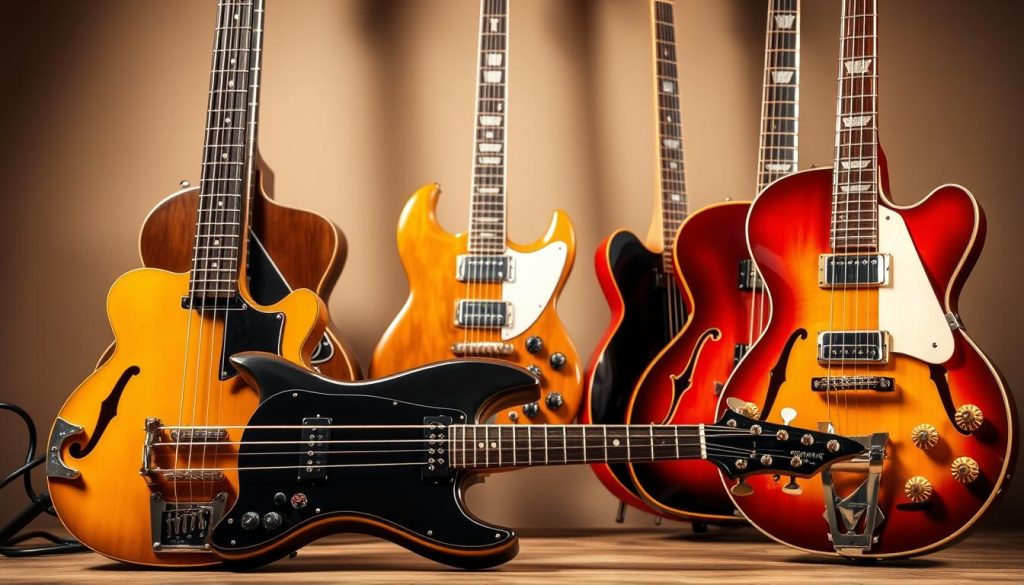
The Jack Casady Signature stands out as a dependable choice: this dynamic semi-hollow bass is highly regarded in studio mixes. Its well-defined midrange makes it versatile.
The EB‑0 and EB‑3 have a short scale and a mahogany body. They produce a thick sound suited to vintage rock, garage rock, and stoner rock. They are less suited to precise slap playing but remain impressive for their price.
Premium choices for the stage
At Gibson, the Les Paul Bass and Thunderbird represent the premium range. They offer sustain, projection, and a strong visual presence onstage.
“The Jack Casady holds its value very well, while the Les Paul Bass and Thunderbird represent the true premium range.”
- Use: EB‑0/EB‑3 for roots rock; Jack Casady for midrange dynamics and a sound that sits well in a mix.
- Positioning: the more affordable brand covers the entry and midrange segments; Gibson’s premium models stand out for their finishes and components.
- Tip: try the instrument in a shop to assess its scale length and response before buying.
| Model | Suggested style | Strengths |
|---|---|---|
| Jack Casady Signature | Indie, studio, vintage | Rich semi-hollow sound, midrange dynamics, good value for money |
| EB‑0 / EB‑3 | Rock, garage, stoner | Full-bodied sound, short scale, attractive price |
| Les Paul Bass / Thunderbird | Stage, classic rock, blues | Sustain, projection, premium finishes |
Prices and ranges: from entry level to premium
Budget remains the most concrete consideration when choosing between the two brands. The figures show a clear pattern: the price gap is structural and applies to both guitars and basses.
Example: a 2018 comparison showed an average difference of €1,355 between representative new models. This gives an idea of how much more a new premium instrument can cost.
Average price differences in the French market
In France, prices for new models differ considerably. Depreciation creates opportunities in the used market, although premium models generally retain a higher value.
Value for money and buying advice
Understanding the ranges: one brand covers entry level and midrange with practical finishes. The other occupies the premium segment, with more costly woods and components.
Before buying, set a total budget that includes a setup and any upgrades. Watch local listings too: promotions and limited editions can narrow the price gap.
“Comparing models individually remains essential: some special editions can approach premium prices.”
| Criterion | Entry level and midrange | Premium |
|---|---|---|
| New price (approximate) | €300 to €900 | €1,800 to €3,000 or more |
| Depreciation on the used market (France) | Greater depreciation; bargains possible | Limited depreciation; values remain strong |
| Total cost (instrument and setup) | Modest budget; allow for a setup | High budget; factory setup generally optimized |
Manufacturing and production locations
Where an instrument is made often affects its finish and setup.
American workshop: precision and setup
At Gibson, manufacturing combines manual expertise with high-precision machinery. Plek machines (around ten units) help ensure consistent fretwork.
As a result, instruments generally arrive at shops well set up. This ongoing quality control strengthens the perception of build quality.
Production in Asia: volume and improvement
Epiphone has concentrated most of its production in China for about fifteen years, with facilities in Korea and Indonesia.
Its process is geared toward mass production. An initial setup (fret leveling, neck adjustment, and intonation) may be needed before regular playing.
Costs, consistency, and advice
American labor costs more, which partly explains the price difference between the two brands.
Consistency can vary more between batches in mass production. Practical advice: try the instrument, inspect the frets and neck, and budget for a full setup if needed.
“An initial setup can turn a good guitar into a reliable stage instrument.”
Materials and woods: maple, mahogany, and plywood
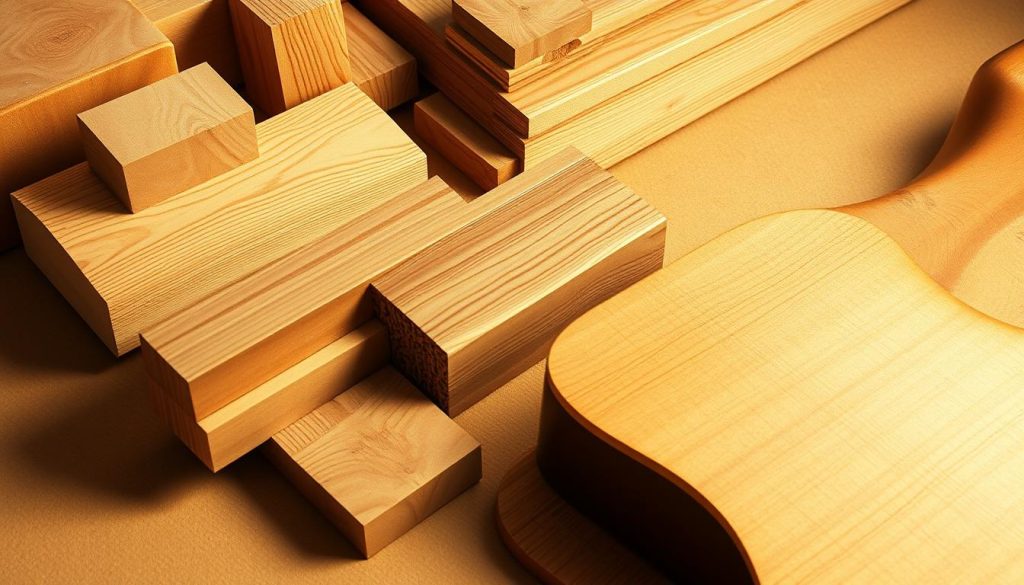
Materials define much of an instrument’s character. Wood choice affects its weight, density, and frequency response.
The term mahogany can refer to several species: Asian-made models often use sapele or luan, while some series specify mahogany in the stricter sense.
Mahogany, sapele, and luan; laurel and rosewood: effects on weight and sound
True mahogany tends to produce warm low mids and sustain. Sapele or luan can be slightly denser, lighter, or more variable depending on the batch.
Rosewood and laurel mainly affect brightness and harmonic richness, with similar effects across brands on tops and necks.
Multi-piece bodies and plywood: three plies versus five
Multi-piece bodies and veneers reduce costs but sometimes add weight. On ES-style models, three-ply plywood (maple/poplar/maple) allows more resonance.
Five-ply plywood provides greater stiffness, a sharper attack, and different projection, although its resonance may seem less open.
Veneers and figured tops: perceived quality and resonance
Veneers contribute to appearance and dimensional stability. They may, however, dampen vibration transfer compared with a solid top.
“Always assess balance and weight on your shoulder: playing feel depends as much on construction as it does on wood.”
- Wood selection: some series use more consistent pieces; others use more joined pieces to reduce the price.
- Practical tip: test the balance while sitting and standing, then compare attack and sustain before buying.
| Material | Effect on sound | Practical consequence |
|---|---|---|
| Mahogany (or sapele/luan) | Warm low mids, sustain | Variable weight and comfort |
| Maple (tops/veneers) | Brightness, definition | Improves attack; veneer may dampen vibrations |
| Three-ply plywood | More open resonance | Preferred for ES-style instruments |
| Five-ply plywood | Stiffness, sharp attack | Less resonance, more projection |
Hardware and electronics: from bridge to circuitry
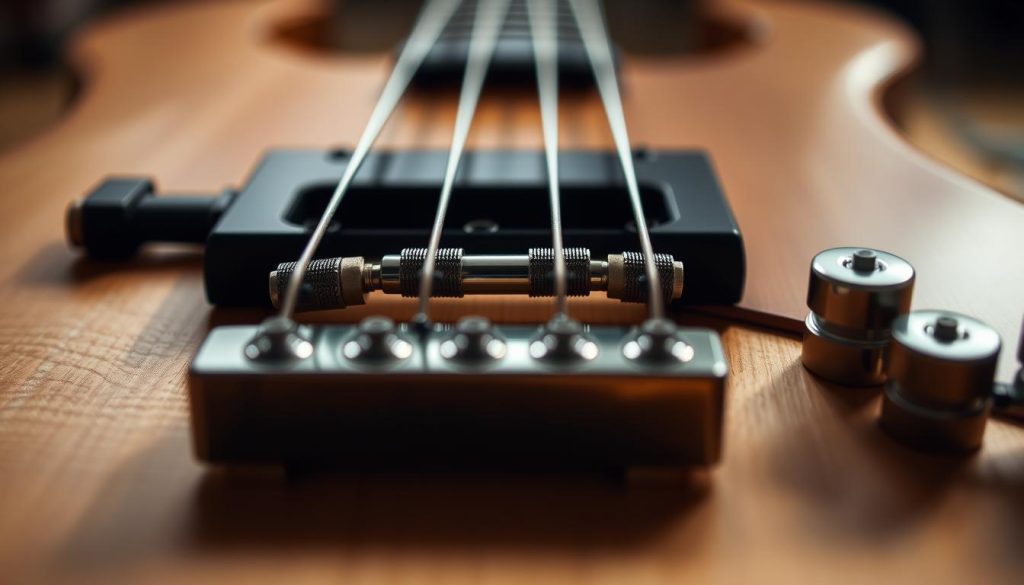
From the bridge to the potentiometers, every component affects intonation and tuning stability. Hardware influences onstage stability and the transfer of vibrations to the body.
Bridges, tuners, and metals
Materials: titanium and aluminum reduce weight and encourage vibration transfer. This can improve sustain and definition.
By contrast, alloys such as zamak are economical but less effective for resonance. Suppliers such as Gotoh, TonePros, and Ping often offer premium parts.
Pickups, tonal character, and circuits
Pickups: American-made ranges offer distinctive tones and strong dynamics. ProBuckers are effective and musical, while EMG options suit modern styles.
On some series, electronics mounted on a printed circuit board simplify maintenance. More basic components, however, may prompt an upgrade.
“Even good pickups depend on the wood, scale length, and hardware; assess the instrument as a whole.”
Practical advice: choose sturdy tuners and a bridge for tuning stability. Replacing the pickups, potentiometers, or output jack can often transform an instrument without a large expense.
To identify each component on your instrument, consult the page on the names of guitar parts.
| Component | Impact | Solution / upgrade |
|---|---|---|
| Bridge (titanium/aluminum) | Sustain, vibration transfer | Install more precise saddles or TonePros parts |
| Bridge (zamak) | Less resonance | Replace the bridge or upgrade the nut |
| Pickups (USA / ProBucker / EMG) | Tonal character, noise, dynamics | Change the pickups to suit your needs |
Design, finish, and playing feel
Design and finish shape how an instrument feels in your hands, even before the first chord. They affect comfort, speed, and longevity.
Nitrocellulose and polyurethane finishes: aging, appearance, sound
Nitrocellulose finish: thinner and more delicate, it ages by developing checking and a patina that appeals to enthusiasts. Many perceive the sound as more open after several years.
Polyurethane finish: durable, it retains a new appearance longer. It suits high-volume production, but some players find it less “breathable” than nitrocellulose.
“The choice of finish changes the feel: nitrocellulose often lets the hand glide more easily, while polyurethane can feel slightly sticky under the fretting hand.”
Fretwork and fingerboard edges strongly affect comfort. Better finishing is immediately noticeable when playing fast.
- Try the instrument standing up with a strap to assess its balance and how much it tires your shoulder.
- Prioritize a careful setup (string height and neck relief) and level frets: they matter more than the finish alone.
| Criterion | Nitrocellulose finish | Polyurethane finish |
|---|---|---|
| Appearance after several years | Patina, checking, vintage appearance | New appearance, little visible wear |
| Feel | Easy glide, natural texture | Smooth surface, sometimes “sticky” |
| Perceived effect on sound | More open sound, increased responsiveness | More contained, stable sound |
Reliability, value, and long-term cost
An instrument’s longevity depends as much on maintenance as on its construction. A purchase should allow for regular adjustments and upkeep: changing strings and adjusting the truss rod and intonation.
Quality control, setups, and upgrades
Many buyers upgrade their instruments soon after purchase. Low-cost improvements with a strong impact include:
- Potentiometers with tighter tolerances;
- A sturdy output jack and careful wiring;
- Then, depending on the style, replacement pickups.
Gibson’s introduction of printed circuit boards sparked debate without changing the experience of most musicians.
Durability, resale, and aging
Over time, better material selection supports an instrument’s durability and value. In some cases, a scarf joint at the headstock makes an instrument less fragile than a traditional headstock design, which is often considered vulnerable.
“The total cost of owning an upgraded Epiphone can approach that of an entry-level Gibson.”
| Factor | Impact | Advice |
|---|---|---|
| Inexpensive upgrades | Reliability and immediate sound improvement | Prioritize potentiometers, the output jack, and wiring |
| Regular maintenance | Onstage stability | Plan for periodic setups |
| Resale value | Often higher retained value | Consider resale value when buying |
Practical tip: choose the instrument that makes you want to play often; practice and maintenance matter more than the brand alone to its eventual quality and value. To make an informed first choice, consult a buying guide.
Conclusion
To decide, weigh your practical needs against the true cost over several years.
Summary: one brand emphasizes American manufacturing, wood selection, pickups, and nitrocellulose finishes. The other prioritizes affordability, production in Asia, and attractive value for money at entry and midrange prices.
The difference comes down to several factors: manufacturing, woods, hardware, finish, and electronics. Set a budget, try several models in a shop, and compare their weight, necks, and balance.
To learn more, read this detailed comparison and plan for a setup after purchase. Good maintenance over the years often turns a good guitar into a lasting instrument.