
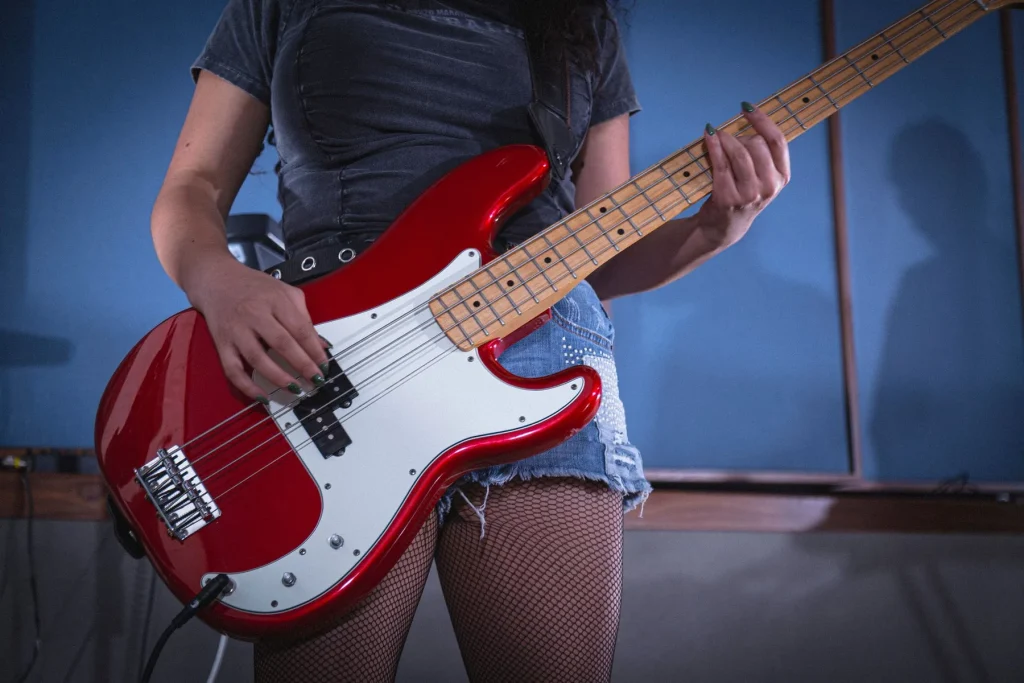
Introduction: this article clearly compares the two instruments to help you make your choice based on your ear, the role you want to play and your musical progress.
Visually, the two instruments have similar construction: body, neck, tuning machines and pickups. Yet their size, weight and tuning change how they feel to play.
Role in a band: the guitar often plays melodies, chords and solos. The bass anchors the rhythm and lays the harmonic foundation alongside the drums.
Most guitars have six strings. Most basses have four, sometimes five or six. On stage, there is generally one bassist and several guitarists.
Learning the basics of bass may seem quicker if you want to play at rehearsals, but mastering it takes just as much work as mastering guitar.
We will look at the key factors: strings and tuning, size and neck, electronics, playing techniques and the real challenges of each instrument. For practical advice and examples, see this comparison and learning guide.
Difference between guitar and bass: a simple guide to telling them apart at a glance
A glance is often enough to tell these instruments apart by their size, strings and position on stage. First, count the tuning machines: four or five strings often indicate a bass, while six strings are typical of most guitars. Some guitars even have twelve strings, and some basses have five or six.
Visually, a bass has a longer neck and thicker strings. Its lower tuning gives it a low register you can hear. Its body is often larger, and the whole instrument can be heavier than a standard electric guitar.
On stage, look at where the musicians stand: the bassist stays near the drummer to maintain the rhythm, while the guitarists generally occupy the front of the stage. Finally, watch how they play: most bassists use their fingers and most guitarists use a pick, though there are famous exceptions such as Mark Knopfler.
- Quick rule: count the strings.
- Sound clue: thick strings mean a lower register.
- Stage position: the bassist stands near the drums.
Technical features that make all the difference
Scale length, pickups and electronics shape the sound. Thicker bass strings produce powerful low frequencies. They give the bass guitar its fundamental presence in the mix.
Scale length and neck: a long scale increases string tension and provides greater definition. A short scale feels more flexible and may suit smaller hands or make the instrument easier to transport. A longer neck changes the distance between frets, while neck width affects fretting-hand technique.
Pickups and electronics: bass guitars may have single-coil or dual-coil pickups. Two pickups provide a wider range of tones. Passive electronics offer an organic character. Battery-powered active electronics boost the lows and provide more headroom.
Playing and amplification: neck choice and setup affect comfort and tone. A dedicated bass amp is crucial: an electric guitar amp is not designed for low bass frequencies and may compromise the sound.

To compare models and configurations, browse the selection at Pat Querleux Guitares.
Role in a band and overall sound
Often understated, the bass line shapes a song’s groove and harmonic character.
The bass connects harmony and rhythm. It provides anchoring notes that guide the drums and the rest of the band. A small change of note can alter the tonal center and the feel of a passage far more than you might expect.
Harmonic foundation and groove: bass as the backbone
Bassists work on timing with the drummer to keep the tempo steady. They leave room in the low end to prevent frequencies from piling up.
Electric guitar: chords, arpeggios, solos and sparkle
Guitarists enrich the texture with chords, arpeggios and solos. The guitar adds brightness and contrast. Sometimes the bass drives the energy—Flea and Les Claypool are examples—while at other times it sits further back, as it does with Radiohead or alongside an understated David Gilmour.
| Part | Main function | Effect on the mix | Stage example |
|---|---|---|---|
| Bass | Harmonic foundation and rhythm | Strengthens the low end and steadies the rhythm | Flea (RHCP) |
| Guitar | Chords, melody and sparkle | Adds presence in the mids and highs | David Gilmour (Pink Floyd) |
| Rhythm section | Drums and bass | Controls groove and tempo | Radiohead (examples of rhythmic placement) |
To learn more about bass tone and how it is handled in a mix, see this dedicated guide.
Playing techniques: fingers, pick and approach
How you strike a string changes everything, from tone to groove. It affects the sound’s character, rhythmic precision and place in the mix. The differences come down to attack, string tension and economy of movement.
Fingers or pick
Fingers: most bassists play with their fingers to control tone and groove. The attack is rounder and more adaptable.
Pick: it produces a sharper attack, useful for precise passages. Many guitarists favor a pick, although famous exceptions—including Jeff Beck and Mark Knopfler—play with their fingers.
Advice on using a pick and playing with your fingers
Root notes and chords
Bassists often rely on the root note to establish the harmony. Chords are possible, but should be used sparingly in the low register to preserve clarity.
Timing, speed and space
“Less is often more”: giving the low end room to breathe improves the groove.
Playing fast is not the goal. Precision, timing and dynamics matter more. Practice alternating your index and middle fingers, coordinating both hands and playing with a metronome.
| Technique | Benefit | Tip |
|---|---|---|
| Fingers | Tone control and a warm groove | Alternate index and middle fingers; pluck gently |
| Pick | Clear attack and rhythmic precision | Use it for fast lines or accents |
| Bass chords | Harmonic color | Limit them in the low register to leave space |

Is bass easier than guitar? Separating fact from fiction
Many people think bass is an easier instrument at first. Fewer strings and repeating patterns can help you reach a level suitable for rehearsals fairly quickly.
Learning quickly versus mastering the instrument: simple bass lines may be easier to learn, but mastery takes as much effort as it does on guitar. Rhythmic precision, timing and dynamics take years to refine.
Why bass requires precision: low notes carry the song. A different note or a slight timing shift immediately changes how a piece feels. The bass has a strong influence on the mix and the band’s cohesion.
Physical demands and theory: the bass is often heavier, with a wider neck and thicker strings. This calls for stamina, attention to posture and adjustments in hand position. Some guitar fingerings do not transfer directly to bass.
- Tempo and subdivision matter more than sheer speed.
- Theory—intervals, scale degrees and root notes—immediately enriches your playing.
- Switching from guitar to bass can be quicker in some cases, but still requires real adjustment.
Conclusion: depending on the style, bass can be easier or much more demanding than expected. Your choice depends on your goals: playing in a band soon or developing a deeper command of groove and tone.

Guitar or bass: choosing what suits your playing and goals
Choosing an instrument starts with deciding what you want to play and how you want to express it on stage.
Styles such as rock, funk and jazz call for different approaches.
Styles and settings: rock, funk, jazz, acoustic and electronic music
Rock and metal often favor an electric guitar with a sharp tone and a solid bass to underpin the sound.
Funk calls for a percussive, punchy bass. Jazz values the articulation of both instruments.
In acoustic or electronic settings, an acoustic or acoustic-electric bass can naturally accompany an unamplified steel-string acoustic guitar.

Personality, stage role and opportunities to play in a band
If you enjoy taking the spotlight with solos, the guitar will often put you at the front of the stage. If you prefer holding down the groove, the bassist’s role is essential.
Tip: bands are often looking for dependable bassists, which can make it easier to get on stage.
Quick buying guide: 4, 5 or 6 strings; fretted or fretless; left-handed
4 strings = simplicity. 5 strings = access to lower notes. 6 strings = greater range, but a wider neck.
Fretted = precision; fretless = expressiveness and slides, but it demands accurate intonation.
Left-handed players should favor dedicated models over reversing the strings.
| Factor | Common option | Benefit | Tip |
|---|---|---|---|
| Number of strings | 4 / 5 / 6 | Simplicity / extended low range / wider overall range | Start with 4 if you are unsure |
| Fretted or fretless | Fretted / fretless | Precision / expressiveness | Choose fretless if your finger placement is reliable |
| Electronics | Passive / active | Character / gain and dynamics | Choose active for more headroom |
| Ergonomics | Neck, hardware, truss rod | Comfort and stability | Try the neck in a shop |
In short: match your choice to the style you enjoy, the place you want to occupy on stage and how comfortable the instrument feels. A classic Precision Bass is a good example of a balanced instrument for both new and experienced bassists.
Conclusion
To conclude, these two instruments look alike but play distinctly different roles. Choose according to your ear, whether you prefer a low foundation or melodic brightness, your physical comfort and the role you want on stage.
Practical reminder: bass may seem easier at first for playing in a band, but bassists must work carefully on timing, notes and groove.
Guitar offers more possibilities for chords and solos. Try the strings and necks of several instruments, then spend a few hours playing with a band before deciding.
Next steps: define your style, budget and equipment needs (amp and electronics). In the end, regular practice and listening to your bandmates will do far more for your progress than the choice of instrument alone.