
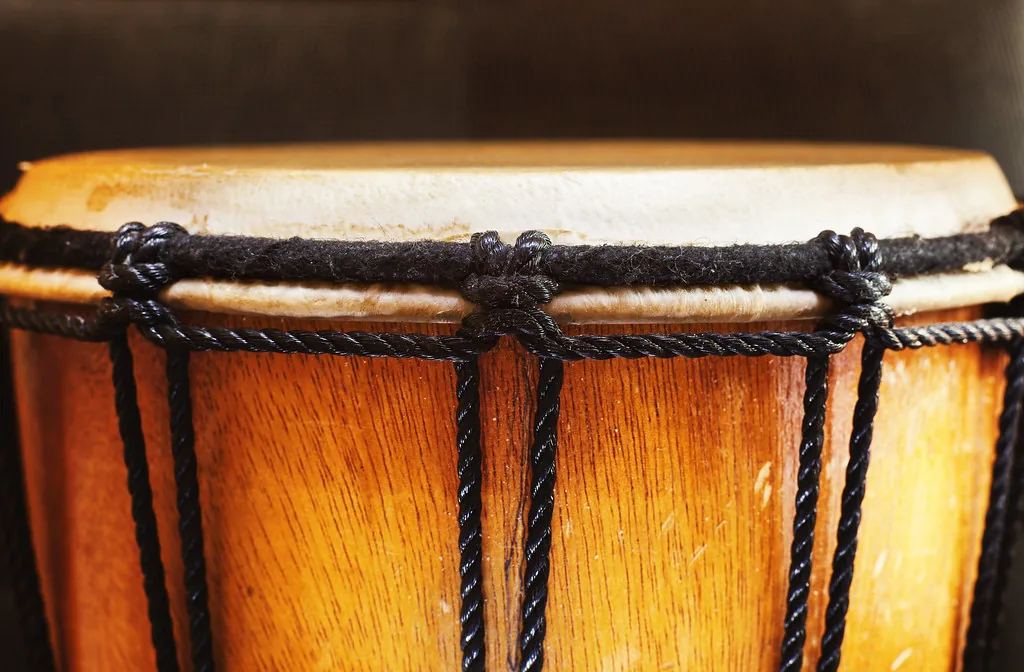
The djembe is an iconic West African percussion instrument. It is known for its powerful sound and rich rhythms. Originating in Guinea, Mali, Burkina Faso and Côte d’Ivoire, it fascinates many music lovers.
Accessible to beginners, the djembe can be learned independently, with a teacher or through online resources. Mastering it, however, takes gradual learning. Even great djembefolas such as Mamady Keita spent years refining their playing.
This guide covers the essentials: choosing the right djembe, finding a way to learn, planning your practice and mastering basic techniques. You will also find tips for practicing without disturbing your neighbors.
As a percussionist who has helped more than 50 beginners, I want to share practical advice with you. Music is a personal journey, and every percussionist progresses at their own pace. Ready to begin this musical adventure?
1. Choose the right djembe to get started
Choosing a djembe is an important step for any aspiring musician. A quality instrument can make learning much easier and help you avoid the frustration of poor sound. Consider several factors before making your choice.
Essential criteria: size, materials and sound quality
For a good start, a djembe should be about 60 cm tall and at least 34 cm in diameter. Avoid small models, which limit the range of sounds and the quality of your playing. Look for dense, high-quality woods such as lenke, balafon wood (goni/hari), diala (mahogany), dugura, iroko or cassia. Each wood has a distinct sound, and its density contributes to better sound quality.
Check the bowl of the djembe for cracks. Some repaired cracks in the base affect neither the sound nor the instrument’s strength. The head, usually goatskin, should have no cracks or holes, be properly tensioned and have a suitable thickness. A head that is too thin may lack a clear tone. Remember that the head is a replaceable part, much like guitar strings.
Essential accessories for learning
A few accessories will help you get started. A djembe stand or tripod keeps the instrument stable while you practice. Consider buying replacement heads, as they can wear out over time. A carrying case helps protect your djembe from moisture and knocks when you travel.
The rope should be about 5 mm in diameter. Check its tension and overall condition. These details contribute to a better learning experience.
Where can beginners buy a suitable djembe?
For a quality djembe, visit specialist shops such as Instruments du Monde or L’Atelier Kora Djembé. These shops offer models selected for beginners and experienced percussionists alike. Whether shopping in person or online, take time to choose an instrument that meets your needs.
2. How can beginners learn to play the djembe?
There are several ways to become familiar with this fascinating instrument, and each has advantages. Whether you choose in-person lessons, online resources or independent study, find the approach that suits you best.
In-person lessons: benefits and advice
In-person lessons are an excellent option for beginners. A teacher can give you immediate feedback, helping you correct mistakes quickly and make steady progress.
Local music schools and conservatories often offer percussion lessons, including djembe classes. Cultural centers focused on African cultures may also run workshops. Check noticeboards at libraries and music shops for information about available classes.
Use social media to find local percussion groups. Attending musical events can also help you meet teachers.
Online resources: tutorials, communities and virtual lessons
The internet offers many resources for learners. YouTube tutorials cover the basics, from holding the instrument to striking techniques. They can feel like having a virtual teacher beside you.
Many musicians and djembe teachers offer online courses. These structured programs let you interact with the teacher, ask questions and receive personal feedback. They often cost less than in-person lessons.
Online communities are valuable too. They offer support, advice and a place to share recordings with other enthusiasts.
Learning independently: methods and recommendations
Learning independently gives you flexibility. With an internet connection, you can progress at your own pace. Explore free articles, forums and tutorials to build your knowledge.
Consider combining several methods. For example, an in-person lesson once a week alongside daily practice with online tutorials can be very helpful.
Above all, stay motivated and practice regularly. Each method has benefits; choose the one that inspires you most.
3. Plan an effective practice routine
To improve your command of the instrument, establish a structured practice routine. Good planning helps you use your time well and develop your skills steadily.
Set clear, gradual goals
First, define specific goals. You might aim to learn a particular rhythm or increase your playing speed. To stay motivated, set both short-term and long-term goals.
Begin with simple tasks, such as mastering one striking technique. Then move on to harder challenges, such as playing in a group. This will give your learning direction.
Why consistency and short daily sessions matter
Regular practice is the key to progress. Playing for 15 minutes every day is better than playing for two hours once a week. Consistency builds muscle memory and strengthens your connection with the instrument.
Even a short daily session will improve your stamina and ease on the djembe.
Warm up, record and review your playing
Warm up before each session. Simple exercises to loosen your wrists and fingers can help prevent injuries and prepare your body for practice.
Record your sessions. Listening back will help you assess your progress and identify areas to improve. You can make audio recordings or film yourself to check your strokes.
Practice with a group to improve
Group playing is an excellent way to speed up your learning. Playing with other musicians teaches you to synchronize, listen and respond in real time. It also gives you a chance to share knowledge and tips.
Repetition is essential for mastering rhythms. Regular playing helps commit them to muscle memory.
| Goal | Example activity | Recommended time |
|---|---|---|
| Master a simple rhythm | Solo practice | 15 minutes a day |
| Increase playing speed | Metronome exercises | 10 minutes a day |
| Play in a group | Improvisation sessions | 1 hour a week |
In short, a structured routine with clear goals and regular practice will help you progress. Explore different techniques and styles to enrich your musical experience. For more advice, see this guide.
4. Basic techniques for playing the djembe well
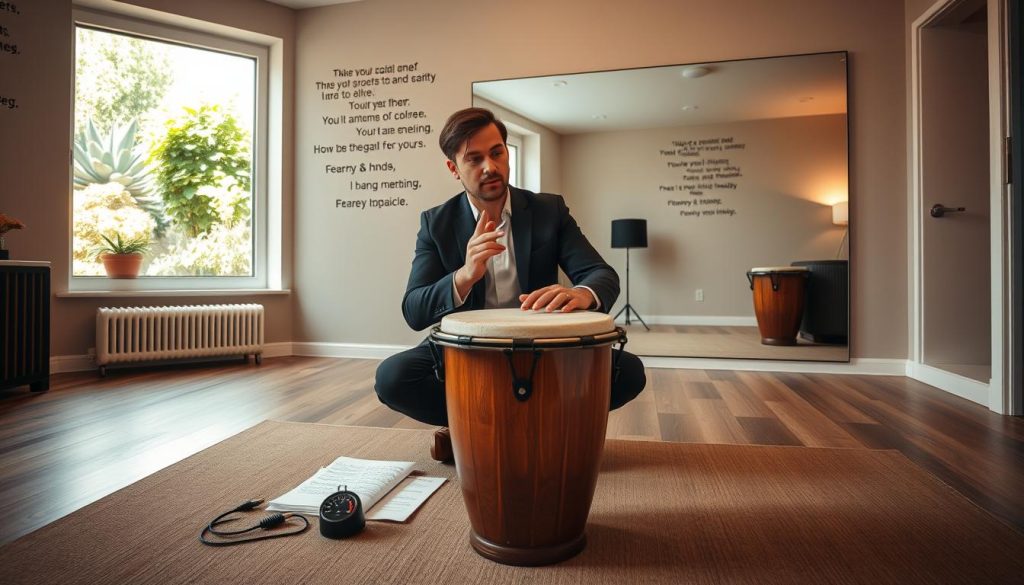
To master this instrument, learn the fundamentals: how to hold the djembe, the basic strokes and where to place your hands. A firm grasp of these basics will help you progress quickly.
Hold your djembe and use good posture
There are several ways to hold a djembe. These are the most common:
- Sitting on a chair: Sit on the edge of a chair without armrests. Place the djembe between your legs, tilted slightly toward you, with its base on the floor. Keep your feet flat and your knees slightly apart to stabilize it. Sit upright to reduce fatigue and breathe more easily.
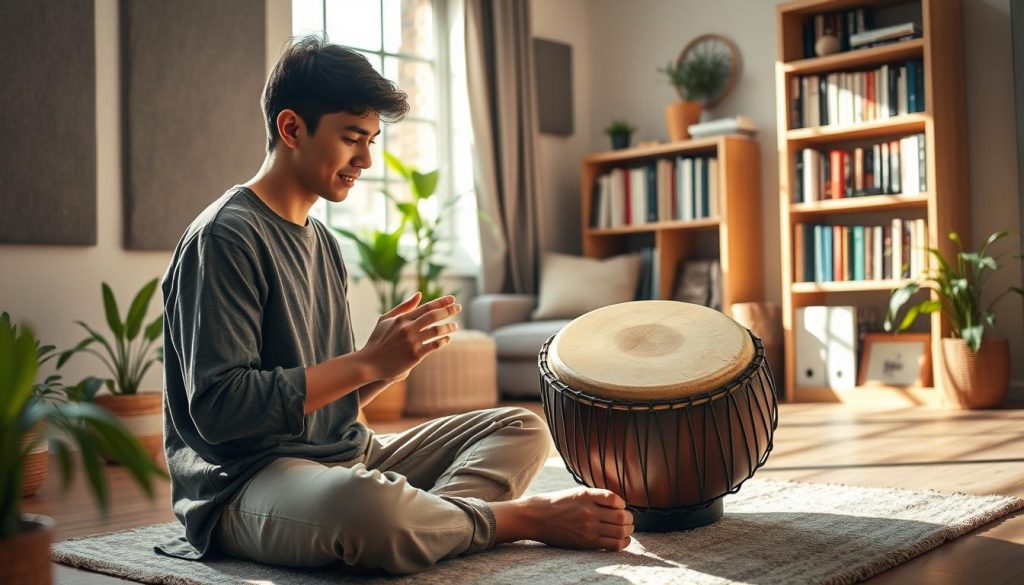
- Sitting on the floor: Sit cross-legged or on your knees. If your djembe is large, you can also sit directly on it. Make sure your hands can easily reach the drumhead.
- Standing: Use a strap or harness to hold the djembe. The strap should pass over one shoulder and under the opposite arm so the instrument hangs vertically in front of you, tilted forward.
The three fundamental strokes: bass, tone and slap
To produce a range of sounds, master these three strokes:
- The bass stroke (“bass”): Use your whole hand to strike the center of the drumhead. Move downward and let the weight of your arm add force. This produces a deep, low sound. For a muted sound, quickly place your hand back on the head after striking.
- The tone stroke (“tone”): Use the four fingers of one hand, held together, to strike the edge of the head. Only the finger joints, excluding the thumb, should touch the instrument. This produces a short, high sound, with the hand bouncing slightly after contact.
- The slap stroke (“slap”): Lightly slap the edge of the head. Spread your four fingers and round your hand slightly. The contact should be very brief and produce an even higher sound.
Understand hand and finger placement
Where you place your hands and fingers determines the sounds you produce. Try these tips:
- Move your fingers closer to the center for lower sounds and closer to the edge for higher sounds.
- Keep your hands and shoulders relaxed to avoid tension.
- Avoid forcing the movement. Work slowly at first so each stroke becomes natural and fluid.
Practice regularly to master these techniques. This exercise table can help:
| Technique | Exercise | Recommended time |
|---|---|---|
| Bass stroke | Alternate bass strokes | 10 minutes |
| Tone stroke | Repeat tone strokes in time | 10 minutes |
| Slap stroke | Alternate slap and tone strokes | 10 minutes |
These basic techniques are essential for progress. Focusing on accurate movements and sound quality will build your skills. For more playing advice, see this guide.
5. Discover African rhythms to enrich your playing
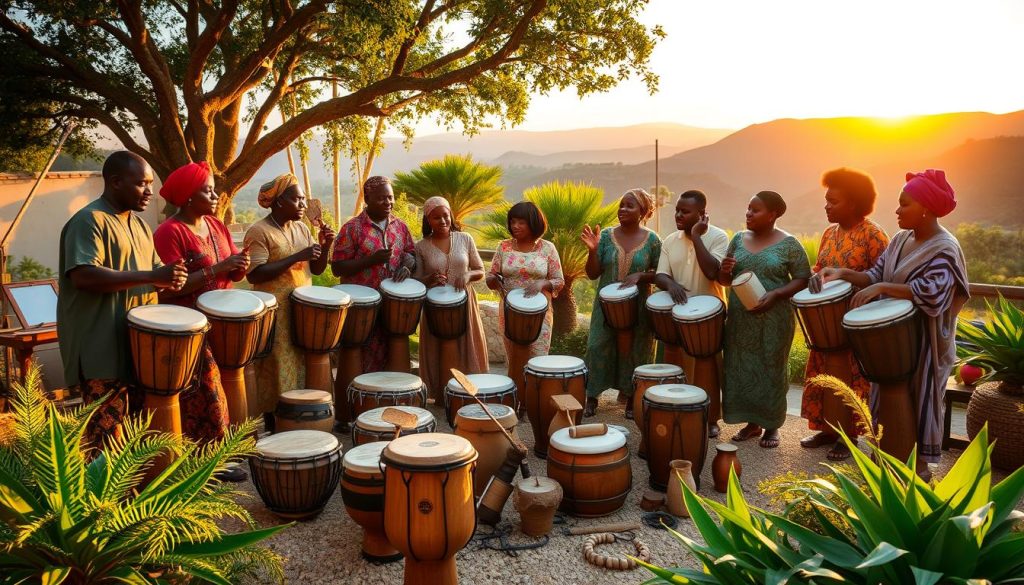
The djembe is more than a percussion instrument. It is also a means of communication and cultural transmission. Each rhythm tells a story and connects musicians with West African traditions. African rhythms are deeply rooted in the history, spirituality and daily life of communities.
The variety of rhythms is fascinating. Each region and ethnic group has developed its own musical traditions. For example, the powerful, fast rhythms of the Mandinka in Guinea contrast with the fluidity of Malian rhythms. The complexity of Ivorian polyrhythms offers another rewarding musical experience.
Origins and variety of traditional rhythms
Great djembe masters of an earlier generation, including Mamady Keita and Famoudou Konaté, established an approach rooted in tradition. They developed deep musicality and powerful sounds. Today, artists such as Harouna Dembélé and Bassidi Koné bring virtuosity and modern ideas while respecting the fundamentals.
Simple rhythms for beginners
Beginners can start with simple rhythms such as “Kuku” or “Djembe Basics.” These repeating patterns provide a foundation for learning and are accessible to new percussionists.
Learn rhythms by listening and imitating
Learning these rhythms calls for careful listening. By listening to recordings of great djembefolas, you can try to reproduce what you hear. This will introduce you to new sounds and enrich your playing.
Group practice matters too. Playing with other musicians helps you understand rhythmic communication and synchronize your playing. You can take part in complex ensembles in which each percussionist contributes variations and solos.
To discover more African rhythms, explore Mamady Keita’s albums, recordings of traditional performances and African ballet recordings. These resources will immerse you in a fascinating rhythmic world.
| Rhythm | Description | Level |
|---|---|---|
| Kuku | An energetic rhythm often played at celebrations. | Beginner |
| Djembe Basics | Simple rhythmic patterns suited to newcomers. | Beginner |
| Djembe Suku | A traditional rhythm with interesting variations. | Intermediate |
6. Measure your progress and stay motivated
Tracking your development helps you stay enthusiastic while learning the djembe. When teaching yourself, immediate feedback can be hard to find. Develop your musical ear and your ability to assess your own playing.
Use recordings to assess your playing
Recording practice sessions lets you hear your progress and identify what needs work. Filming yourself also shows how your technique is developing.
Share these recordings with other percussionists or online to receive constructive feedback. This encourages learning and the exchange of ideas.
Set milestones and celebrate achievements
Set clear, realistic goals, such as learning a new rhythm each month or increasing the speed of a stroke. Celebrating every achievement, however small, helps maintain motivation.
Every percussionist progresses at their own pace. Remember that learning is a personal journey with no fixed timetable. The ultimate goal is to find your own musical voice.
Work through difficulties and stay disciplined
Progress is not always steady. Periods when improvement seems to stall are part of learning music. Regular practice eventually pays off, even during those periods.
A practice journal can help. Write down your goals, successes and difficulties. It will help you step back and see how far consistent practice has taken you.
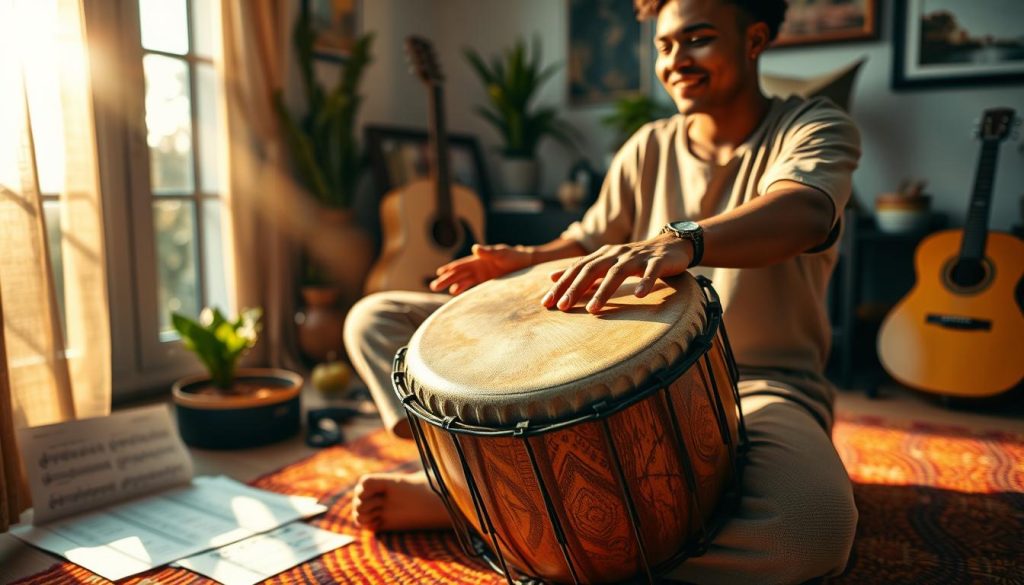
7. Learn the djembe without disturbing your neighbors
For djembe enthusiasts, balancing practice with consideration for others is essential. This powerful instrument produces lively rhythms, but the comfort of people nearby matters too. Here are some ways to play more quietly.
Ways to reduce the volume
One simple option is to muffle the sound. Placing cloth or a sponge inside the shell of your djembe can reduce its volume considerably while letting you practice your technique. Make sure you try different materials to find what works best for your instrument.
Choose suitable times and places to practice
Choose appropriate practice times. Avoid playing late at night or early in the morning so you do not disturb your neighbors. Early afternoon, for example, may be a time when sound is better tolerated.
If possible, consider practicing outdoors. Open spaces such as parks and gardens offer pleasant natural acoustics. They may reduce the volume your neighbors hear and provide an enjoyable setting for practice.
Consider an electronic djembe
An electronic djembe may be an effective option. These instruments let you play with headphones and hear good sound while keeping your surroundings quiet. They can be particularly useful in apartments and adjoining homes.
Talk with your neighbors too. Tell them about your interest in the djembe and let them know when you practice. Open, respectful communication can help you maintain good relationships while continuing your musical journey.
These precautions need not slow your enthusiasm or your regular practice. They can help you enjoy playing the djembe while respecting those around you.
8. Conclusion
Mastering the djembe is an exciting musical journey that takes time, patience and regular practice. Even great djembefolas such as Mamady Keita devoted their lives to refining their playing. Choosing a quality djembe is essential to enjoying the learning process.
This guide has highlighted the value of a structured practice plan, fundamental techniques and the exploration of African rhythms. Consistent practice matters more than speed. Playing in a group also enriches your experience and helps you learn.
To learn more, explore resources such as Instruments du Monde to find a quality djembe, or L’Atelier Kora Djembé to discover custom-made instruments. Every percussionist progresses at their own pace, and discipline and passion can help you flourish as a musician.