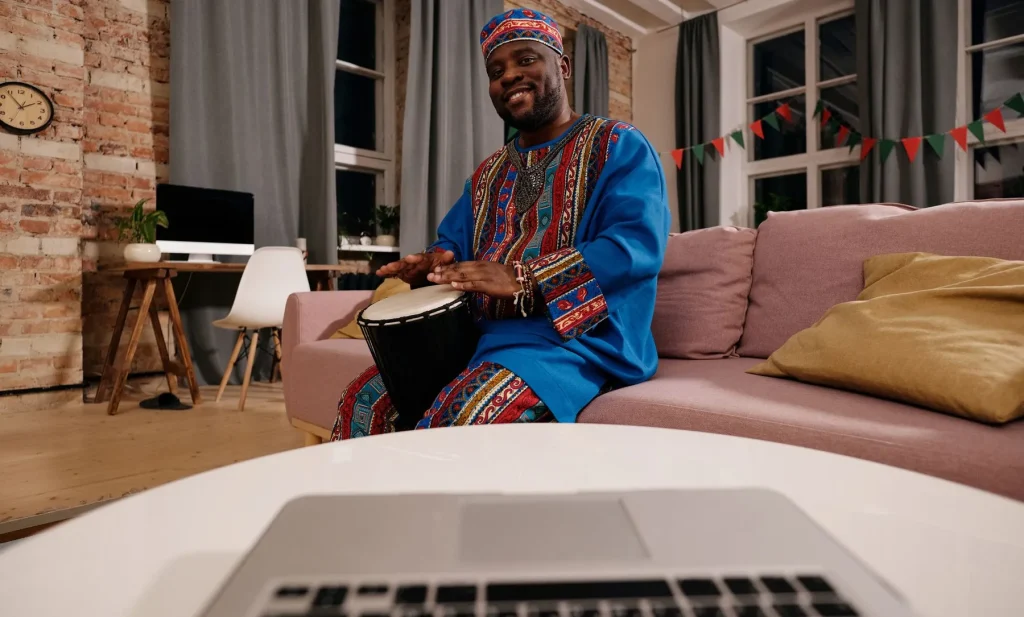
The djembe is an iconic West African percussion instrument. Its powerful sound and rhythmic range make it a popular choice among musicians. However, choosing the right instrument is crucial, especially for beginners.
When buying an African drum, it helps to ask the right questions. What should you consider? Your build, the materials, size, budget, and musical goals all matter.
This complete guide will take you through the choice step by step. With more than 20 years of experience, we have helped many aspiring musicians find the right instrument. Take time to assess your needs before investing.
The djembe’s origins and why your choice matters
Rooted in the rich traditions of West Africa, the djembe is much more than a percussion instrument. It is a cultural symbol, a means of communication, and a central part of ceremonies. It is closely associated with community dances and rituals.
The djembe has roots in countries including Guinea, Mali, Burkina Faso, and Côte d’Ivoire. Traditionally, it provided rhythms for celebrations and helped convey messages within communities. This deep cultural connection makes it a natural choice for anyone who wants to explore African music.
A brief history of djembe traditions
From the 1950s onward, the instrument became known beyond Africa. African ballet companies introduced it to the world stage. Then, in the 1980s, the djembe grew popular with a wider audience.
Masters such as Mamady Keita and Famoudou Konaté played a crucial role in spreading the instrument. Their musicianship and command of it helped establish a style that still inspires musicians today.
Why choose the right djembe from the start?
Choosing the right instrument at the outset is essential. A good choice helps you progress quickly and avoids the frustration of playing a poor-quality instrument. A badly made instrument can discourage beginners and slow their progress in learning music.
To help you choose, consider taking lessons with a teacher. They can point you toward quality musical instruments and help you develop the necessary skills. Here are a few points to consider:
- The djembe’s geographical origins and its role in community traditions.
- Its use in ceremonies and for conveying messages.
- Its worldwide spread through African ballet companies.
- The masters who shaped the instrument’s history.
- Contemporary musicians who continue to develop djembe playing.
- The risks a poor instrument choice poses for beginners.
- The value of lessons when making that choice.
| Period | Event | Impact |
|---|---|---|
| 1950s | Introduction to the world stage | Popularity begins to grow |
| 1980s | Growing popularity | Adoption by a wider audience |
| Today | Evolution of playing styles | Influence of new musicians |
How to choose a djembe for your skill level: types and materials
Choosing a djembe matters if you want a rewarding musical experience. There are two main categories: traditional and modern models. Each has its own features and advantages.
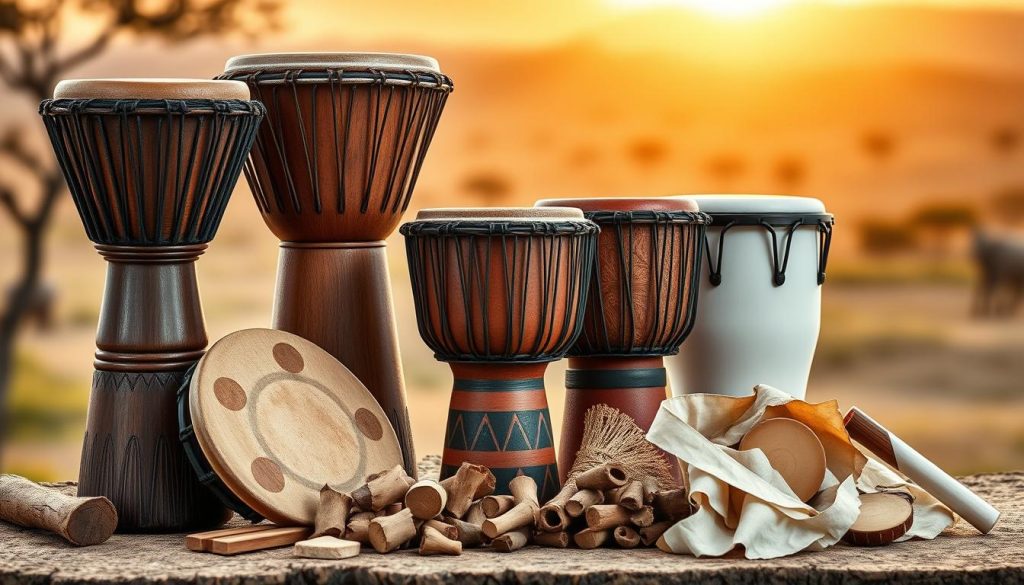
Traditional djembes: wood, skins, and handcrafting
Traditional djembes are often carved from a single block of dense wood. Woods such as lenke, iroko, and mahogany are favored for their strength. These instruments generally have animal skins, mainly goatskin, which contribute to their characteristic sound.
Braided ropes and metal rings hold the head in place. This system lets you adjust the skin’s tension, which affects the sound. A good traditional instrument produces deep bass and clear highs, making it well suited to musicians exploring African rhythms.
Modern djembes: synthetic materials and their advantages
Modern djembes are often mass-produced using materials such as ABS plastic or fiberglass. They are less sensitive to humidity and temperature changes, making them practical for outdoor use.
Pay attention to synthetic heads, however. Some produce an unpleasant metallic sound and may be less suitable if you want a traditional tone. Some modern models have mechanical tension rods that make tuning easier.
How materials affect sound and durability
Materials have a significant effect on a djembe’s sound and durability. Dense, heavy wood generally gives a better sound. Composite models may be more resistant to wear, but they may lack the same acoustic richness.
Check a few details before buying. Make sure the rings fit properly and the djembe’s rim is even, without sharp edges. The rope should be good quality—ideally a prestretched cord about 5 mm in diameter—to maintain proper tension.
For more information on choosing a djembe, read our complete guide.
The ideal djembe size for your skill level and build
A djembe’s size plays a major role in the playing experience. Beginners need a model that is comfortable and easy to use. Standard sizes are generally designed to suit the player’s build, supporting good posture and comfortable playing.
Djembes for beginners: a recommended medium size
For adult beginners, a djembe 60 cm high and 34 cm in diameter is often recommended. This size is easy to play while offering a rich sound. Models with a head 40 to 50 cm in diameter offer a balance between portability and sound quality.
Options for children: small, lightweight djembes
Young percussionists benefit from smaller models about 40 cm high. These instruments are lighter and better suited to their hands. Avoid choosing a djembe that is too small, though: a child will grow, and the instrument may soon no longer fit.
How size affects sound and playability
A djembe’s size directly affects its sound. Smaller models produce higher notes, while larger ones deliver deeper bass and a wider range. Choose a size that suits the player while allowing them to explore different musical styles.
Keep these points in mind when choosing a size:
- A djembe 60 cm high and 34 cm in diameter is ideal for an adult beginner.
- Medium-sized models, 40 to 50 cm in diameter, offer a good balance of comfort and sound.
- Standard-sized djembes offer the tonal range needed to explore complex rhythms.
- For children, choose a model about 40 cm high to make playing easier.
- Avoid buying a djembe that is too small for a child, as they will grow quickly.
- Size affects sound: smaller instruments produce higher notes, while larger ones offer deeper bass.
- Match the size to the player’s build to avoid back pain and maintain a comfortable playing position.
- Avoid a diameter so narrow that your hands strike each other as you play.
- Try several models to find the one that best suits your percussion style.
| Djembe type | Height (cm) | Diameter (cm) | Recommended use |
|---|---|---|---|
| Standard | 60 | 34 | Adult beginners |
| Medium | 60+ | 40–50 | Exploring complex rhythms |
| Small | 40 | 30 | Children and young percussionists |
How much should a beginner budget for a djembe?
Budget is an important factor when buying a djembe. Different price ranges offer different features and levels of quality. Here is an overview to help you choose.
Budget options (€50 to €100)
For beginners, €50 to €100 can buy an entry-level model. These instruments are often made from plastic or fiberglass, making them light and easy to carry.
Materials and finishing may be lower quality, however. Here is what to expect:
- A limited sound that is less rich than that of higher-priced models.
- Variable durability, with synthetic heads that may need replacing every one to two years.
- An accessible way to try percussion without a major investment.
Mid-range (€100 to €300): the best balance of quality and price
Between €100 and €300, you will find djembes that are often handmade and offer better playability and a richer sound. This range offers the best balance for beginners who want a quality instrument.
Its advantages include:
- Better-quality materials, often solid wood.
- Handcrafting with attention to detail.
- Faster progress when learning music.
Premium models: when and why spend more?
If you plan to spend more than €300, premium djembes are made by experienced craftspeople. These instruments use high-quality materials and offer outstanding sound and an impressive appearance.
Reasons to invest in a premium model include:
- Superior sound quality, ideal for performances.
- Refined looks, often with customization options.
- Better resale value, as quality instruments tend to hold their value.
Set a realistic budget before you begin looking. An exceptionally low price can conceal poor quality. As with a guitar or piano, the price often reflects the quality of construction and richness of sound.
For more information on choosing a djembe, read our complete guide.
Essential accessories for a beginner’s djembe
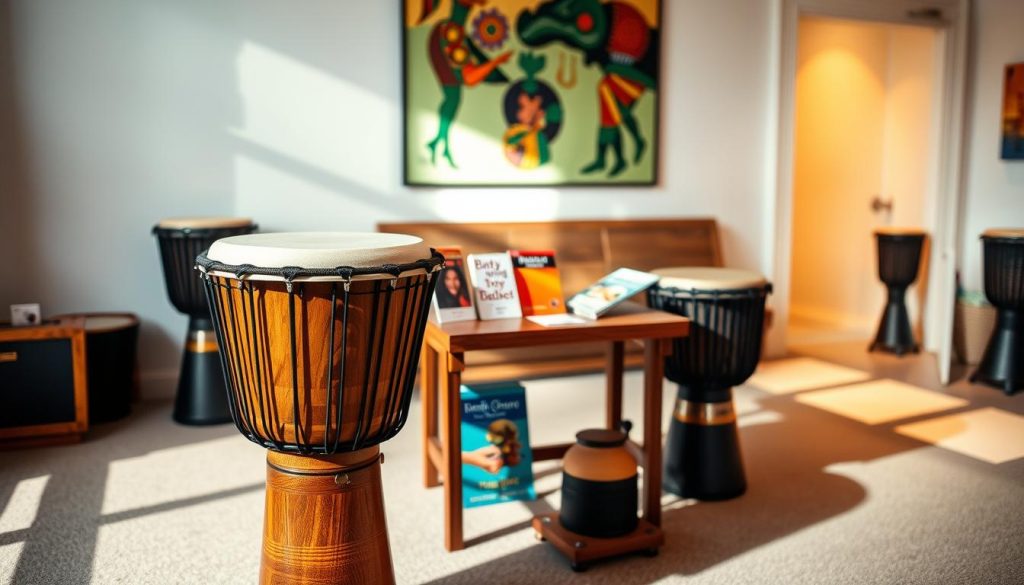
Some accessories can improve a beginner’s playing experience. They help protect the instrument and make it easier to use while maintaining its sound.
Straps and bags for transport and protection
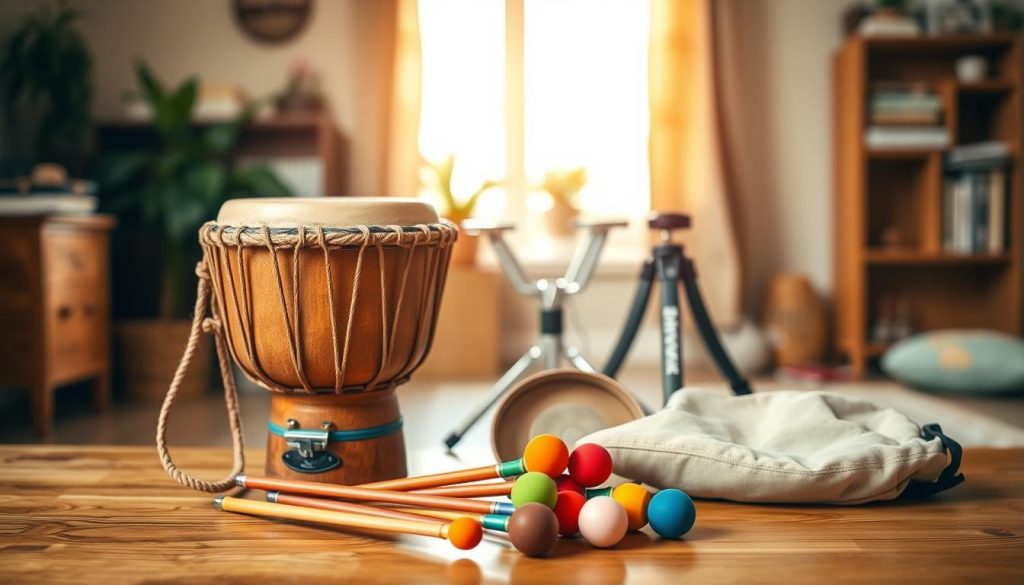
A comfortable carrying strap is essential. It lets you carry your djembe securely to lessons, performances, or rehearsals. By distributing the instrument’s weight evenly, it makes transport easier.
A protective bag is also a wise investment. It shields the djembe from weather, dust, and knocks, extending its life and protecting its finish.
Replacement heads and care for lasting sound quality
It is useful to keep replacement heads on hand. Djembe heads wear over time, much like guitar strings. To replace one, follow these steps:
- Remove the old head.
- Soak the new skin to prepare it.
- Fit the new skin over the rings.
- Gradually tension the wet skin.
- Wait until it has dried completely before applying the final tension.
Other equipment that makes learning and playing easier
Other equipment can improve your playing experience. A metronome helps you work on timing, while a stand lets you play standing up. These accessories can help you gain greater control of the percussion instrument.
Regular care also matters. Check the rope tension, clean the wooden shell, and moisturize the skin to maintain the best possible sound.
| Accessory | Function | Importance |
|---|---|---|
| Carrying strap | Makes transport easier | Comfort and safety |
| Protective bag | Protects the instrument | Durability and appearance |
| Replacement heads | Replace a worn head | Maintain sound quality |
| Metronome | Helps you work on timing | Skill development |
| Stand | Lets you play standing up | Playing comfort |
Practical tips for choosing your first djembe
Before buying, think about your musical needs and your build. A djembe should suit your playing style as well as your height and posture.
Assess your musical needs and build
First, decide what kind of music you want to play. Traditional African music, world music, and casual playing may each call for a different djembe. Consider your height and arm length too, as these affect the size you need.
A good playing position is essential. A djembe that is too large or too small can cause discomfort. Try several models to find the best fit.
Consider appearance and musical style
Your djembe’s appearance may also affect your choice. Decorations, carvings, and finishes can add an artistic element to your musical experience. An instrument you enjoy looking at may encourage you to play more often.
Think about your musical style as well. Traditional djembes offer a characteristic sound, while modern models may be more practical and durable. Choose an instrument that reflects your musical personality.
Try several models and ask a professional for advice
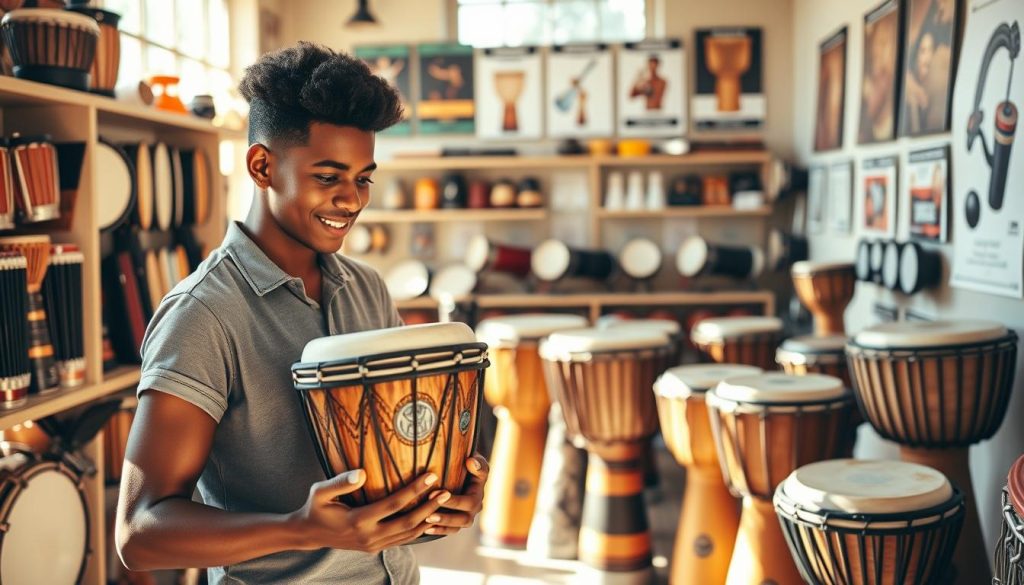
Try several models before you buy so you can compare their sound and playing comfort. Pay attention to construction quality. A good instrument should resonate well and feel comfortable to play.
Ask a professional or percussion teacher for advice. They can guide you toward a suitable djembe and help you spot possible defects. As the proverb says, “Wisdom begins with listening.” Listen to expert advice to make the best choice.
With these tips, you can find a djembe to accompany you on your musical journey. Regular practice and listening to traditional rhythms will enrich the experience.
Conclusion
Buying a djembe may seem complicated, but it can be a rewarding adventure. To choose well, consider factors such as size, materials, and budget. Traditional solid-wood djembes with goatskin heads offer a characteristic sound, while modern models are practical and durable.
Match the instrument’s size to your build for the best comfort. A budget of €100 to €300 offers the best balance for a beginner. Remember to get essential accessories, such as a strap and bag, to protect your instrument.
Visit specialist stores such as Instruments du Monde, which offers a wide selection of djembes. Choosing a djembe is personal, so let your expectations guide you. Begin your musical journey with confidence!