

The djembe is an iconic West African instrument, known for its powerful sound and captivating rhythms. Since the 1950s, it has gained popularity around the world, particularly through African dance companies. If you want to learn to play this fascinating drum, you may be wondering which learning method to choose.
There are three main paths: in-person lessons with a teacher, online resources, and self-directed learning. Each has advantages and can suit different learners.
In this article, we will explore these options and help you choose according to your level, budget, and lifestyle. You will also learn why choosing a quality instrument matters: it will affect both your progress and your enjoyment of playing.
Whether you love African music or are simply curious, this guide will accompany you on your musical journey. Get ready to explore the rhythmic world of the djembe!
How do you choose the right djembe when starting out?
Choosing the right drum can make a real difference to your musical journey. For beginners, an instrument that suits you is essential. It will affect your comfort and progress.
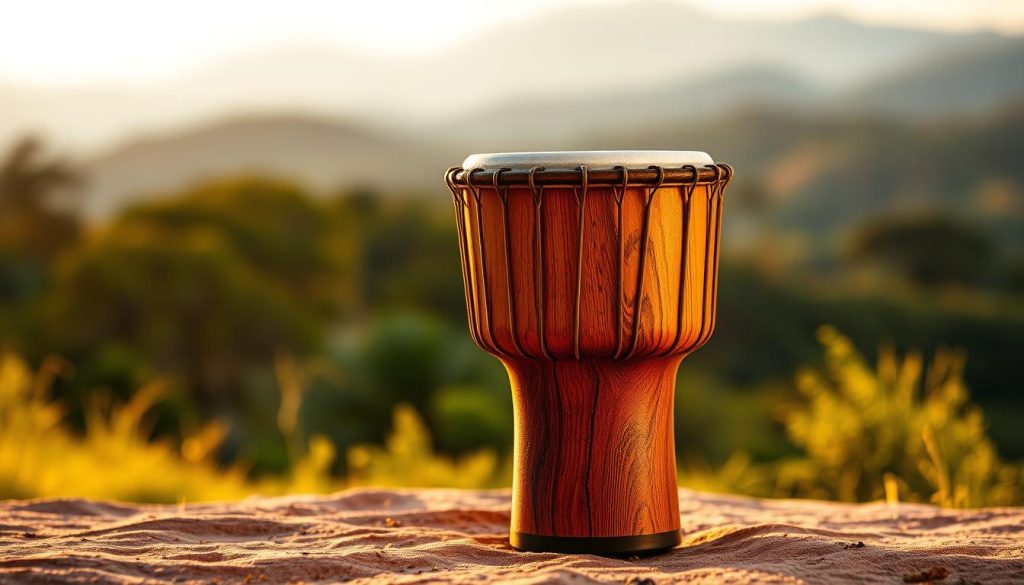
The instrument’s size and materials are important considerations. A typical djembe is about 60 cm tall and 34 cm in diameter. A smaller model may be easier for a beginner to handle.
Instrument size and materials
Materials play an essential role in sound quality. Look for dense woods such as lenke or mahogany. These woods produce powerful, warm sounds. Instruments made from synthetic materials, on the other hand, may sound less traditional.
The drumhead is another key element. A good goatskin head should have no cracks, be properly tensioned, and have an appropriate thickness. This helps produce deep bass notes and crisp slaps under your hands.
Essential accessories for learning
Some accessories are useful when you start. A stand or tripod holds the instrument in place. A carrying case protects your drum from moisture. Consider getting replacement drumheads, too, as they can wear out over time.
Finally, pay close attention to the rope. A diameter of about 5 mm is recommended. Check the ropes’ tension and overall condition regularly to maintain good sound quality.
Here is a summary of the criteria to consider when choosing your djembe:
| Criterion | Recommendation |
|---|---|
| Size | 60 cm tall, 34 cm in diameter |
| Materials | Dense wood (lenke, mahogany) |
| Drumhead | Crack-free goatskin |
| Accessories | Stand, case, replacement drumheads |
| Rope | 5 mm in diameter; check the tension |
Djembe lessons: how to find the right approach
When you begin learning an instrument, it is essential to choose a method that works for you. With the djembe, you have several options. Each has advantages and disadvantages, and understanding them will help you make an informed choice.
In-person lessons: learning with a teacher
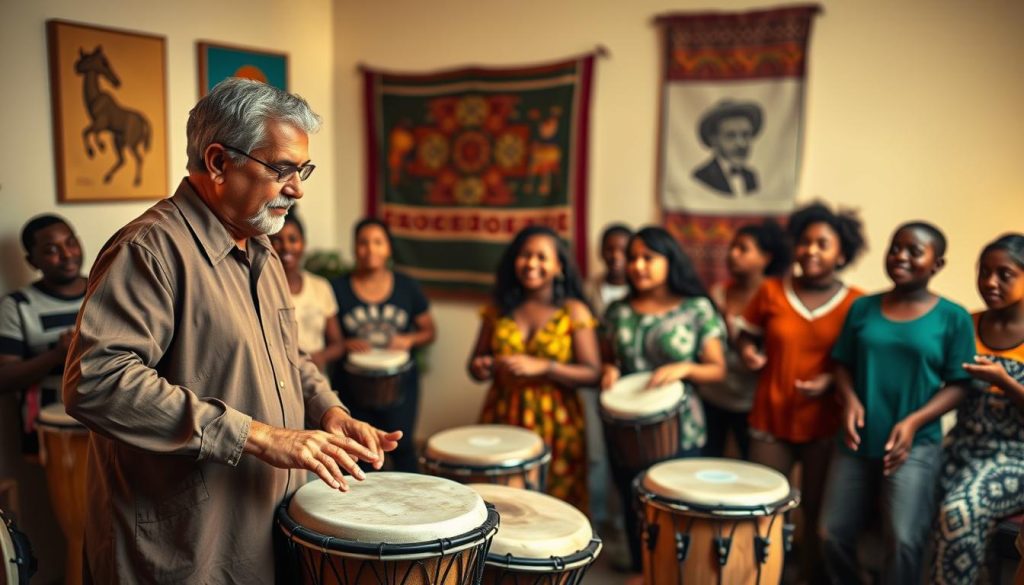
In-person lessons are often considered the most effective way to build musical skills. You get immediate feedback on your playing, allowing you to correct mistakes quickly and improve your technique.
- Advantages: Direct interaction with the teacher, personalized corrections, guided progress.
- Disadvantages: Less scheduling flexibility and often higher costs.
To find a good teacher, explore music schools and conservatories near you. Cultural centers specializing in African cultures may also offer worthwhile workshops.
Online resources and lessons: tutorials and virtual communities
Online resources offer a great deal of flexibility. You can learn at your own pace from home. Platforms such as YouTube have many free videos covering djembe basics.
- Advantages: Access to many tutorials and the freedom to learn at your own pace.
- Disadvantages: Limited direct interaction and personalized feedback.
Paid online courses are also available and may offer more detailed guidance and personalized feedback. These courses are often structured to suit your level.
Self-directed learning: methods and tips
Self-directed learning is a practical option if you enjoy exploring at your own pace. With discipline and the right resources, you can make steady progress.
- Advantages: Complete flexibility and access to a wide range of knowledge.
- Disadvantages: No direct feedback on your playing and a need to develop your musical ear.
Record yourself regularly to assess your progress. Remember to stay motivated and practise consistently: mastering the djembe’s subtleties takes time and patience.
Basic djembe techniques to master
To make progress with this fascinating instrument, you need to master a few fundamental techniques. These foundations shape the quality of your playing and prepare you for more complex rhythms.
There are three main sounds to learn:
- Bass: Strike the center of the drumhead with a flat hand to produce this deep sound, which forms the foundation of many rhythms.
- Tone: Strike near the edge of the drum with a flat hand to produce a clear, resonant middle-range sound that is essential to many African rhythms.
- Slap: Strike the edge with a slightly curved hand, focusing the impact on your fingertips, to create this sharp, lively sound.
Keep your hands and shoulders relaxed as you learn. Playing with too much tension can cause injuries and reduce sound quality. Warming up before each session is also essential. Simple wrist rotations and finger stretches prepare your hands to play.
Start by practising each stroke slowly. Speed will come naturally through regular practice and muscle memory. Try alternating your right and left hands to make your playing more fluid.
Listen closely to every sound you make. A good stroke should feel natural, fluid, and controlled. To improve, consider taking lessons focused on djembe techniques or watching tutorials. Seeing the correct movements can help you avoid developing poor habits.
How do you build an effective practice routine?
To improve your djembe playing, establish a regular practice routine. The key is consistency rather than session length. Practising a little every day, even in short sessions, is more beneficial than one intensive session each week.
Here are some tips for structuring your routine:
- Frequency: Practise every day; even 15 to 20 minutes can help you improve.
- Goals: Set clear short-term goals, such as learning a new rhythm, and long-term goals, such as playing in a group.
- Progression: Start with simple four-beat rhythms, then move on to more complex patterns.
- Recording: Record your sessions in audio or video to assess your progress.
- Variety: Explore different styles and rhythms to enrich your musical experience.
- Group practice: If possible, play with other musicians to develop your sense of rhythm.
- Repetition: Mastering rhythms takes repeated practice until the patterns become part of your muscle memory.
- Inspiration: Listen to masters such as Mamady Keita to spark your creativity.
With a disciplined approach and a routine suited to your level, you may notice significant progress within a few weeks. Remember that every session is an opportunity to learn and improve.
Discovering and understanding African rhythms
Africa is a cradle of percussion, where every region and ethnic group has developed distinctive musical traditions. These rhythms are deeply rooted in communities’ histories, spiritual practices, and daily lives. They tell stories, convey emotions, and reflect the cultural identities of West African peoples.
Playing styles vary considerably from one region to another. For example, Guinean Manding rhythms are known for their power and speed. Malian rhythms stand out for their fluidity, while Ivorian polyrhythms offer fascinating rhythmic complexity. This diversity enriches your djembe learning and connects you with centuries-old traditions.

The djembe has traditionally accompanied dances, conveyed messages during ceremonies, and marked the rhythm of daily village life. To learn these rhythms, listen closely to recordings by great masters. This helps you hear the subtleties of each style and deepen your musical experience.
Understanding the cultural context is just as important. Every rhythm has its own meaning and social function. For example, dununs, the low-pitched drums, often accompany the djembe in traditional ensembles, creating an essential part of the music’s interplay.
Learning African rhythms is a journey that can last years. Every new rhythm you master enriches your playing. Whether you take lessons or teach yourself, exploring these rhythms offers endless inspiration to a keen percussionist.
Practising the djembe without disturbing your neighbors
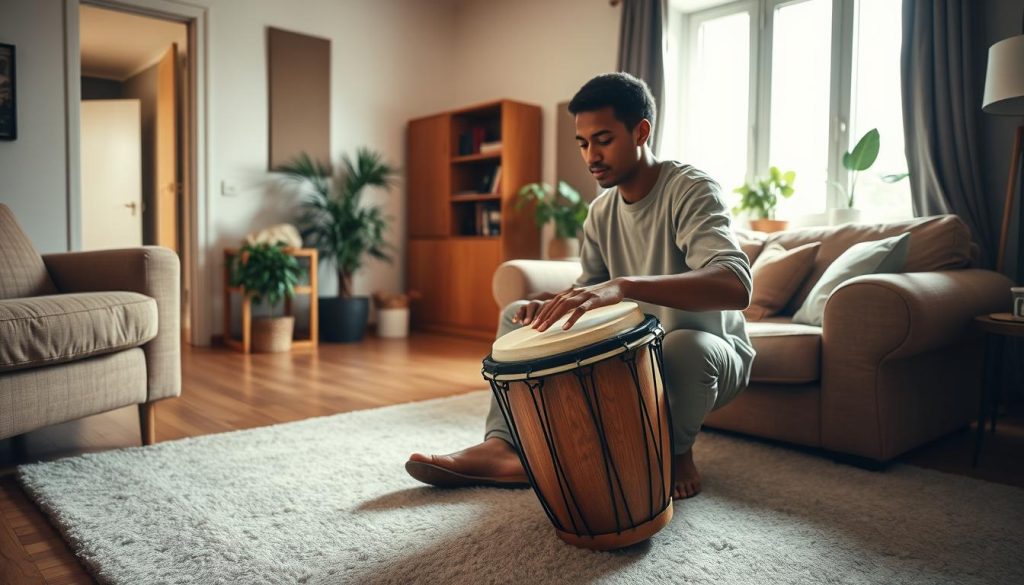
Playing the djembe can be a real pleasure, but it can also be challenging if you live in an apartment or shared home. Several practical solutions can help you enjoy your instrument while being considerate of those around you.
First, muffling the drum is a simple, effective method. Placing a cloth or sponge inside its resonating body can significantly reduce the volume. This lets you keep practising while limiting the noise.
Choosing appropriate practice times also matters. Avoid playing late at night or early in the morning. Instead, choose times of day when noise is generally better tolerated, such as early afternoon.
If you can, practise outdoors in a park or garden. Sound disperses more easily there, giving you room to play without disturbing others.
Another option is an electronic djembe. You can play it through headphones for an immersive experience without making noise for those around you.
Communication with your neighbors is essential. Tell them about your interest in music and let them know when you practise. This can help maintain good relationships and prevent misunderstandings.
Here are a few practical tips for playing considerately:
- The djembe is a powerful instrument, and its sound can easily travel through walls. Take steps to keep your practice from disturbing others.
- Try different muffling materials to find one that suits your instrument. The cloth’s thickness and density will affect how much sound it absorbs.
- Keep sessions reasonably short and avoid playing several times a day during sensitive hours.
- Thicker drumheads generally produce duller sounds that carry less, which may be worth considering if you live in an apartment.
With these tips, you can continue learning the djembe with peace of mind, without worrying that you will disturb your neighbors or have to give up an instrument you love.
Conclusion
You are now ready to begin your musical journey with the djembe. Choosing the right way to learn matters, whether you prefer in-person lessons, online resources, or self-directed learning. Each option has advantages and can be adapted to your level and goals.
A quality instrument is fundamental. A well-made solid-wood drum with a properly tensioned head will give you rich sounds and support your progress. Master the basic strokes—bass, tone, and slap—before moving on to more complex rhythms.
Regular practice is the key to success. Even a few minutes a day can make a big difference. Explore traditional African rhythms to enrich your musical experience, and consider joining a community of percussionists to share your enthusiasm and learn together.
So get started! Choose a learning method, find an instrument you enjoy playing, and discover the possibilities of this remarkable drum.