
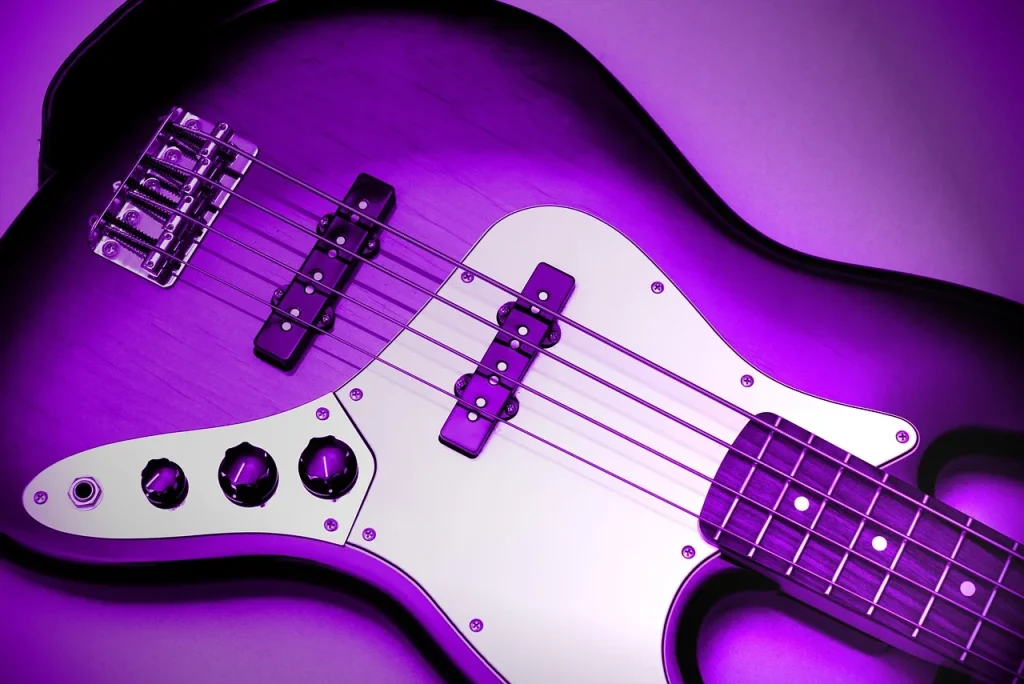
A simple promise: this article helps beginners choose an approachable instrument. The shorter neck makes playing more comfortable. It reduces fatigue and helps you progress faster.
In practical terms: these models remain versatile. They suit many styles, from jazz to rock, without sacrificing sound quality. They are light, easy to transport, and convenient for spending more time practicing.
This guide compares options and brands, mentions FeriaMusica, and aims to clarify your choice based on your build, circumstances, and budget. You’ll learn which factors to consider and how to approach your first purchase with confidence.
Understanding short scale: definition, measurements, and immediate effects
The distance between the nut and bridge affects string tension, playability, and tone.
What is a short-scale bass? 30 to 32 inches versus 34 inches
Definition: scale length is the vibrating length of a string between the nut and bridge.
Short-scale instruments generally have a scale length of 30 to 32 inches. The modern standard is about 34 inches. This difference shortens the neck and reduces the instrument’s overall size.
String tension, fret spacing, and playing comfort
A shorter scale reduces string tension at the same gauge. Bends and legato become easier.
The frets are closer together, helping the fretting hand. Playing is often more comfortable for people with small hands or younger musicians.
- Everyday handling: easier storage and transport.
- Posture: often a more natural wrist angle.
- Sound: warmer lows and rounded mids, sometimes with a “boomy” character.
| Measurement | 30 to 32 inches | 34 inches (standard) |
|---|---|---|
| String tension | Lower | Higher |
| Fret spacing | Closer (easier reach) | Wider (more room for techniques) |
| Tonal character | Warm, rounded lows | More defined lows, sometimes greater sustain |
Note: several models come in both long-scale and short-scale versions with the same pickups and electronics. This makes them easier to compare when trying them out.
Short-scale bass guitar: who is it for and why?
Here we look at players for whom a shorter neck makes playing more accessible.

Beginners, players with small hands, young musicians, and people returning after an injury
Who may benefit: beginners who want to reduce frustration, musicians with small hands, and young people discovering the instrument. A player’s size directly affects comfort and how the instrument sits against the body.
A shorter neck reduces string tension and brings the frets closer together. The result is smaller movements and faster learning.
- Rehabilitation: returning after a wrist, elbow, or shoulder injury may be easier with less physical effort.
- Playing with others: it is easier to stay precise alongside a drummer when your hand tires less.
- Motivation: greater ease encourages regular practice and speeds up progress.
Practical tip: if pain persists, consult a luthier about adjusting the action, nut, and truss rod, and choosing a suitable string gauge.
Note: even experienced players sometimes choose this format for long concerts or music that calls for less physical effort.
Main benefits of a short-scale bass for beginners
A compact instrument helps beginners remember positions more quickly and play more regularly. Closer frets and lower tension reduce fatigue. The result is longer sessions without pain.
Easier learning: a short neck puts positions within easier reach. You remember them sooner and can play complete songs earlier.
Playing comfort: often more flexible strings require less finger pressure. This encourages daily practice and reduces shoulder strain during rehearsals with a drummer.
Tonal versatility and easy handling
These instruments offer real tonal versatility: warm lows for vintage rock, a rounded sound valued in jazz, and clarity that helps in denser ensembles.
| Advantage | Immediate effect | Practical result |
|---|---|---|
| Closer frets | Easier positions | Faster learning |
| Lower string tension | Less fatigue | Longer sessions |
| Less weight and smaller size | Easier transport | More rehearsals and impromptu sessions |
To learn more about models and hands-on reviews, explore a selection of short-scale basses.
Limitations and considerations of short-scale basses
Although the compact format appeals for its comfort, it has some trade-offs worth knowing.
Low-end definition: depending on the strings and setup, a shorter scale can produce looser lows and less sustain. Some players like the resulting rounded feel, but it can sound less defined.
Adjusting your technique: players used to a standard scale will feel a softer response under their fingers. The attack changes, and it takes a little time to recover your usual responsiveness.
Demanding styles: modern metal and highly articulated funk often call for more clarity and projection. In those cases, a long scale may be preferable.
- The final sound also depends on the strings, pickups, setup, and effects.
- High-end options: there are fewer premium models, but luthiers and specialist series help fill the gap.
- Onstage: test how clearly the bass comes through alongside the drums to avoid a “boomy” sound.
Practical tip: try several string gauges and materials (steel, nickel, and flatwounds), and choose according to your style, preferred feel, and whether you play in the studio or onstage.
Short scale or standard: what differences will you notice?
Neck length directly affects string tension and the character of the low end. At the same string gauge, a long scale (34 inches) gives the strings more tension, spaces the frets farther apart, and produces more defined lows. A short scale (about 30 inches) reduces tension: playing feels more flexible, but the lows may lose some definition.

Feel under your fingers: on a short-scale bass, the strings feel more flexible and the attack softer. On a standard bass, you feel more resistance and a tighter response.
Sustain and projection: sustain is often slightly greater on a standard-scale bass, though the strings, neck, and construction matter greatly. In a mix with an energetic drummer, the standard version can help your notes come through more clearly.
Many bassists switch between the two according to the music: a warm, vintage sound from a short scale and a sharper, more articulate sound from a standard scale. Ideally, try both side by side to feel the difference in length and tension immediately.
To talk with other musicians and learn from their experiences, visit this dedicated forum.
How to choose a short-scale bass: a method and key criteria
Choosing a bass starts with a simple method: list your budget and expectations. Pick two or three models to try, then set aside time to compare them in a store.

Budget: from entry-level models to custom builds
Allow for the price of the instrument, plus a gig bag, strap, spare strings, and a possible setup. Prices range from inexpensive starter models to handcrafted instruments. Calculate these costs before buying.
Trying basses in a store: feel and comparison
Nothing replaces trying an instrument in person. Test its balance while standing and sitting, access to the high notes, and how the frets feel.
Compare several instruments through the same amp to judge their sound quality.
New, used, and buying safely
A new instrument offers peace of mind and a warranty. Buying used from a store combines inspection with a limited warranty. Be careful when buying from an individual.
Checklist and when to see a luthier
- Ask for the receipt, and check the cosmetic condition and whether the neck is straight.
- Test the tuners, pickups, and controls, then check tuning stability.
- Allow for a setup by a luthier to adjust the action, truss rod, and string gauge to your preferred playing feel.
“Take the time to try it out: it’s the best investment you can make in your playing.”
Details that make a difference: strings, electronics, and ergonomics
From strings to the number of frets, every detail affects playability and the musician’s physical comfort.

String gauge: light or heavy
Gauge changes how much resistance you feel under your fingers.
Light or extra-light strings make playing easier and reduce fatigue. They are ideal when starting out or trying to spare your wrist.
Heavy strings offer more sustain and allow a lower action, but require more effort.
Tip: start with a light gauge, then adjust according to your style and the neck’s response.
Active or passive bass
An active bass offers more controls and versatility in the studio. It needs a battery and regular maintenance.
A passive bass is simple and reliable onstage, with no battery, although it can sometimes be more susceptible to interference.
- Avoid unsuitable rechargeable batteries.
- Keep a spare battery and check the connections.
Four, five, or six strings: choosing for comfort
Four strings keep things simple and the weight down. Five or six strings expand the range but make the instrument heavier.
If you play standing up for long periods, choose a compact, well-balanced model to protect your back and shoulders.
| Feature | Effect | Recommendation |
|---|---|---|
| String gauge | Affects sustain and effort | Light to start, heavy for more sustain |
| Electronics | Tonal control or simplicity | Active for studio use, passive for the stage |
| Number of strings | Range and weight | Four for a roots groove, five or six for modern playing |
“A good neck setup is often worth more than a change of strings.”
Sound and styles: what can you play on a short-scale bass?
A shorter-scale instrument offers a pleasing range of sounds, with prominent low mids and a softer attack.
Tonal character: enveloping lows, warm mids, and a soft attack. This sound fits naturally into vintage textures and can produce the “boomy” quality sought in classic rock and blues.
Uses across musical styles
In jazz, walking bass lines gain fullness without sounding harsh. In blues, lines remain thick and expressive. In vintage rock, a retro tone strengthens the groove.
Controlling the low end
To tame boominess, choose flatwound strings, adjust the EQ, and move your plucking hand closer to the bridge. Your touch and dynamics can also reduce excess low-end energy.
Playing with drums: aim for a balance of warmth and clarity. Adjust the amp’s EQ and your playing so the bass does not mask the kick drum.
Tonal versatility remains a strength: changing pickups, strings, and settings can take you from a vintage sound to a more modern one. For demanding studio projects, a good setup and suitable strings provide the necessary quality.
“Explore the settings: often, the best solution is a simple adjustment.”
Find more practical information and benefits in this guide to the advantages of a short-scale bass.
Notable brands and models for starting on a short-scale bass
If you want a compact instrument with a distinctive sound, these models are worth trying.
Fender Mustang Bass: the historic benchmark
The Fender Mustang Bass remains a benchmark. Its tone and heritage make it recognizable and a dependable choice for beginners.
It is ideal if you want a bass with a clear identity and a proven design.
Squier: an affordable starting point
Squier offers affordable basses such as the Vintage Modified Jaguar. Their value helps beginners get started confidently.
These models often offer ergonomics similar to Fender basses at a lower price.
Ibanez TMB30 and similar models: ergonomics and versatility
The Ibanez TMB30 focuses on balance, light weight, and a broad tonal range. It suits several styles without demanding too much effort.
Bassists often praise how comfortable it feels to play.
| Category | Example | Indicative price |
|---|---|---|
| Traditional | Fender Mustang | About €400 to €900 |
| Entry level | Squier Vintage Modified | About €200 to €400 |
| Modern ergonomics | Ibanez TMB30 | About €250 to €450 |
Practical tip: try several models in the same price range. Check the stated scale length (often 30 inches) and whether a suitable gig bag and stand are available on the manufacturers’ websites.
Listen to demonstrations by different bassists to judge the sound against your needs.
Equipment and practice: amps, alternatives, and effects
To progress quickly, choosing a suitable amp and tools matters as much as your practice method.
Amp: for playing alone, a 20–30 W head or combo is enough. Look for a headphone output so you can practice without disturbing anyone. For rehearsals with drums and guitar, aim for roughly 200 W from a solid-state amp to leave some headroom. Renting an equipped rehearsal room is another practical option.
Alternatives to an amp
Practice with an audio interface: an iPad, Apogee JAM, and GarageBand, or a PC or Mac with ASIO. Simulators such as AmpliTube or Guitar Rig let you record and play through headphones. The Tascam Bass Trainer is useful for focused exercises.
Essential effects and good habits
Keep it simple at first: an equalizer and compressor are often enough. The equalizer helps shape the lows so the bass is easier to hear alongside the drums. The compressor evens out dynamics and helps the bass sit in the mix.
| Use | Recommended solution | Practical benefit |
|---|---|---|
| At home | 20–30 W, headphone output | Quiet, comfortable practice |
| Rehearsal | About 200 W, solid-state | Enough projection alongside drums |
| Practice without an amp | Interface and simulators | Recording demos and practicing through headphones |
Tips: test equipment in a store using an amp representative of how you will play. Schedule regular lessons and short daily sessions; this makes good use of your time and builds habits. Suitable strings and good EQ are often more useful than rushing to buy many effects.
Conclusion
Overall, these instruments offer a credible alternative to longer-necked basses. Their main advantages are comfort and easy handling, which help beginners and returning bassists progress quickly.
Versatility: their warmth and fullness suit vintage music, while strings and setup let you adapt the sound.
When choosing a bass, consider neck length and your size, then try it in a realistic playing situation. Set a budget, compare several models, and consider a visit to a luthier to optimize the action and string choice.
Also test how it sounds alongside drums in a rehearsal or lesson. This lets you check whether the lows sit well in the mix.
Conclusion: this format is a complete instrument in its own right. For help making a practical choice, explore this short-scale selection.