
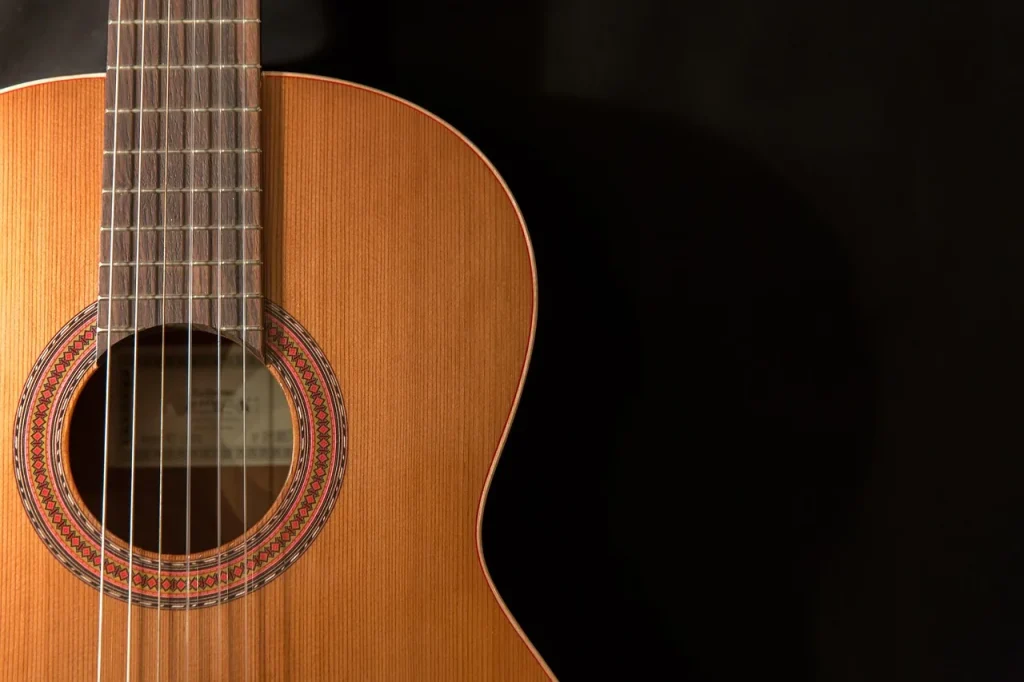
Recording an acoustic guitar involves a few key steps to achieve a professional sound. Start by choosing the right room for recording: avoid rooms with a lot of echo and choose a quiet, softly furnished space. You can also consider investing in acoustic treatment to improve the quality of your recording.
Microphone placement plays a crucial role in the quality of your acoustic guitar recording. Place a cardioid microphone about 30 centimetres from the guitar. Avoid placing it too close to the sound hole to prevent audio dropouts.
Microphone choice matters too. Different types are available, including dynamic microphones and condenser microphones. Each has advantages and drawbacks, so choose the one that best suits your needs.
Finally, remember that your choice of guitar and strings will also affect the recording quality. Choose a good-quality guitar and new strings for the best sound.
By following these expert tips and using the best recording equipment, you can record your acoustic guitar like a professional. Stay tuned for more acoustic guitar recording tips and tutorials. And remember: a good recording starts with a well-equipped recording studio.
Choosing a room and acoustic treatment
Before you start recording, choose a suitable room and improve its acoustics. A quiet room without echo is ideal for capturing a quality sound. Avoid rooms with too much reverberation, which can change the sound of your acoustic guitar. You can also invest in acoustic treatment to improve the recording quality.
| Acoustic treatment | Advantages | Drawbacks |
|---|---|---|
| Absorption panels | Reduce unwanted sound reflections | Expensive |
| Bass traps | Control low frequencies | Take up space |
| Diffusers | Prevent flat reflections | Less effective at low frequencies |
To improve your room’s acoustics, you can combine different types of acoustic treatment according to your needs and budget. The aim is to create the best possible environment for recording your acoustic guitar.
With the right equipment and room, you can capture a quality recording of your acoustic guitar. The room and its acoustic treatment provide the foundation for a good recording. Next, let’s look at microphone placement to capture your instrument faithfully.
Microphone placement
Microphone placement is crucial to getting the best possible recording of your acoustic guitar. A cardioid microphone is recommended because it primarily captures sound from the front and reduces unwanted background noise. Place it about 30 centimetres from the guitar to capture its sound effectively.
Placement can vary depending on the sound you want. To bring out the low frequencies, move the microphone towards the lower part of the guitar body. To emphasise the highs, position it closer to the upper part.
Avoid placing the microphone too close to the guitar’s sound hole, as this can cause audio dropouts or unwanted distortion. Try different positions and listen carefully to find the right balance.

| Sound | Microphone position |
|---|---|
| Balanced | Halfway between the upper and lower parts of the guitar body |
| Emphasised highs | Closer to the upper part of the guitar body |
| Emphasised lows | Closer to the lower part of the guitar body |
Take time to try different microphone positions and listen carefully to the results. Each acoustic guitar may respond differently depending on its design and sound. With these tips in mind, you can make a professional-quality acoustic guitar recording.
Choosing a microphone
Your choice of microphone matters when recording an acoustic guitar. Several types are available, each with its own characteristics. The two types most commonly used to record acoustic guitars are dynamic microphones and condenser microphones.
Dynamic microphones are robust and can handle high sound levels, making them a useful choice for acoustic guitars. They also tend to produce a warmer, more natural sound. Condenser microphones, on the other hand, are more sensitive and capture more sonic detail. They are often used to achieve a clearer, more precise sound.
Choose the microphone that best suits your needs and recording style. Some musicians prefer a dynamic microphone for its more vintage sound, while others choose a condenser microphone for its clarity and precision. You can also combine the two types to capture a wider range of sounds.
| Advantages of dynamic microphones | Advantages of condenser microphones |
|---|---|
| – Robust and durable | – Capture sonic detail |
| – Warm, natural sound | – Clear, precise sound |
| – Handle high sound levels | – Wider range of sounds |
Try and compare different microphones to find the one that best suits your style and preferences. Every microphone affects the final sound of a recording, so choose carefully.

How your choice of guitar and strings affects the recording
Your choice of guitar and strings is an important factor in achieving a high-quality acoustic guitar recording. A good-quality guitar provides a rich, full sound. Higher-end guitars are often made from better-quality wood, which can improve resonance and sound projection.
For strings, new strings are recommended for a clear, bright sound. Worn strings can sound dull and lose sustain. Choose strings that suit your playing style, and try different brands to find the ones you prefer.
Different string types can also affect the final recording. Steel strings produce a brighter, more powerful sound, while nylon strings offer a softer, warmer sound. Choose strings that suit your musical style and tonal preferences.
| String type | Characteristics |
|---|---|
| Steel strings | Bright, powerful sound |
| Nylon strings | Soft, warm sound |
| Phosphor bronze strings | Balanced sound with good projection |
In conclusion, your choice of guitar and strings is crucial to a high-quality acoustic guitar recording. Choose a good-quality guitar and new strings, taking your playing style and tonal preferences into account. Try different guitars and strings to find the combination that gives you your ideal sound.

Keywords: choosing a guitar, new strings, acoustic guitar recording
Conclusion
By following these steps and considering the different aspects of recording an acoustic guitar, you can achieve professional results. First, choose a suitable recording room. Avoid places with a lot of echo and opt for a quiet, softly furnished space. Acoustic treatment can also improve the quality of your recording.
For microphone placement, use a cardioid microphone about 30 centimetres from the guitar. Adjust its position to get the sound you want, but avoid placing it too close to the sound hole to prevent audio dropouts.
When it comes to microphone choice, select the type that best suits your needs, whether dynamic or condenser. Each type has advantages and drawbacks, so choose according to your preferences and the sound you want.
Finally, remember the importance of your guitar and strings. A good-quality guitar and new strings will help you capture the best possible sound.
FAQ
How do I choose the right room for recording my acoustic guitar?
Choose a quiet room without echo, and consider acoustic treatment to improve the recording quality.
What is the best microphone placement for recording an acoustic guitar?
Place a cardioid microphone about 30 centimetres from the guitar, avoiding the sound hole to prevent audio dropouts.
What type of microphone should I use to record my acoustic guitar?
Different types are available, including dynamic and condenser microphones. Choose the one that best suits your needs.
Does my choice of guitar and strings affect the recording quality?
Yes. Choosing a good-quality guitar and new strings can improve the quality of your acoustic guitar recording.