
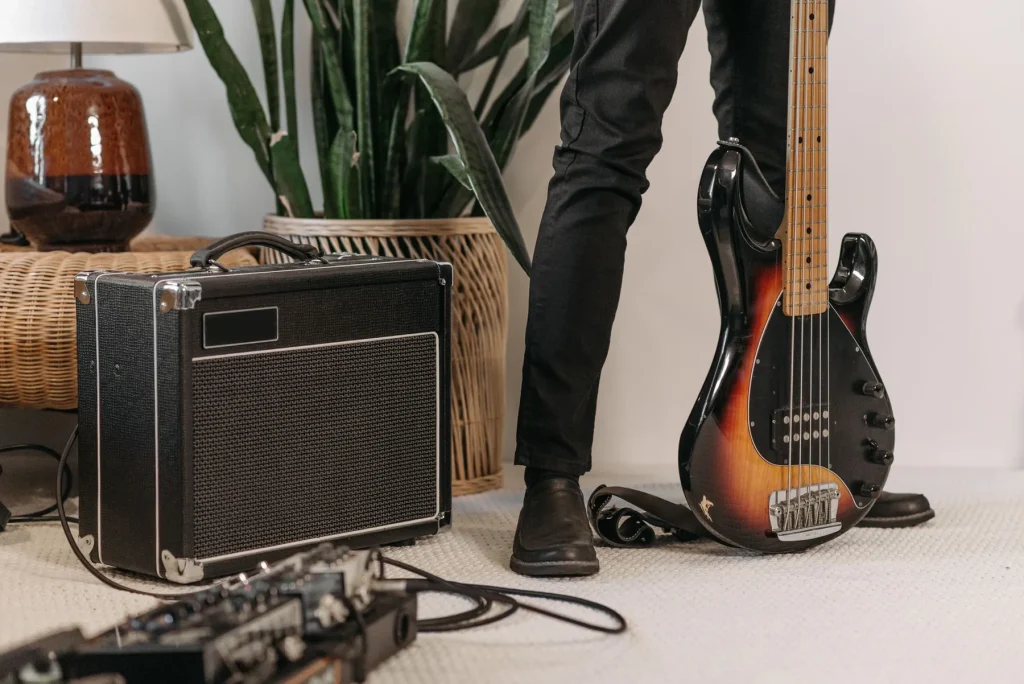
A ready-to-play solution for beginners: this type of bundle includes an entry-level bass, a small 15 to 30-watt combo amp, a cable and sometimes accessories.
Who is it for? If you only need to practice at home, 20 to 30 watts is enough. To play with a band, guides suggest aiming for 100 to 300 watts from a solid-state amp.
Models such as the Fender Rumble, Harley Benton HB-15GXD JamBox and Warwick Gnome show that affordable, reliable options are available.
This format is a good way to start learning without getting lost among dozens of models. It helps you progress while keeping the initial cost and setup decisions manageable.
In this article, we cover the criteria to consider: wattage, format (combo or head and cabinet), connections (headphone output, auxiliary input and DI), and alternatives such as headphone amps and compact USB combos.
For practical guidance on which amp to choose when starting out, read on.
Why choose a bass and amp bundle today?
Starting out with a complete setup makes the instrument more accessible. With a ready-to-use kit, you can open the box, plug in and play straight away. It is ideal for practicing at home without having to sort through hundreds of options.
Simplicity and budget: for playing at home, 15 to 40 W is enough, and many amps include a headphone output and an auxiliary input. These features make quiet practice and playing along with backing tracks easier.
Ease of use: a bass and combo amp are paired to keep setup simple. Compact combos and pocket-size options such as the Vox AmPlug Bass and VGH-BASS let bassists focus on their playing.
| Use | Recommended power | Useful features |
|---|---|---|
| Home | 15–40 W | Headphone output, auxiliary input, Bluetooth/USB |
| Rehearsal/entry level | 30–100 W | Line output, DI, more extensive EQ |
| Stage/band | 100–300 W | Power, projection, option to use a head and cabinet |
Start small, then assess what you actually need. Upgrading gradually is usually the most cost-effective way to support your progress.
Bass guitar and amp bundle: is it worth it?
The right setup depends mainly on where you play: at home, at rehearsal or on stage.
For home: 20 to 30 watts, a headphone output and an auxiliary input
A 20 to 30-watt amp is enough for playing at home. It can deliver a balanced sound at low volume.
Look for models with a headphone output and an auxiliary input. These features let you practice quietly and play along with backing tracks.
For playing with a band: aim for 100 to 300 watts and a sturdy combo
To rehearse with drums and guitars, aim for 100 to 300 watts from a solid-state amp. This power range provides useful headroom and projection.
Combos rated at 100 to 300 W are convenient: they put everything in one unit, are easy to transport and often use modern, lighter and more efficient speakers.
When should you choose a head and cabinet or send a DI signal to the front of house?
Move to a separate head and cabinet when flexibility and power become priorities. A separate head gives you more options for different venues.
On stage, sending a signal through an XLR or line output, or a DI box, can reduce stage volume while keeping the bass audible to the audience.
Technical note: impedance, measured in ohms, affects actual power output. A head rated at 4 ohms will deliver fewer watts into an 8-ohm load, while the cabinet also shapes the sound.
- Examples by use: compact USB/Bluetooth combos such as the Vox Adio Air Bass for a desk setup.
- 100 to 300 W combos for rehearsals; compact heads for moving up to stage use.
In short, match the power and format to your situation to find the best balance of comfort, power and ease of use.
Key criteria: power, connections and format
The main selection criteria are power, impedance and available connections. Together, they help you choose a setup for home, rehearsal or stage use.
Power and wattage
Solid-state amps: allow some extra power for headroom. With a band, 100 to 300 W can provide a comfortable listening level. At home, 20 to 30 W is enough.
Tube amps: their sound may seem warmer, but they tend to weigh more and require more maintenance.

Ohms, efficiency and cabinet combinations
Match the head’s supported impedance to the speaker load. An amp rated at 300 W into 4 ohms may deliver around 150 to 180 W into 8 ohms.
A more efficient cabinet projects sound better; two cabinets can improve coverage, provided you respect the amp’s minimum impedance.
Connections and format
A headphone output for quiet playing, an auxiliary input for backing tracks, an effects loop for modulation and delay, and a line/DI output for the PA or recording.
One last consideration: format
A combo is simple and portable. A separate head and cabinets offer flexibility and power. Modern models with neodymium speakers or digital features can reduce weight or add useful amp simulations.
The best bundles and combos for home use
For home playing, some combos offer a particularly good balance of sound, connections and compact size. Here are practical, reliable models for practicing without complicating your setup.
Fender Rumble 15/25
Fender Rumble 25 V3: 25 W, an 8-inch speaker, built-in overdrive and Contour voicing. The headphone output and auxiliary input make quiet practice and playing along with playlists easier.
EBS Session 30 MkIII
The EBS Session 30 MkIII offers 30 W, an 8-inch speaker with a tweeter, Bluetooth and an XLR DI output. It is a precise amp, well suited to recording or connecting to the front-of-house system at a small venue.
Vox Adio Air Bass and miniature options
The Vox Adio Air Bass is a powerful desktop mini amp (2 × 25 W stereo) with USB, Bluetooth and banks of amp simulations. It is well suited to making demos and playing through headphones.
Compact alternatives
- Harley Benton HB-15GXD JamBox: a budget option for home use.
- Vox AmPlug Bass / VGH-BASS: portable options for discreet practice.
Remember: 20 to 30 watts is enough at home. Speaker choice (6.5 to 8 inches) and EQ affect how full the bass sounds at low volume. Choose a brand with the connections you need so you can keep practicing and progressing.
Playing with a band and on stage: power, midrange and projection
On stage, midrange control and power headroom determine whether your bass cuts through or disappears in the mix.
The Markbass CMB 121 Black Line is a good example: 150 W, a 12-inch speaker, 4-band EQ, Bright/Mode switches, an auxiliary input, a headphone output, a balanced XLR output and an effects loop. This combo offers headroom and lets you shape the midrange so the bass stands out alongside drums and guitars.

Warwick Gnome Bundle
The Warwick Gnome Bundle is a practical rehearsal option. Compact and portable, it is simple to use and easy to carry. It suits bassists who want a minimal but effective setup.
Taking the next step: Ampeg, Aguilar and EBS
Brands such as Ampeg (warmth), Aguilar (clarity) and EBS (modern punch) offer lightweight heads and cabinets for upgrading. These models provide more power without sacrificing definition.
- Useful power: with a band, aim for 100 to 300 watts from a solid-state amp to retain headroom.
- Professional connections: an XLR/DI output for the PA, an effects loop for pedals and a headphone output for sound checks.
- Midrange: pay attention to it instead of turning the bass all the way up; it helps you be heard.
Compare models and brands with the venue, drummer’s volume and any guitars in mind. For a larger room, plan to send a mic or DI signal to the front-of-house system for clear coverage.
Which bass amp should you aim for? Make sure your equipment has enough power: if the band is loud, consider 200 to 300 watts to maintain comfortable playing volume.
Choosing speaker cabinets and speakers
Stack or bundle: matching heads, cabinets and your needs
Pairing a head with cabinets means balancing power, sound and practical constraints.
Aguilar Tone Hammer 500: compact and musical, it delivers 500 W into 4 ohms (250 W into 8 ohms). Its preamp offers focused mids and subtle drive, ideal if you want character without a bulky setup.
EBS Reidmar 752: substantial power headroom (750 W into 2 ohms), a built-in compressor and an effects loop. Its line/DI outputs make stage use and recording easier.

Cabinets and speaker sizes: what sound can you expect?
A 1 × 15 can deliver deep lows and a rounded sound. A 2 × 10 or 4 × 10 can provide attack and clearly defined mids. A 2 × 12 offers a versatile middle ground.
Practical impedance examples
A head rated at 300 W into 4 ohms often delivers around 150 to 180 W into 8 ohms. You can notice the difference in available volume at a venue.
- Check impedance: before connecting an 8-ohm cabinet to a head rated at 4 ohms, check that the combination is supported.
- Sensitivity: a more sensitive cabinet projects better at the same power level.
- Practical option: if the head supports it, add a second cabinet for more usable stage output.
- Effects loop: place delay and modulation effects after the preamp to keep the sound clear.
Tip: choose based on transport needs (weight), sound (attack or warmth) and the outputs you need (DI or external speaker output). A well-matched setup turns amp power into an audible presence.
Alternatives: keyboard amps, interfaces and headphone practice
When volume or transport is a problem, other setups offer practical and often more neutral options.
Keyboard amps (Roland, Peavey): these speakers cover a wide frequency range and reproduce low notes without readily distorting. They remain relatively transparent and offer power headroom, which can help preserve an electric bass’s low register without excessive coloration.

Preamp and DI: a clean signal for the stage
Sending the signal through a preamp and then a DI provides a clean, balanced output. The preamp lets you adjust EQ before the signal reaches the PA, making mixing easier and reducing the need to raise stage volume.
Portability and headphone playing
Small adapters such as the Vox AmPlug Bass and VGH-BASS make headphone practice simple and discreet. The Vox Adio Air Bass also works as a USB interface, useful for practicing at a desk and recording directly.
- Practical benefit: lower volume and easier integration on stage.
- Tip: if noise could disturb your neighbors, favor headphones or a DI when choosing a bass amp setup.
Summary: these options complement or replace a traditional setup by giving you better volume control, simpler transport and a direct, neutral signal for studio or stage use.
Conclusion
The best approach balances budget, power and features. At home, 20 to 30 watts is enough; with a band, aim for 100 to 300 watts to retain headroom. Also consider impedance, measured in ohms: a higher speaker load often reduces actual power output.
Which amp should you choose? First define where you will use it (home or stage), then consider a simple combo to start with and a separate head and cabinets as your needs grow. Connections matter: a headphone output, auxiliary input, line/DI output and effects loop all make playing easier.
Pay attention to EQ and midrange so your bass stands out in the mix. Choose between tube and solid-state amps based on the sound you want and the practicalities of carrying and maintaining them. Try models from Fender, EBS, Vox, Markbass, Warwick and Aguilar, and leave room to grow rather than buying more power than you need.