
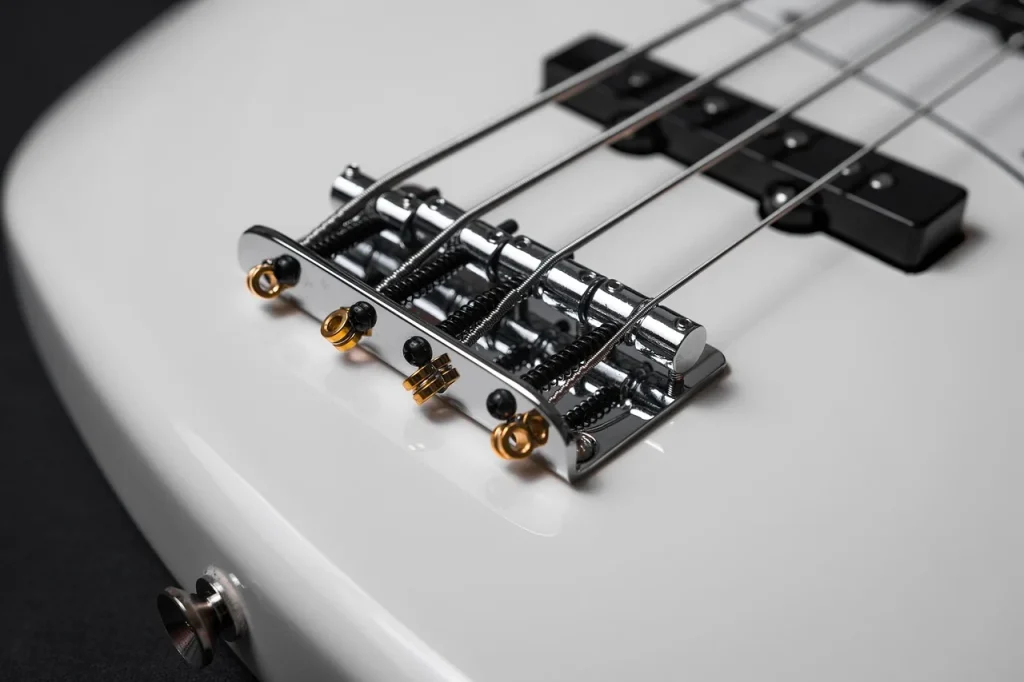
Goal of this guide: help you make the right choice for how you play, your musical styles, and your budget. It will help you avoid an impulse purchase and find suitable equipment.
The guitar and the bass have similar ergonomics. However, the bass’s rhythmic and harmonic role strongly influences its design and features.
There are three main types: solid-body instruments for the stage, semi-hollow instruments for a resonant sound, and fully acoustic instruments for playing without an amplifier. Semi-hollow instruments often have a center block to limit feedback.
Depending on the musical style, the electric bass excels in pop, rock, funk, and metal; the acoustic version suits folk and more intimate music. Musicians choose an instrument to suit the genres they want to play.
This buying guide takes you through several steps: understanding your needs, examining each version, reviewing the deciding factors, technical features, budget, and brands available in France (Fender, Squier, Yamaha, Ibanez, Marcus Miller/Sire, Harley Benton), then considering accessories and a checklist.
For more information, see this practical guide: comparison and buying advice.
Understand your needs and musical styles
Before buying, decide where and how you will use the instrument. Playing alone at home brings different requirements from rehearsing with a drummer or performing at an amplified concert.
- Solo playing without an amplifier: choose an instrument that sounds good naturally.
- Rehearsals: look for durability and adjustable volume so you can fit in with the group.
- Amplified performances: choose an instrument designed for amplification and sound projection.
Genres and suitability:
- Rock, funk, and soul favor an electric presence and precise controls.
- Folk and country suit natural resonance and a woody tone.
- Modern jazz and pop call for versatility and good control of the neck to vary your sound.
In short: the right choice depends as much on playability, portability, and the neck as it does on tone. Think about where you will play and whether you need amplification to choose an instrument that suits your styles.
Electric bass: versatility, tones, and modern uses
When playing in a group, a well-adjusted, amplified instrument has an unmistakable presence. The electric bass is approachable for beginners, with comfortable necks, adjustable string action, and plenty of tonal control through its pickups and electronics.
It fits naturally with drums and guitars. Effects, equalization, and volume controls let you adjust its place in the mix. Its main styles include blues, rock ’n’ roll, soul, funk, and hard rock, where attack and presence matter.

Body styles differ: a solid body lets you play loudly without unwanted resonance, while semi-hollow bodies add warmth. On stage, a semi-hollow bass’s center block effectively reduces feedback.
Single-coil pickups, humbuckers, and active preamps expand the range of sounds available across different models. The market ranges from budget series to iconic reissues such as the Fender Jazz Bass, covering all price points and types of player. To learn more about the available options, see this practical guide: bass buying guide.
Acoustic bass: warm sound and playing without an amplifier
For intimate performances, this instrument offers a woody character and gentle attack that quickly win players over.
Woody tone and natural projection
The acoustic bass produces a full, warm sound. Its body, often larger than a Jumbo guitar’s, reinforces the low frequencies and gives it a real presence when played solo.
This tone works particularly well for folk and acoustic music. Sparse arrangements bring it out without requiring much amplification.
When to amplify it and which pickups to use
Its projection remains limited in a group. It is generally amplified using a condenser microphone placed in front of the soundhole or a built-in piezoelectric or condenser pickup.
For regular performances, plan on using a direct box and an additional microphone to retain a natural sound without feedback. Try different woods for the top, sides, and back: they change its low-frequency response.
| Situation | Solution | Benefit |
|---|---|---|
| Solo playing without an amplifier | Unamplified instrument | Natural warmth and woody tone |
| Small stage or duo | Condenser microphone and direct box | Projection without losing tone |
| Amplified group | Dedicated pickup and feedback control | Stability and controlled gain |
Acoustic or electric bass guitar: which should you choose?
Start by thinking about everyday comfort: a light, well-balanced instrument makes all the difference.
Assess the neck: its profile and width affect how it feels in your hand. A slim neck makes initial chords and quick position changes easier.
Number of strings: for a first bass guitar, a four-string setup remains the simplest to learn. It is easier on both your ear and your hands.

Skill level and progression
Short-scale basses with a 30-inch scale suit smaller hands. The standard 34-inch scale is versatile and recommended from age 12.
A long 35-inch scale is most useful if you want five or six strings, or tighter low notes.
Playing environment, transport, and budget
In an apartment, choose quiet options such as a headphone amplifier or an audio interface. On stage, favor the stability of a solid body and reliable electronics.
| Criterion | Recommended option | Indicative price |
|---|---|---|
| Beginner | Four strings, 34 or 30 inches depending on player size | < €400 (possibly as a bundle) |
| Midrange | Comfortable neck, reliable preamp | €500 to €800 |
| Advanced | Premium materials, five- or six-string options | > €800 |
Tip: start with a sturdy, versatile instrument. For more practical advice, see this practical guide.
Technical features that make a difference
Technical choices often determine an instrument’s character and playability. They affect its sound, comfort, and use in a group or solo.

Scale length and number of strings
Four strings cover 90% of repertoire and are straightforward to play. Five- or six-string basses add lower or higher notes but require more practice and precise setup.
A short 30-inch scale reduces string tension and makes wide finger stretches easier. The standard 34-inch scale is recommended from age 12. A 35-inch scale increases tension on the low strings, helping five- or six-string basses stay in tune at lower pitches.
Pickups and electronics
Single-coil pickups provide clarity and precision. Humbuckers reduce noise and give the sound more body.
Active electronics provide built-in equalization to shape the sound. Passive electronics remain simpler and more natural, with no battery.
Woods and construction
Alder and ash are versatile. Mahogany adds warmth and sustain; maple adds brightness. Basswood and agathis remain budget options.
A bolt-on neck promotes attack and makes maintenance easier. A set neck increases sustain. A neck-through design offers the greatest continuity of vibration and makes high notes easier to reach.
| Feature | Effect | Recommended use |
|---|---|---|
| 30-inch scale | Lower tension, comfortable playing | Smaller hands, melodic playing |
| 34-inch scale | Versatile balance | Varied use, from beginner to advanced player |
| 35-inch scale | Greater tension on low strings | Low tunings, five or six strings |
| Single-coil pickup | Bright, precise sound | Funk, rock, clear bass lines |
| Humbucker | Fuller sound, less noise | Heavy styles, clean signal |
Budget, brands, and models to consider in France
Setting a clear budget makes it easier to identify models available in France.
Indicative prices by range
Lower-priced models are an option for a first purchase.
In the midrange (€500 to €800), build quality and electronics improve. The Squier Affinity and Yamaha TRBX ranges offer an excellent balance.
Above €800, premium models meet the finish and stability requirements of professional sessions.
Popular brands and models
- Harley Benton: very affordable options and frequent bundles.
- Squier / Fender: Affinity, Classic Vibe, and Player for reliable models.
- Yamaha TRBX and Ibanez GSR/SR: comfortable designs and low weight.
- Sire (Marcus Miller): Sire V3, V7, U5, and Z3, often praised for their value; Marcus Miller lends his name to certain models.
Tip: short-scale and travel basses can be ideal for smaller players or for traveling.
Electric basses often have active or passive electronics, with single-coil pickups or humbuckers. To compare brands and look at local offers, see this practical comparison: which brand suits you.
Essential accessories and what to check before buying
Think about equipment: the right accessories extend your instrument’s life and improve its sound.

Essential equipment
Essentials: a bass amplifier suited to an apartment or stage, a reliable cable, a comfortable strap, and a protective case or gig bag.
Add picks if they suit your technique, headphones for quiet practice, and a tuning pedal if you plan to perform live.
Allow for accessories in your budget
Beyond the price of the bass, allow €100 to €300 for a set of quality accessories. This covers an entry-level amplifier, a sturdy cable, a gig bag, and a few consumables.
What to check in the store
- Tuning: check that it remains stable for several minutes.
- Neck: check that it is straight, with no visible twist.
- String action: it should be neither too high nor too low, to avoid unwanted noise or fatigue.
- Electronics & pickups: test them through headphones and an amplifier; check for crackling and make sure the controls turn smoothly.
- Finish: check that the frets are smooth, the tuning machines are stable, and the bridge is aligned.
| Accessory | Use | Indicative price |
|---|---|---|
| Compact amplifier | Useful for rehearsals and small performances | €80 to €250 |
| Shielded instrument cable | Reliability and less noise | €15 to €40 |
| Gig bag or hard case | Transport and protection | €30 to €150 |
| Headphones and tuner | Useful in an apartment | €20 to €80 |
Conclusion
Your final decision should balance musical style, playing comfort, and room to grow. Choose according to your skill level, preferred styles (rock, funk, or folk), and playing situation. A good bass guitar will serve you for years if it produces the sound you want.
For a first bass guitar, choose a four-string model with a 34-inch scale and a moderate price. The electric bass is ideal for playing in a group; the acoustic bass shines solo. An acoustic-electric model can be a practical compromise.
Keep the technical criteria in mind: strings, pickups (single-coil or humbucker), active or passive electronics, and construction. In France, try brands such as Harley Benton, Squier, Yamaha, Ibanez, Fender, and Sire (Marcus Miller) before buying.
Method: set a budget, list your priorities, try several bass guitars, and check the essentials before buying to make a sound investment.