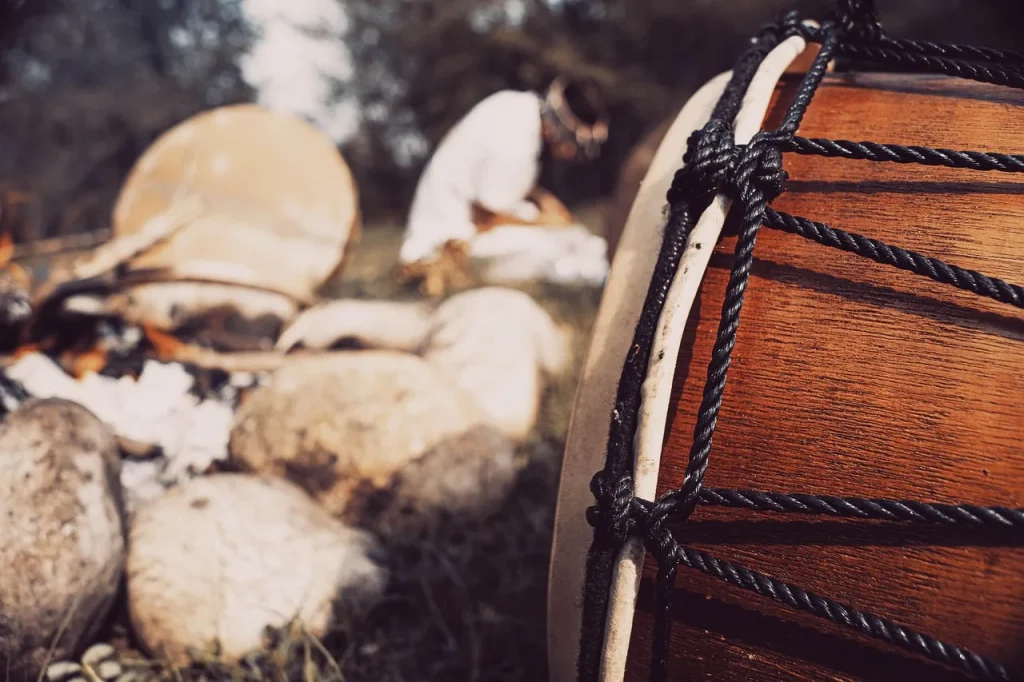
The djembe is a fascinating African percussion instrument prized for its rich sound. Its price varies considerably depending on several factors, including size, materials, and construction. Models are available from €20, while others can cost more than €500.
This guide aims to help every reader find the ideal djembe, whether they are a beginner or an experienced musician. The French market offers a wide range of options, from entry-level instruments to exceptional handcrafted pieces.
Price does not always determine quality. Factors such as the type of wood, the drumhead, and the construction method also affect the cost. Drawing on nearly 20 years of experience, this article offers practical advice and information on price ranges.
As you read, you will discover which technical features affect the price and how to make an informed choice. African music, and the djembe in particular, is attracting growing interest in France, making this guide especially useful for prospective buyers.
Understanding today’s djembe price ranges in France
Understanding the different djembe price ranges in France helps you make an informed choice based on your needs and experience. Let’s look at the options available at each price point.
Budget djembes: €20 to €50
This range mainly includes small djembes measuring 20 to 30 centimeters. They are suitable for children and beginners who want to try African percussion without spending a great deal.
However, djembes taller than 30 cm that sell for less than €50 are often poor quality. They tend to have weak resonance and limited durability.
Midrange options: €50 to €100
For those seeking a little more quality, midrange options cost between €50 and €100. This range includes medium-sized djembes, generally measuring 30 to 50 centimeters.
These instruments are often handmade in Mali, Senegal, or Guinea from woods such as mahogany, iroko, or doussié. Their carefully tensioned goatskin heads produce a warm, authentic sound.
A moderate investment: €100 to €200
A budget of €100 to €200 gives you access to djembes over 50 centimeters tall. These models offer greater depth of sound, with pronounced bass and clear highs.
This range also includes adjustable tension systems and artistic decoration, providing a good balance of sound performance and construction quality.
Premium djembes: over €200
Premium djembes costing more than €200 are exceptional instruments. Made from quality woods such as mahogany, they are often crafted by renowned artisans.
These models can be fully customized, making each one unique. They are an investment for musicians seeking a high-quality instrument.
| Model | Price (€) | Size (cm) | Features |
|---|---|---|---|
| Meinl Junior | 52 | 20 | Ideal for children |
| Toca 7″ | 55 | 30 | Suitable for beginners |
| Nino ADJ4-XS | 62 | 40 | Handcrafted |
| Set with case | 215 | 50+ | Complete and practical |
Bear in mind that inexpensive secondhand djembes may have damaged heads. Replacing one soon after purchase can increase the total cost.
Ultimately, each price range suits a different use. Your choice will depend on your skill level, the sound you want, and how often you expect to play.
Technical factors that affect the price of a djembe
Technical features play a key role in a djembe’s cost. Everything from the choice of wood to the finish can affect its price. Let’s examine the main factors.
Wood: species and their effect on sound and price
The choice of wood is fundamental. Species such as lingué, dugura, djala, and guéni are valued for their density and rich sound. These solid woods add warmth and depth.
Mahogany is often favored for its warm tone. Gmelina is also prized for its light weight and durability. Synthetic materials such as ABS remain stable in humid conditions but may produce a less warm acoustic sound.
Drumhead: natural or synthetic, and at what price?
Natural goatskin is the benchmark for an authentic sound. It offers a lively tone and greater dynamic range. However, it requires regular care and periodic retensioning.
Synthetic heads are durable and provide a consistent sound outdoors. They suit schools and travel because they need fewer tuning adjustments.
Size and dimensions: effects on sound and cost
Size directly affects sound. A diameter of 7 to 8 inches is ideal for beginners. For greater versatility, a diameter of 10 to 12 inches is recommended. Above 13 inches, a djembe is suited to stage use, offering deep bass and powerful projection.
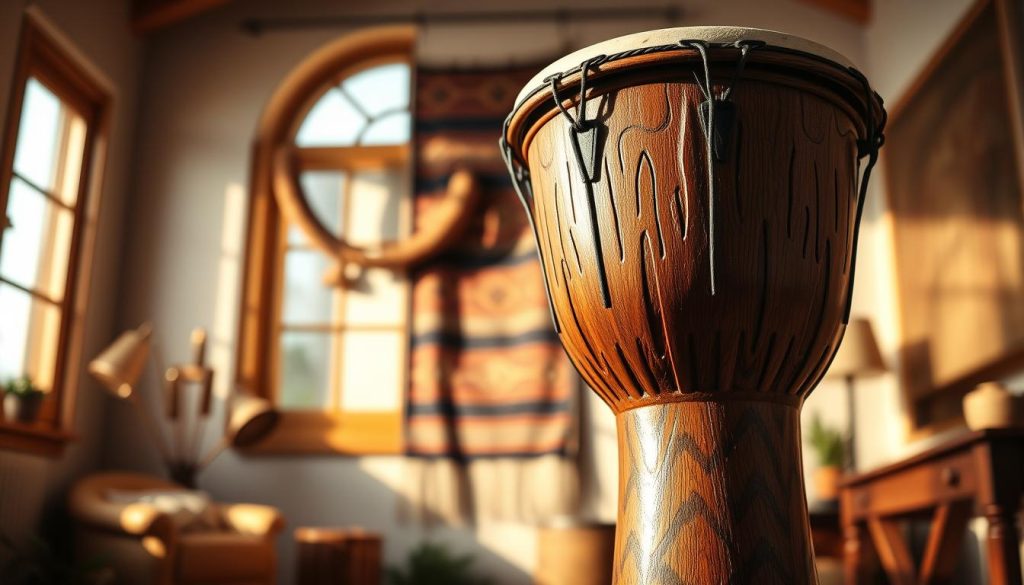
Typical dimensions for a quality medium-sized djembe are a diameter of 25 to 26.5 cm, a height of 52 to 56 cm, and a weight of 3.5 to 5.5 kg. These measurements are useful when assessing an instrument.
Finishes, carvings, and tension systems
Finishes and carvings add visual appeal. Hand carving and careful oiling can improve durability. The tension system is also crucial to maintaining the sound.
When buying, look for signs of quality: secure knots, enough spare rope to retension the head, and a head without visible veins.
| Factor | Effect on price | Importance for sound |
|---|---|---|
| Wood | High | Very important |
| Drumhead | Medium to high | Essential |
| Size | Medium | Important |
| Finish | Variable | Important |
These technical factors explain why two visually similar djembes can have very different prices. They should guide a considered purchase.
Choosing a djembe for your needs, skill level, and playing style
Choosing an instrument matters, especially when it is a djembe. Children, beginners, and accomplished musicians all have different needs. Select a model that suits the player.
For children and schools, models such as the Meinl Junior and Toca 7″ are ideal. These lightweight instruments have synthetic shells and heads. They are easy to carry and well suited to classroom use.
They are also comfortable for small hands. Because they are less affected by changes in the weather, they are practical for young musicians.
For beginners who want to improve, a budget below €120 is reasonable. Options such as the Afroton AD 006 at around €57, the Thomann BN23 at €66, and the Toca Street 10″ at €119 offer good value. They provide a satisfying sound for developing African percussion skills.
For more experienced musicians, an investment of €200 or more may be worthwhile. Models such as the Meinl Jumbo at €209, or sets costing €215 that include a protective case, are suited to stage performance. These premium instruments offer power and stable head tension.
Playing comfort also matters. Weight and smoothly finished rims are essential for playing for long periods without fatigue. Every detail helps encourage regular music practice.
Finally, compare several models before deciding. Your choice of djembe should match its intended use, whether it is for a child, a beginner, or a stage musician. This supports lasting, rewarding progress.
The cost of replacing a djembe head and caring for the instrument
Replacing the head is an important part of caring for a percussion instrument. The cost depends on factors including its size, quality, and how the skin has been treated.
Here are some guide prices:
- A quality head for a medium-sized djembe costs around €30.
- Larger, higher-quality heads can cost more than €50.
Goatskin heads are especially valued for their warm, rich sound and remain the traditional choice. Cowhide produces a deeper sound but has different tonal characteristics.
Professional synthetic heads can also cost more than €100. However, their sound does not always justify that expense compared with natural goatskin.
The way a skin is treated, particularly tanning and drying, affects its durability and tonal stability. These care tips will help protect the head and wood:
- Keep the djembe away from moisture and direct sunlight.
- Check the head regularly for wear.
- Retighten the lacing if necessary.
- Apply a suitable oil or wax to maintain the instrument’s condition and sound.
Replacing a head takes specialized skill. Labor costs can be added to the price of the skin, increasing the overall budget.
Head tension is a key factor in sound quality. Good care can reduce how often a head needs replacing and extend the instrument’s life.
Regular djembe maintenance is a modest investment in the pleasure of playing an instrument that stays well tuned and sounds its best.
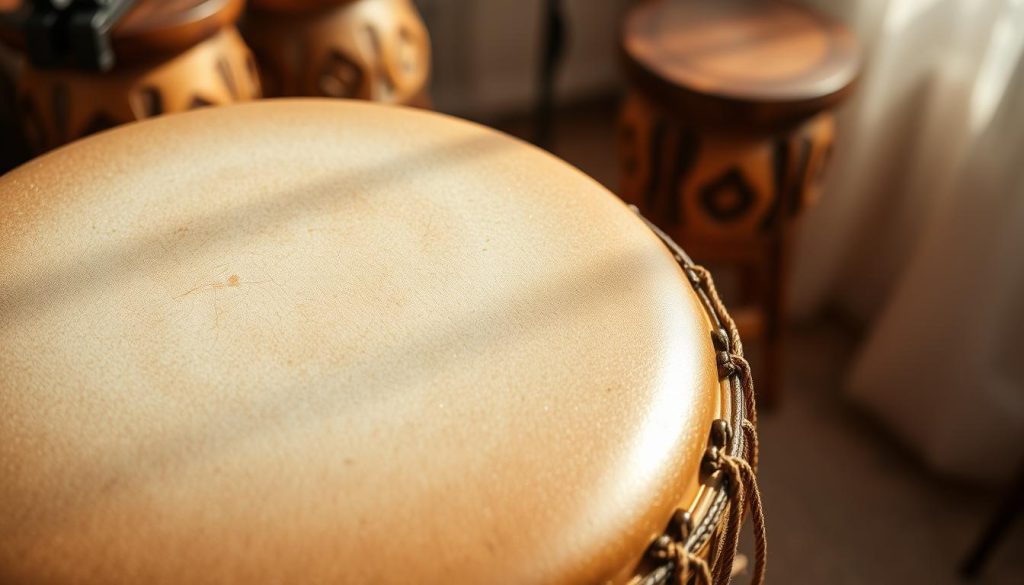
How much can you sell a djembe without a head for?
It can be difficult to judge the resale value of a drum without a head. The quality of the shell, the type of wood, and the instrument’s overall condition are all important factors.
Entry-level djembes without heads may have fairly low resale values. These mass-produced models may sell for less than €50 to €100. The local market and the shell’s condition will also affect the price.
Handcrafted or high-quality djembes made from selected wood can command much higher prices. Even without a head, they may sell for €100 to several hundred euros. Collectors and professional musicians may seek them out for customization.
The shell material is particularly important. A quality solid-wood djembe, such as one made from mahogany, will have a much higher resale value than a synthetic model.
To maximize resale value, consider:
- Taking detailed photographs of the instrument.
- Describing its condition accurately, including any distinctive features or defects.
- Checking specialist forums and online marketplaces to assess current prices.
Remember that the buyer will need to pay for a new head and possibly have the instrument reassembled. This may affect the final sale price.
The brand or maker can also affect the value of a headless djembe. Recognized brands such as Meinl often retain their value better. To set a fair price, be transparent about the instrument’s condition and consider all these factors.
Why craftsmanship and finishing affect cost and quality
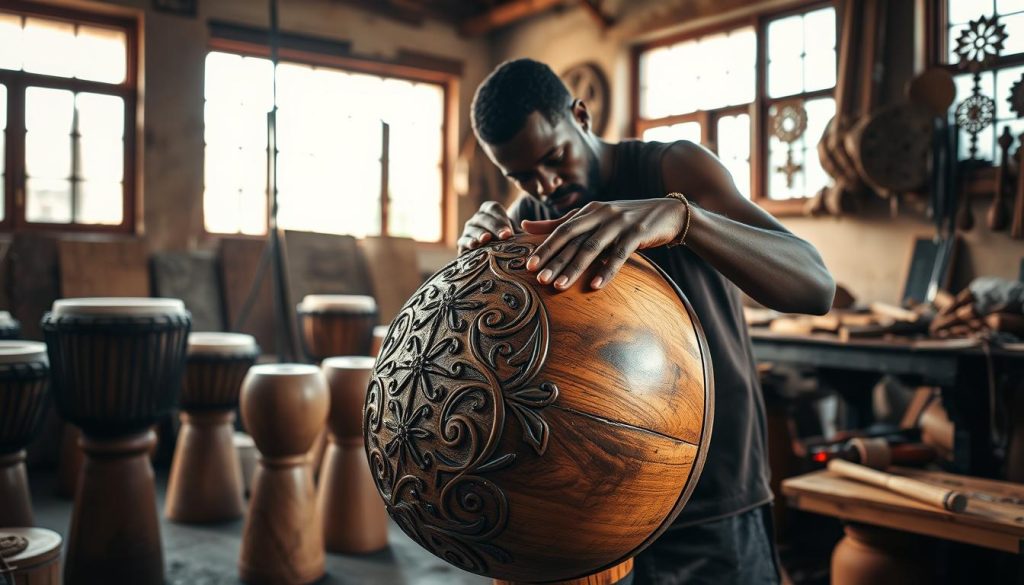
The difference between a handcrafted djembe and a factory-made model matters. Handmade instruments often come from West Africa. They are carved from a single block of wood, fitted with a goatskin head, and tensioned with rope.
This process takes time and careful wood selection. Each stage draws on skills passed down through generations. The higher price of a handcrafted djembe reflects the uniqueness of each instrument: every piece has its own resonance and tonal character.
Factory-made instruments offer greater consistency. Some use synthetic heads to keep their tuning stable. This can lower the cost but may also change the traditional sound.
Finishing has a major effect on an instrument’s value. A hand-carved, polished, and varnished djembe costs considerably more than an unfinished model. It may also offer greater visual appeal and durability.
Woods such as mahogany and iroko have different tonal and visual qualities. Both affect the instrument’s sound and final price. Premium handcrafted djembes often feature intricate African carvings, turning the instrument into a work of art.
The quality of the finish directly affects how well the wood is protected from moisture and changes in the weather. A good varnish can considerably extend the instrument’s life.
Renowned artisans from Mali, Senegal, and Guinea are sought after for their exceptional skill in making djembes. Their expertise helps ensure consistent quality.
Skins for handcrafted djembes are selected for their thickness and stability. This helps produce an authentic sound and a more responsive instrument.
Investing in a well-finished handcrafted djembe means choosing an instrument that inspires frequent playing, rhythm practice, and lasting progress in percussion.
Essential accessories and tips for a smart purchase
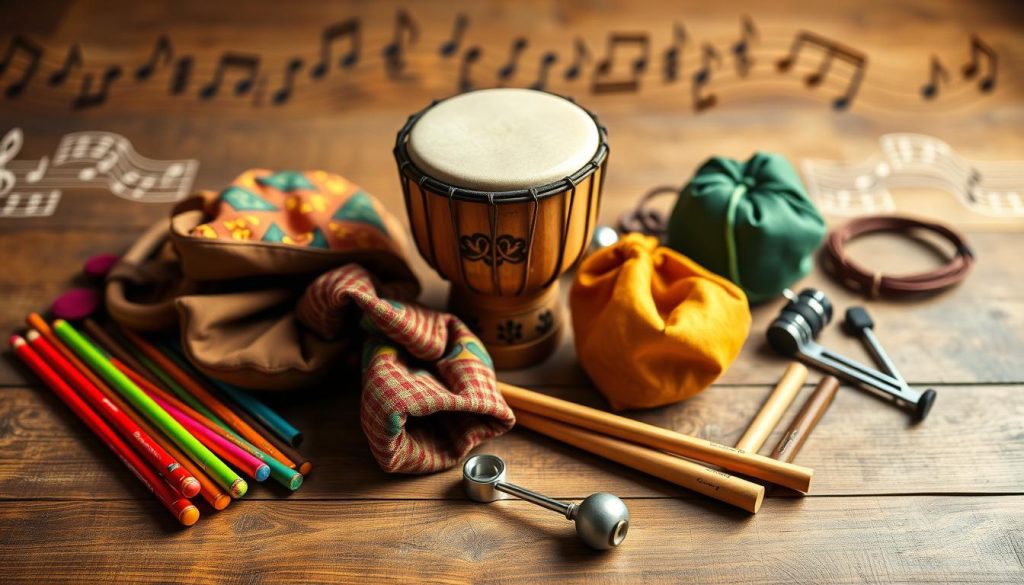
When buying a djembe, consider the accessories you will need. A protective case helps extend the instrument’s life and makes it safer to carry. It protects the djembe from weather, dust, and knocks.
A set that includes a case often costs less than buying each item separately. For example, sets priced around €215 can offer good value. It is also useful to budget for spare rope, a care kit for a natural head, and possibly a tuner. These accessories support proper care and good playing conditions.
For a smart purchase, compare two or three models. Check their detailed specifications and account for extra costs such as delivery and insurance. Be wary of extremely low prices, which may indicate a decorative or fragile instrument. Always check the size, head, and product details before buying.
Also check stock and availability. A handcrafted instrument may be a one-off piece with a longer production time, while an in-stock model may ship quickly. Choose specialist shops, respected instrument makers, or reputable sites such as Thomann and Woodbrass, as well as trusted African sellers, to help ensure instrument quality.
Before buying, read customer reviews, check the returns policy, and look for clear information about where the wood and skin come from. These details help you buy with confidence. Accessories also affect playing comfort: smooth rims, a well-fitting case, and quality rope all contribute to an enjoyable experience over time.
Finally, take time to compare your options. Treat the purchase as an investment in an instrument that may accompany you through many years of music-making. These steps will help you make an informed choice.
Conclusion
Investing in a djembe can be rewarding for beginners and accomplished musicians alike. Prices range from €20 to more than €500, depending on factors such as size, wood, and construction. For a first instrument, a budget below €70 is reasonable, while a versatile model generally costs €90 to €150.
Consider the quality of the wood, head, and tension system, since these affect both sound and durability. A good choice will let you produce distinct bass, tone, and slap sounds, all essential to playing the djembe. Compare several models before completing your purchase, including any extra costs.
The world of the djembe offers many ways to explore African music. Whether you are an enthusiast or a professional, choose an instrument that makes you want to play often. For advice and a wide range of instruments, visit Instruments du Monde, a recognized specialist. Investing in a good djembe is a rewarding step into a fascinating musical world.