
The art of fingerpicking on acoustic guitar is based on using the fingers to play melody, rhythm, and accompaniment, creating a wide variety of sounds and textures. Often used in folk music, this technique lets guitarists explore new sounds and add a distinctive touch to their playing.
To play fingerpicking, it is essential to master basic chords such as E major, A minor, D major, and G major. You can also use techniques such as harmonics, playing percussion on the guitar body, tapping, hammer-ons, and pull-offs.
A steel-string acoustic guitar is generally recommended for fingerpicking because of its clear, warm sound. It is important to choose a guitar with a medium-sized body, a narrow neck, and a solid-wood body that resonates well. Recommended steel-string guitar models for fingerpicking include guitars by Art & Lutherie, Lag, and Seagull.
Fingerpicking is a musical language used in genres such as jazz, blues, pop, country, rock, and even classical music. Renowned guitarists including Tommy Emmanuel, Leo Kottke, and Mark Knopfler have mastered the technique and made it part of their personal styles.
By exploring the art of fingerpicking on acoustic guitar, you can discover new musical possibilities and enrich your playing experience. Whether you are a beginner or an experienced player, learning fingerpicking will help you explore new directions and add a distinctive dimension to your guitar playing.
Fingerpicking Techniques
To master the art of fingerpicking, it is important to learn and practice different techniques through fingerpicking exercises, specific rhythms, and tablature. Fingerpicking is a complex technique that lets you play melody, rhythm, and accompaniment simultaneously by plucking the strings of an acoustic guitar with the fingers of your picking hand.
Fingerpicking exercises are essential for developing finger coordination, speed, and accuracy. They generally involve playing repeated patterns that build muscle memory and improve dexterity. Start with simple exercises, then move on to more complex patterns as your confidence grows.
Fingerpicking rhythms are an important part of the technique. They add energy and groove to your playing. Rhythms vary with the musical style you want to play: blues shuffle, ragtime jazz, arpeggios, or contemporary fingerstyle. Regular practice of fingerpicking rhythms will help you develop your sense of tempo and pulse.
Fingerpicking tablature is a valuable tool for learning new songs and understanding how fingerstyle guitarists play their favorite pieces. Tablature is a diagram showing which strings and frets to use for each note or chord. It makes finger positions on the guitar neck easy to see and helps you reproduce fingerpicking patterns accurately.
Example of Fingerpicking Tablature:
| String | Fret |
|---|---|
| 1 (E) | 3 |
| 2 (B) | 0 |
| 3 (G) | 2 |
| 4 (D) | 0 |
| 5 (A) | 3 |
| 6 (E) | x |
In this example, you play a fingerpicked melody by plucking strings 1, 2, 3, 4, and 5 with your fingers, without playing string 6. The tablature shows the finger positions on the guitar neck, helping you play the piece smoothly and accurately.
In short, mastering fingerpicking takes regular fingerpicking exercises, practice with its characteristic rhythms, and the use of tablature to learn new songs. With patience and persistence, you will develop your own fingerstyle approach and be able to explore new musical directions.

Fingerpicking is a musical language that spans styles such as jazz, blues, pop, country, and rock. Many well-known artists have used the technique to create distinctive compositions. The range of styles and genres suited to fingerpicking offers a wealth of sounds and forms of expression.
Jazz is one of the most popular styles for fingerpicking. Jazz artists often use the technique to improvise complex melodies over rich harmonies. Musicians such as Joe Pass and Django Reinhardt brought fingerstyle jazz guitar to a remarkable level of virtuosity, creating impressive and inventive solos.
Fingerpicking is also widely used in blues. Blues guitarists use it to create powerful rhythms and melodic solos. Artists such as Robert Johnson and Mississippi John Hurt left their mark on blues history by using fingerpicking to accompany their singing and create intense moods.
In pop, fingerpicking adds a delicate, melodic dimension to songs. Artists such as Paul Simon and James Taylor have used it to write timeless ballads. Fingerpicking brings subtlety and acoustic texture to pop songs, creating a warm, intimate atmosphere.
In country and rock, fingerpicking can create catchy riffs and striking solos. Guitarists such as Dire Straits’ Mark Knopfler and Chet Atkins popularized the technique in rock and country. They used it to add technical and harmonic complexity to their compositions while retaining an authentic, expressive sound.

| Style | Artist |
|---|---|
| Jazz | Joe Pass |
| Blues | Robert Johnson |
| Pop | Paul Simon |
| Country | Chet Atkins |
| Rock | Mark Knopfler |
Choosing the Right Guitar for Fingerpicking
For fingerpicking, it is essential to choose a steel-string acoustic guitar with a clear, warm sound. Here are the features to look for, along with a few recommended models.
Steel-string acoustic guitars are often favored for fingerpicking because of their sound. Here are the main features to consider when choosing a fingerstyle guitar:
- Medium-sized body: a medium-sized body offers balanced projection and a responsive sound, both essential for producing subtle nuances in your playing.
- Narrow neck: a narrow neck makes it easier to reach the strings and move between chords and melodies.
- Solid-wood body: guitars with solid-wood bodies offer better resonance and greater depth of sound than those with plywood bodies. Cedar, spruce, and rosewood are commonly used in making steel-string acoustic guitars.
- Durable body: because fingerpicking sometimes involves using the guitar body as percussion, choose an instrument sturdy enough to avoid damage.
Here are some recommended steel-string guitar models for fingerpicking:
| Brand | Model |
|---|---|
| Art et Lutherie | Cedar Antique Burst |
| Lag | T70D |
| Seagull | S6 Original |
These guitars are known for their build quality, excellent sound, and value for money. They suit guitarists of all levels who want to get started with fingerpicking.

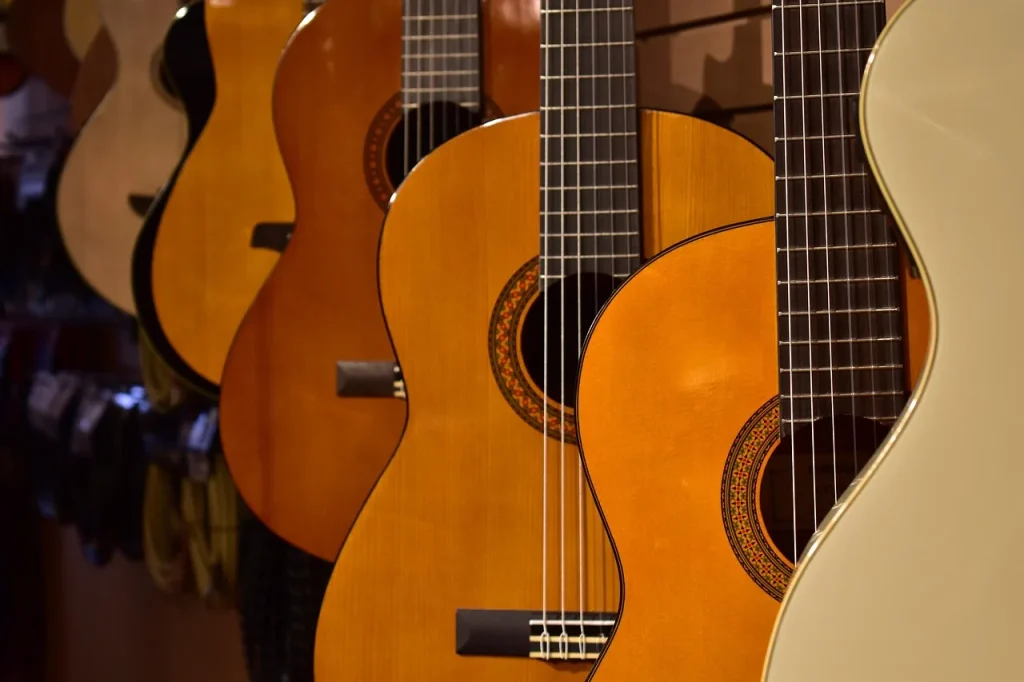
The image above shows a steel-string acoustic guitar, a popular choice among fingerpicking players for its warm sound and versatility. It captures the essence of the art of fingerpicking on acoustic guitar.
Conclusion
The art of fingerpicking on acoustic guitar offers a distinctive musical experience: it lets you explore a variety of styles and create rich, complex sounds. Regular practice and learning the techniques are essential to mastering it. By using your fingers to play melody, rhythm, and accompaniment, fingerpicking offers a wider range of sounds and textures than playing with a pick.
To play fingerpicking, it is important to master basic chords such as E major, A minor, D major, and G major. You can also use techniques such as harmonics, playing percussion on the guitar body, tapping, hammer-ons, and pull-offs.
A steel-string acoustic guitar is generally recommended for this technique because of its clear, warm sound. Choose a guitar with a medium-sized body, a narrow neck, and a solid-wood body that resonates well and is sturdy enough for percussive playing. Recommended steel-string guitar models for fingerpicking include guitars by Art & Lutherie, Lag, and Seagull.
Fingerpicking is used in genres such as jazz, blues, pop, country, rock, and even classical music. Renowned guitarists including Tommy Emmanuel, Leo Kottke, Marcel Dadi, Muriel Anderson, Mark Knopfler, and Alexandr Misko have mastered the technique and helped popularize it. Fingerpicking on a steel-string acoustic guitar can create rich, complex sounds that other playing techniques cannot produce.
FAQ
What is fingerpicking on acoustic guitar?
Fingerpicking on acoustic guitar means using your fingers to play melody, rhythm, and accompaniment. It offers a wider range of sounds and textures than playing with a pick.
Which basic chords are essential for fingerpicking?
The essential basic chords for fingerpicking are E major, A minor, D major, and G major.
What techniques are used in fingerpicking?
Fingerpicking techniques include harmonics, playing percussion on the guitar body, tapping, hammer-ons, and pull-offs.
What guitar is recommended for fingerstyle playing?
A steel-string acoustic guitar is generally recommended for fingerstyle playing because of its clear, warm sound. Choose one with a medium-sized body, a narrow neck, and a solid-wood body that resonates well and is sturdy enough for percussive playing.
Which steel-string guitar models are recommended for fingerstyle?
Recommended steel-string acoustic guitars for fingerstyle include models by Art & Lutherie, Lag, and Seagull.
Who are some famous fingerstyle guitarists?
Famous fingerstyle guitarists include Tommy Emmanuel, Leo Kottke, Marcel Dadi, Muriel Anderson, Mark Knopfler, and Alexandr Misko.
Which musical genres use fingerstyle?
Fingerstyle is used in many genres, including jazz, blues, pop, country, rock, and classical music.
What sounds can you create by playing fingerstyle on a steel-string acoustic guitar?
Playing fingerstyle on a steel-string acoustic guitar can create rich, complex sounds that other playing techniques cannot produce.